Digital Declutter: Reclaim 10 Hours Weekly by 2026

A structured 3-month digital declutter can effectively help individuals reclaim more than 10 hours weekly by 2026, leading to enhanced focus, improved well-being, and greater personal productivity.
Are you feeling overwhelmed by constant notifications, endless scrolling, and the pervasive presence of digital devices in your life? In an increasingly connected world, finding balance is crucial. This guide on The 3-Month Digital Declutter: A Practical Guide to Reclaim 10 Hours Weekly in 2026 offers a clear, actionable roadmap to help you regain control of your time and attention, promising a significant return on your investment: at least 10 hours back in your week.
Understanding the Digital Overload in 2026
The digital landscape of 2026 is more complex and demanding than ever before. From smart home devices vying for attention to sophisticated algorithms designed to maximize screen time, our lives are intricately woven with technology. This constant connectivity, while offering unparalleled convenience, often comes at the cost of our mental well-being, productivity, and genuine human connection. Recognizing the pervasive nature of this digital overload is the first step towards reclaiming your time and focus.
It’s not just about social media; it encompasses work emails bleeding into personal hours, news alerts creating constant anxiety, and entertainment platforms offering an endless stream of content. The cumulative effect is a fragmented attention span and a feeling of always being ‘on.’ Many people report feeling drained and less present in their daily lives due to this digital tether. The goal of a digital declutter is not to abandon technology entirely, but to use it intentionally, putting you back in the driver’s seat.
The invisible drain on your time
The insidious nature of digital overload lies in its ability to slowly erode your time without you fully realizing it. A quick check of email here, a brief scroll through a news feed there – these micro-interactions add up significantly over a day, and even more so over a week. By understanding where your time is truly going, you can begin to identify the biggest culprits.
- Notification Fatigue: Constant pings and alerts pull your attention away from tasks, breaking concentration and increasing stress.
- Endless Scrolling: Social media feeds and content platforms are designed to be addictive, leading to hours lost in passive consumption.
- Email Overload: The expectation of instant responses and a never-ending inbox can turn work communication into a 24/7 burden.
- Information Overload: The sheer volume of news, articles, and updates makes it difficult to discern what is truly important, leading to mental exhaustion.
Taking stock of these habits is crucial. Many apps now offer screen time reports, which can be an eye-opening experience. This data provides an objective look at your digital consumption, highlighting areas where you might be spending more time than you realize or intend. Armed with this awareness, you can approach your digital declutter with a clear understanding of your current digital habits and the potential gains.
In essence, the digital environment, while designed to connect and inform, often leads to distraction and exhaustion. A structured declutter helps us navigate this complex world with greater intention, ensuring that technology serves us, rather than the other way around. This foundational understanding sets the stage for a successful 3-month plan.
Month 1: The Awareness and Audit Phase
The first month of your digital declutter journey is dedicated to understanding your current digital habits and identifying areas for improvement. This phase is less about immediate drastic changes and more about building awareness, much like a detective gathering clues. You cannot fix what you do not acknowledge, and this month is all about honest self-assessment.
Begin by tracking your screen time across all devices. Most smartphones and operating systems now have built-in tools for this. Pay attention not just to total time, but also to which apps and categories consume the most. This data will be invaluable in crafting a personalized declutter strategy. Be honest with yourself about why you use certain apps and what emotional needs they might be fulfilling.
Tracking your digital footprint
Detailed tracking goes beyond just screen time. Consider documenting your interactions with technology in a journal for a few days. Note down when you pick up your phone, what app you open first, how long you spend on it, and how you feel afterward. This qualitative data can reveal patterns that quantitative data might miss.
- Use built-in screen time trackers: Leverage features on iOS (Screen Time) and Android (Digital Wellbeing) to get detailed reports.
- Manual logging: For a deeper dive, keep a small notebook handy to jot down every time you instinctively reach for a device and what you do with it.
- Identify ‘trigger’ apps: Pinpoint applications or websites that consistently lead to extended, unintentional use.
- Analyze notification patterns: Observe which notifications are truly essential and which are merely distractions.
Once you have a clear picture of your digital consumption, it’s time to audit your apps and subscriptions. Go through your smartphone, tablet, and computer. Delete any apps you haven’t used in the last month or that do not serve a specific, positive purpose. Unsubscribe from newsletters that clutter your inbox and provide no real value. This initial pruning clears digital clutter and reduces potential distractions.
This month’s focus on awareness and auditing provides the necessary groundwork. By understanding your digital habits and identifying the biggest time sinks, you are preparing yourself for more targeted interventions in the subsequent months. It’s about creating a baseline from which to measure your progress and celebrate your reclaimed hours.
Month 2: Strategic Reduction and Reconfiguration
Having identified your digital habits in Month 1, Month 2 is about taking decisive action. This phase involves strategically reducing your digital consumption and reconfiguring your devices and routines to support a more intentional relationship with technology. The goal is to minimize passive consumption and maximize purposeful engagement, moving closer to that 10-hour weekly reclaim target.
Start by tackling notifications. Turn off all non-essential notifications across all your devices. Only allow alerts that are absolutely critical for work or personal safety. This single action can dramatically reduce the constant pull of your devices and allow for longer periods of focused attention. Consider a ‘do not disturb’ schedule for specific hours of the day.
Implementing app and device boundaries
Now that you know which apps are your biggest time-wasters, it’s time to set boundaries. This might involve deleting them entirely, moving them to a less accessible folder, or setting strict time limits using your device’s built-in controls. For social media, consider setting a timer for each session to prevent endless scrolling.
- Delete unused apps: Permanently remove applications that don’t add value or are rarely used.
- Categorize and hide: Group distracting apps into folders and move them off your home screen, making them less accessible.
- Set app limits: Utilize screen time features to impose daily limits on time-consuming apps.
- Embrace grayscale mode: Experiment with turning your screen to grayscale. The lack of vibrant colors can make devices less appealing and reduce their addictive nature.
Beyond apps, reconfigure your device settings for minimal distraction. Change your phone’s default browser homepage to something productive, like a to-do list or a blank page, instead of a news site. Charge your phone outside your bedroom to avoid late-night scrolling and improve sleep hygiene. Create ‘tech-free zones’ in your home, such as the dining table or bedroom, where devices are not allowed.
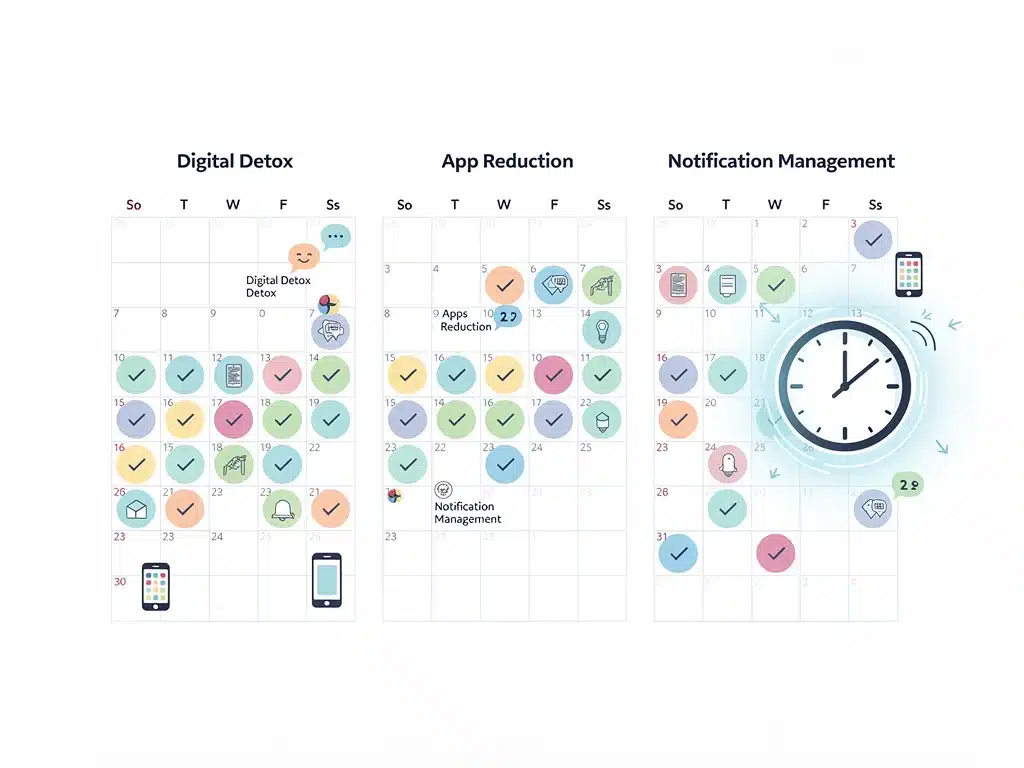
This month requires discipline and consistency. It’s about actively redesigning your digital environment to serve your goals, rather than allowing it to dictate your attention. By the end of Month 2, you should already be feeling a noticeable shift in your ability to focus and a greater sense of control over your time. The hours you save will start accumulating, providing tangible evidence of your progress.
Month 3: Cultivating New Habits and Sustaining Gains
The final month of your digital declutter focuses on solidifying the changes you’ve made and cultivating new, positive habits to sustain your progress long-term. This isn’t just about reducing screen time; it’s about intentionally filling the reclaimed hours with activities that genuinely enrich your life and contribute to your well-being. This is where the 10 hours weekly truly become a reality and a sustainable part of your life.
Reflect on the time you’ve freed up. What are you going to do with it? Proactively schedule non-digital activities. This could be anything from reading a physical book, pursuing a hobby, spending quality time with loved ones, exercising, or simply enjoying quiet reflection. The key is to replace old digital habits with new, fulfilling analog ones.
Embracing analog alternatives
The beauty of a digital declutter is not just what you stop doing, but what you start doing instead. Explore activities that engage your mind and body without screens. This month is about experimenting and finding what truly resonates with you in the non-digital realm.
- Rediscover reading: Pick up physical books, magazines, or newspapers.
- Engage in hobbies: Dedicate time to creative pursuits like painting, playing an instrument, gardening, or cooking.
- Spend time in nature: Go for walks, hikes, or simply sit outdoors without your phone.
- Connect in person: Schedule coffee dates, dinners, or calls with friends and family, focusing on present conversation.
- Practice mindfulness: Incorporate meditation, journaling, or quiet contemplation into your daily routine.
Review your progress from Months 1 and 2. Are there any digital habits that have crept back in? It’s important to be vigilant and make adjustments as needed. The digital world is constantly evolving, and so too should your strategies for managing it. Consider setting weekly or monthly check-ins with yourself to assess your digital consumption and ensure you’re adhering to your intentional limits.
Building a support system can also be incredibly helpful. Share your digital declutter journey with friends or family members who might be interested in joining you. Mutual accountability can provide motivation and encouragement, especially during moments of weakness. The goal is to make these new, healthier habits feel natural and effortless.
By the end of Month 3, you should feel a profound sense of liberation and control. The reclaimed 10 hours weekly will not just be empty time slots but opportunities filled with meaningful experiences. This sustained approach ensures that your digital declutter is not a temporary fix, but a lasting transformation in how you interact with the digital world and live your life.
Measuring Your Reclaimed Time and Benefits
One of the most motivating aspects of a digital declutter is seeing tangible results. After three months of dedicated effort, it’s crucial to measure the time you’ve reclaimed and acknowledge the broader benefits you’ve experienced. Quantifying your success reinforces positive behavior and provides concrete proof that your efforts have paid off, solidifying the new habits you’ve built.
Revisit your screen time data from Month 1 and compare it to your current usage. You should see a significant reduction in overall screen time, particularly in non-essential apps. Calculate the difference in hours per week. This number represents the time you’ve successfully reclaimed. For many, this calculation will easily exceed the initial goal of 10 hours, demonstrating the profound impact of intentional digital usage.
Beyond the clock: the qualitative gains
While quantitative data is important, the qualitative benefits of a digital declutter are often even more impactful. These are the changes you feel and experience in your daily life, contributing to a richer, more present existence. Pay attention to how your mental and emotional states have improved.
- Improved focus and concentration: Notice an enhanced ability to concentrate on tasks without constant digital interruptions.
- Reduced stress and anxiety: Experience a decrease in the feeling of being overwhelmed or constantly ‘on.’
- Better sleep quality: Observe improvements in your sleep patterns and how rested you feel upon waking.
- Increased presence: Feel more engaged in conversations and activities with others, being truly in the moment.
- Enhanced creativity and productivity: Discover new ideas and complete tasks more efficiently with fewer distractions.
- Stronger relationships: Enjoy deeper connections with friends and family by being more present.
Keep a journal to document these qualitative changes. Note down instances where you felt more present, less stressed, or more productive. This personal testimony serves as a powerful reminder of why you embarked on this journey and motivates you to maintain your new habits. Celebrating these small victories is just as important as tracking the hours.
Measuring your reclaimed time and benefits goes beyond simple numbers; it’s about recognizing the profound positive shift in your overall quality of life. This acknowledgment is vital for sustaining your digital declutter long-term, turning a temporary challenge into a permanent upgrade to your daily living. The benefits extend far beyond just time, touching every aspect of your well-being.
Long-Term Strategies for Digital Wellness
Completing a 3-month digital declutter is a significant achievement, but maintaining digital wellness is an ongoing process, not a one-time event. The digital landscape is constantly evolving, and so too must our strategies for navigating it. This section focuses on establishing long-term habits and mindsets to ensure your reclaimed time and enhanced well-being persist well into 2026 and beyond.
Regularly reassess your digital habits. Just as you conducted an audit in Month 1, make it a quarterly or semi-annual practice to review your screen time, app usage, and notification settings. New apps emerge, and old habits can subtly creep back in. Proactive monitoring helps you catch these shifts before they become ingrained distractions again.
Establishing sustainable digital boundaries
Creating clear and consistent boundaries is paramount for long-term digital wellness. These boundaries should be flexible enough to adapt to life’s demands but firm enough to protect your time and attention. Think of them as guardrails that keep you on the path of intentional tech use.
- Scheduled ‘digital sabbaths’: Dedicate specific days or half-days each week to be completely tech-free.
- Time-blocked digital tasks: Allocate specific blocks of time for checking emails, social media, or news, rather than doing it reactively.
- Physical separation: Continue to charge devices outside the bedroom and establish tech-free zones in your home.
- Mindful consumption: Before opening an app or clicking a link, ask yourself: ‘Is this serving a purpose, or is it just a distraction?’
- Curate your digital environment: Regularly unfollow accounts that don’t add value, unsubscribe from irrelevant emails, and declutter your digital files.
Educate yourself on new digital trends and their potential impact on your wellness. Stay informed about features designed to promote digital well-being, as well as those that might lead to increased distraction. Being knowledgeable empowers you to make informed choices about how you interact with technology.

Remember that digital wellness is a journey, not a destination. There will be days when you slip, and that’s okay. The key is to recognize it, learn from it, and gently guide yourself back to your established boundaries. By integrating these long-term strategies, you can ensure that the benefits of your digital declutter 2026 continue to enrich your life for years to come, providing a consistent source of reclaimed time and peace of mind.
The Broader Impact: Productivity and Well-being
The benefits of a successful digital declutter extend far beyond simply reclaiming hours; they profoundly impact your overall productivity and well-being. By consciously reducing digital noise, you create space for deeper thinking, more focused work, and a greater connection to your inner self and the world around you. This holistic improvement is the ultimate reward of intentional tech management.
Increased productivity is a direct consequence of reduced distractions. When your attention isn’t constantly fragmented by notifications or the urge to check devices, you can enter states of ‘flow’ more easily. This deep concentration allows you to complete tasks more efficiently, produce higher quality work, and feel a greater sense of accomplishment. The 10 hours you reclaim weekly often translate into more impactful work and less rushed effort.
Enhancing mental and emotional health
The link between excessive digital use and mental health challenges is well-documented. A digital declutter can significantly alleviate symptoms of anxiety, stress, and even depression by reducing exposure to comparison culture, negative news cycles, and the constant pressure to be available. This creates a healthier mental environment for growth and resilience.
- Reduced decision fatigue: Fewer digital choices mean less mental drain, freeing up cognitive resources for important decisions.
- Improved sleep patterns: Less blue light exposure and mental stimulation before bed leads to deeper, more restorative sleep.
- Greater self-awareness: More quiet time allows for introspection and understanding of one’s own thoughts and feelings.
- Boosted creativity: Boredom, often stifled by digital entertainment, is a fertile ground for creative thought and problem-solving.
- Stronger relationships: Enjoy deeper connections with friends and family by being more present.
The ripple effect of improved well-being touches every aspect of your life. You might find yourself with more energy for exercise, a greater appetite for learning new things, or simply more patience and joy in your daily interactions. This isn’t just about disconnecting; it’s about reconnecting with what truly matters and aligning your actions with your values.
Ultimately, The 3-Month Digital Declutter: A Practical Guide to Reclaim 10 Hours Weekly in 2026 is an investment in yourself. It’s a commitment to living a more intentional, focused, and fulfilling life. The cumulative effect of these changes transforms not just your relationship with technology, but your entire experience of being in the world, making you more productive, present, and genuinely content.
| Key Phase | Objective and Actions |
|---|---|
| Month 1: Awareness | Track screen time, audit apps, identify digital habits and biggest time sinks. |
| Month 2: Reduction | Turn off notifications, delete non-essential apps, set screen limits, reconfigure devices. |
| Month 3: Sustenance | Cultivate analog habits, schedule non-digital activities, establish long-term boundaries. |
| Overall Goal | Reclaim 10+ hours weekly, enhance focus, productivity, and mental well-being by 2026. |
Frequently Asked Questions About Digital Decluttering
A digital declutter is a conscious effort to reduce and manage your digital consumption to improve focus, productivity, and overall well-being. It’s important because excessive screen time and constant connectivity can lead to increased stress, fragmented attention, and reduced real-world engagement.
Most modern smartphones (iOS and Android) have built-in screen time tracking features that provide detailed reports on app usage. Additionally, you can manually log your device interactions in a journal for a few days to gain qualitative insights into your digital habits.
Start by turning off all non-essential notifications on your devices. Delete unused apps, move distracting apps off your home screen, and set daily time limits for social media or entertainment platforms. Consider implementing ‘do not disturb’ schedules.
Actively schedule analog activities such as reading, pursuing hobbies, exercising, spending time in nature, or engaging in face-to-face conversations. The key is to replace old digital habits with new, fulfilling non-digital experiences that enrich your life.
Digital decluttering is an ongoing process. The digital landscape constantly changes, so regular reassessment of your habits, adapting your strategies, and maintaining consistent boundaries are crucial for long-term digital wellness and sustained benefits.
Conclusion
Embarking on The 3-Month Digital Declutter: A Practical Guide to Reclaim 10 Hours Weekly in 2026 is more than just reducing screen time; it’s a transformative journey toward a more intentional and fulfilling life. By systematically auditing your digital habits, strategically reducing consumption, and cultivating meaningful analog alternatives, you can significantly enhance your focus, boost productivity, and improve your overall well-being. The sustained benefits of this commitment will not only free up valuable time but also foster deeper connections and a greater sense of presence, proving that taking control of your digital life is one of the most powerful investments you can make in yourself for the future.