2026 Digital Well-being Guide: Reduce Screen Time by 30% in One Month

Implementing a structured approach to digital consumption, including setting clear boundaries and utilizing technological tools, can effectively reduce screen time by 30% within one month, leading to improved focus and overall well-being.
In an increasingly connected world, achieving digital well-being 2026 has become a paramount concern for many. This comprehensive guide will explore practical, actionable strategies designed to help you significantly reduce your screen time by 30% in just one month, fostering a healthier and more balanced relationship with technology.
Understanding Your Current Digital Habits in 2026
Before embarking on any journey to reduce screen time, it’s crucial to understand your current digital consumption patterns. Many of us are unaware of just how much time we spend glued to our screens, whether for work, entertainment, or social connection. The first step towards meaningful change is honest self-assessment.
This involves tracking your screen time across all devices, identifying peak usage hours, and pinpointing the apps and activities that consume most of your attention. Several built-in features on smartphones and third-party applications can help you gather this vital data. Without a clear picture of your starting point, it’s difficult to measure progress effectively.
The Importance of Data Collection
Collecting data on your digital habits isn’t about judgment; it’s about awareness. Think of it as a diagnostic tool that reveals the hidden patterns of your online life. This information empowers you to make informed decisions about where and how to cut back.
- Device-specific tracking: Utilize native screen time features on iOS and Android.
- App usage analysis: Identify which applications are the biggest time sinks.
- Peak usage times: Understand when you’re most susceptible to excessive screen use.
By understanding these patterns, you can begin to see the areas where you can implement changes most effectively. For instance, if social media consumption spikes late at night, that’s a clear target for intervention. This initial phase lays the groundwork for a successful screen time reduction plan.
Ultimately, a thorough understanding of your digital habits provides the necessary foundation for setting realistic goals and crafting a personalized strategy. Without this insight, efforts to reduce screen time can often feel like shooting in the dark, leading to frustration and ultimately, a return to old patterns.
Setting Realistic Goals for Screen Time Reduction
Once you have a clear picture of your current screen time, the next step in achieving digital well-being in 2026 is to set realistic and measurable goals. Aiming to cut screen time by 30% in one month is an ambitious yet achievable target, provided you approach it strategically. It’s not about immediate drastic cuts, but rather sustainable changes.
Your goals should be specific, measurable, achievable, relevant, and time-bound (SMART). Instead of a vague desire to ‘use my phone less,’ specify ‘reduce Instagram usage by 30 minutes daily’ or ‘have no screen time during meals.’ This clarity makes your objectives tangible and trackable.
Breaking Down Your 30% Target
A 30% reduction can feel daunting at first, but breaking it down into smaller, manageable chunks makes it less intimidating. Consider a weekly or even daily reduction target. For example, if you currently spend 6 hours on screens daily, a 30% reduction means cutting 1.8 hours, bringing your total to 4.2 hours per day.
- Weekly reduction increments: Aim for a 7-8% reduction each week.
- Identify high-impact areas: Focus on the apps or activities that consume the most time.
- Non-negotiable screen-free zones: Establish times or places where screens are prohibited.
Remember, progress isn’t always linear. There will be days when you might slip, and that’s perfectly normal. The key is to acknowledge it, learn from it, and get back on track. Celebrate small victories along the way to maintain motivation and reinforce positive habits.
Setting realistic goals also involves understanding your own triggers and weaknesses. If you know you tend to scroll endlessly when bored, plan alternative activities. If work demands significant screen time, focus your reduction efforts on personal use. This tailored approach enhances your chances of success in achieving your digital well-being goals.
Practical Strategies for Immediate Screen Time Cuts
Now that you’ve established your baseline and set clear goals, it’s time to implement practical strategies to start reducing your screen time. These techniques are designed for immediate impact, providing quick wins that can build momentum towards your 30% reduction goal. They focus on both environmental changes and behavioral adjustments.
One of the most effective strategies is to create physical and digital barriers. This means making your devices less accessible or less appealing during certain times. Simple actions, like moving your phone out of the bedroom, can have a profound effect on your morning and evening routines.
Implementing Digital Boundaries
Digital boundaries are about consciously limiting your interaction with devices. This can take many forms, from setting app timers to designating specific screen-free periods each day. Consistency is key for these strategies to become effective habits.
- App limits: Utilize built-in phone features to set daily time limits for specific apps.
- Notification management: Turn off non-essential notifications to reduce interruptions.
- Grayscale mode: Switch your phone display to grayscale to make it less visually stimulating.
Another powerful tactic is to change your environment. If your phone is always within arm’s reach, you’re more likely to pick it up. Try leaving it in another room while you’re working, eating, or spending time with family. This small physical separation can create a significant mental one.
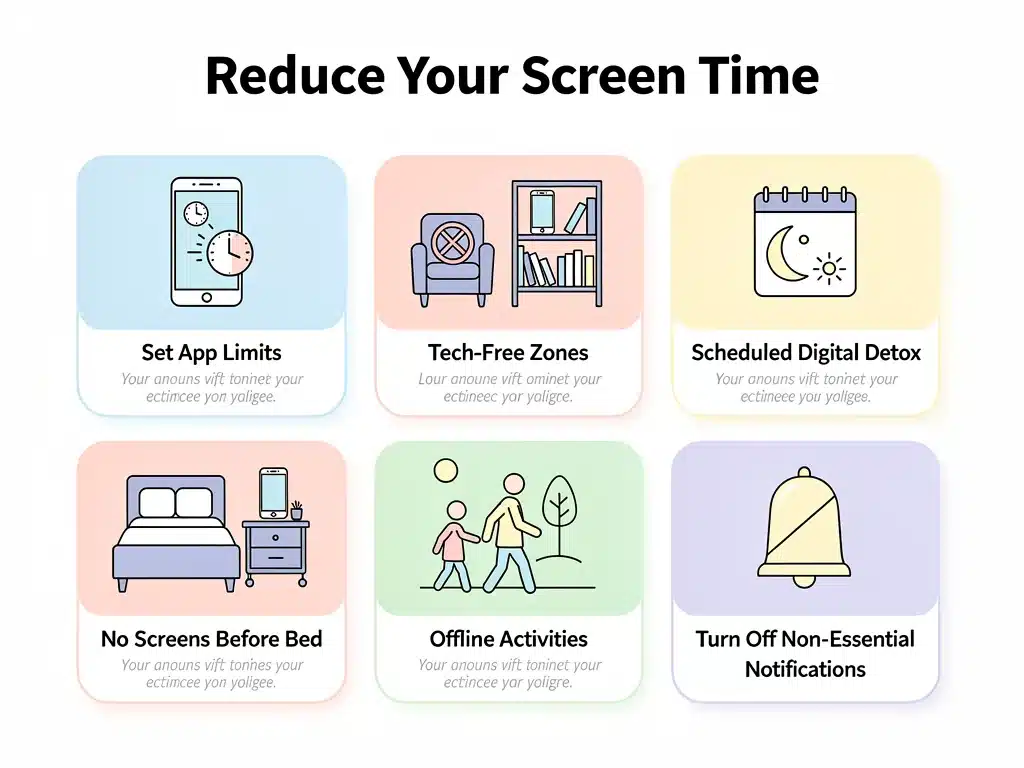
Furthermore, consider replacing screen-based activities with alternative hobbies. If you usually scroll through social media before bed, try reading a physical book instead. If you typically watch TV during dinner, engage in conversation with family members. These substitutions help fill the void left by reduced screen time.
The cumulative effect of these small, consistent changes will begin to manifest quickly. Don’t underestimate the power of these seemingly minor adjustments. They are the building blocks of a more balanced digital life and a key component of your digital well-being 2026 journey.
Leveraging Technology for Digital Detox
It might seem counterintuitive, but technology itself can be a powerful ally in your quest for digital well-being in 2026. Many apps and device features are specifically designed to help users monitor, manage, and ultimately reduce their screen time. Utilizing these tools can automate much of the discipline required for a digital detox.
From comprehensive screen time dashboards to specialized blocking applications, these technological aids provide insights and enforce boundaries that can be challenging to maintain through willpower alone. They act as a digital guardian, gently nudging you towards healthier habits.
Smart Tools for Screen Management
Modern smartphones come equipped with robust features to track and manage usage. Beyond these built-in options, a vibrant ecosystem of third-party apps offers even more granular control and customization for your digital environment.
- Focus apps: Applications like Forest or Freedom help you block distractions for set periods.
- Screen time dashboards: Use iOS Screen Time or Android Digital Wellbeing to gain detailed insights and set limits.
- Browser extensions: Tools that block distracting websites during work hours.
Beyond active blocking, consider how you consume content. Instead of mindlessly scrolling through news feeds, subscribe to curated newsletters that deliver information directly to your inbox at specific times. This shifts passive consumption to active engagement, making your screen time more intentional and less addictive.
Another valuable approach is to optimize your device settings. Disable auto-play for videos, turn off notifications that aren’t critical, and clean up your home screen to reduce visual clutter and the temptation to open apps. These small adjustments create a less stimulating and demanding digital environment.
By strategically employing these technological solutions, you can create a personalized framework that supports your screen time reduction goals. These tools are not a substitute for self-discipline, but they significantly enhance your ability to maintain consistent boundaries and foster a healthier relationship with your devices.
Cultivating Mindful Digital Consumption
Reducing screen time isn’t just about cutting back; it’s about changing your relationship with technology. Cultivating mindful digital consumption means being present and intentional whenever you interact with your devices. It’s a shift from passive, reactive usage to active, conscious engagement, a cornerstone of effective digital well-being 2026.
This approach encourages you to pause before picking up your phone and ask yourself: “Why am I doing this? What purpose does this serve?” This simple act of reflection can often reveal that you’re reaching for your device out of habit, boredom, or distraction, rather than genuine need.
Practices for Intentional Interaction
Mindfulness extends beyond just asking questions; it involves developing practices that reinforce intentionality. These practices help you savor the moments of connection and disengage gracefully when the task is complete, preventing endless scrolling or browsing.
- Scheduled check-ins: Designate specific times to check emails and social media, rather than constant monitoring.
- Single-tasking: When using a device, focus on one task at a time, avoiding multitasking across multiple apps.
- Digital journaling: Reflect on your digital interactions and their impact on your mood and productivity.
Another powerful aspect of mindful consumption is being aware of the content you engage with. Are you consuming information that genuinely enriches your life, or are you falling into rabbit holes of unproductive content? Curate your digital feeds to prioritize quality over quantity.

Mindful digital consumption also means recognizing the physical and mental cues your body sends. If you feel eye strain, a headache, or increased anxiety after extended screen use, acknowledge these signals and take a break. Listening to your body is a crucial part of maintaining overall well-being in the digital age.
By integrating mindfulness into your daily digital interactions, you transform your relationship with technology from one of compulsion to one of conscious choice. This shift is fundamental for achieving long-term digital well-being and maintaining your reduced screen time goals beyond the initial month.
Sustaining Your Reduced Screen Time Habits
Achieving a 30% reduction in screen time within a month is a significant accomplishment, but the real challenge lies in sustaining these new habits long-term. Digital well-being in 2026 isn’t a one-time project; it’s an ongoing practice that requires continuous effort and adaptation. Building a resilient framework for sustained change is essential.
One of the most effective ways to sustain reduced screen time is to integrate your new habits into your lifestyle seamlessly. This means making them feel less like a restriction and more like a natural part of your daily routine. Celebrate your success and acknowledge the benefits you’ve gained.
Building Long-Term Resilience
Sustaining digital well-being involves more than just avoiding screens; it’s about actively replacing old habits with new, healthier ones. This includes developing alternative interests, strengthening real-world connections, and regularly reassessing your digital needs.
- New hobbies: Invest time in offline activities like reading, hiking, or creative pursuits.
- Social connection: Prioritize face-to-face interactions over purely digital ones.
- Regular reviews: Periodically check your screen time and adjust your strategies as needed.
Anticipate challenges and prepare for them. There will be moments when you feel the pull of your devices, especially during periods of stress or boredom. Having a plan for these moments, such as a go-to offline activity or a designated “digital break” strategy, can prevent a relapse into old patterns.
It’s also beneficial to involve your friends and family in your digital well-being journey. Share your goals, encourage them to join you in screen-free activities, and create a supportive environment. Collective effort can make a significant difference in maintaining healthy digital boundaries.
Ultimately, sustaining reduced screen time is about finding a balance that works for you, one that enhances your life without completely isolating you from the benefits of technology. It’s a continuous process of learning, adapting, and prioritizing your mental and physical health in an ever-evolving digital landscape.
The Benefits of Enhanced Digital Well-being
Successfully reducing your screen time by 30% in one month, and sustaining those habits, brings a cascade of positive benefits that extend far beyond simply using your phone less. Enhanced digital well-being 2026 contributes significantly to overall mental, physical, and emotional health, fostering a more fulfilling life.
One of the most immediate and noticeable benefits is improved focus and productivity. With fewer digital distractions, your ability to concentrate on tasks, whether at work or in your personal life, will dramatically increase. This leads to higher quality work and a greater sense of accomplishment.
Transformative Impacts on Daily Life
The positive ripple effects of reduced screen time touch almost every aspect of your daily existence. From better sleep to stronger relationships, the improvements are often profound and deeply impactful.
- Better sleep quality: Reduced exposure to blue light before bed leads to more restful sleep.
- Increased presence: More engagement in real-world interactions and experiences.
- Reduced anxiety and stress: Less exposure to overwhelming information and social comparison.
- Enhanced creativity: More time for unstructured thought and exploration, fostering innovation.
Physically, you might experience less eye strain, fewer headaches, and improved posture. Emotionally, many report a decrease in feelings of anxiety, comparison, and digital fatigue. There’s a renewed sense of calm and control over your attention, which is a precious commodity in the modern world.
Furthermore, dedicating less time to screens often translates into more time for meaningful activities. This could be pursuing a long-forgotten hobby, spending quality time with loved ones, engaging in physical exercise, or simply enjoying moments of quiet reflection. These activities are vital for personal growth and happiness.
The journey to enhanced digital well-being is an investment in yourself. The initial effort to reduce screen time pays dividends in improved mental clarity, deeper connections, and a greater sense of control over your life. It’s about reclaiming your attention and living more intentionally in a digitally saturated world.
| Key Point | Brief Description |
|---|---|
| Understand Habits | Track current screen usage to identify patterns and heavy consumption areas. |
| Set SMART Goals | Establish specific, measurable, achievable, relevant, and time-bound targets. |
| Implement Boundaries | Use app limits, turn off notifications, and create screen-free zones. |
| Utilize Tech Tools | Leverage apps and device features to help manage and reduce screen time. |
Frequently Asked Questions About Digital Well-being
Digital well-being refers to the conscious and healthy management of one’s interaction with digital technologies. In 2026, it’s crucial because pervasive technology can negatively impact mental health, productivity, and real-world connections if not managed effectively. It’s about finding a balance that enhances life.
Most modern smartphones (iOS and Android) have built-in features like Screen Time or Digital Wellbeing that provide detailed reports on app usage and overall device time. Third-party apps also offer advanced tracking and blocking functionalities for more granular control over your digital habits.
Yes, a 30% reduction is ambitious but achievable with consistent effort and strategic planning. By breaking down the goal into smaller weekly targets, identifying high-impact areas for reduction, and utilizing supportive tools, significant progress can be made within a month.
Immediate steps include setting app limits, turning off non-essential notifications, switching your phone to grayscale mode, and creating designated screen-free zones and times, such as during meals or before bed. These small changes can yield quick results.
Sustaining reduced screen time involves cultivating new offline hobbies, prioritizing real-world social interactions, regularly reassessing your digital needs, and preparing for moments of temptation. Building a supportive environment and celebrating small victories also helps reinforce positive habits.
Conclusion
The journey to achieving enhanced digital well-being 2026, particularly by reducing screen time by 30% in one month, is a transformative one. It begins with a clear understanding of current habits, progresses through setting realistic goals and implementing practical strategies, and is cemented by mindful consumption and sustained effort. The benefits—ranging from improved focus and better sleep to stronger relationships and reduced stress—are profound and contribute significantly to a more balanced and fulfilling life. By taking intentional steps and leveraging available tools, anyone can reclaim their attention and cultivate a healthier, more intentional relationship with the digital world, making 2026 a year of true digital liberation.