Family Structures US 2026: Shifting Landscape Insights
By 2026, family structures in the US are projected to continue their significant evolution, driven by demographic shifts, economic pressures, and changing societal norms, leading to diverse household compositions.
Are you curious about how American families will look in just a few short years? The concept of family is constantly evolving, and understanding the shifting landscape of family structures: insights into US households in 2026 offers a fascinating glimpse into our collective future, revealing trends that impact everything from housing to social policy.
Understanding the Evolving Definition of Family
The traditional image of a nuclear family—two parents and their children—while still prevalent, no longer exclusively defines the American household. Societal shifts, economic pressures, and cultural transformations have broadened our understanding of what constitutes a family, fostering a richer, more complex tapestry of relationships and living arrangements.
This evolution is not merely semantic; it reflects profound changes in how individuals form bonds, raise children, and provide mutual support. Recognizing these diverse forms is crucial for policymakers, businesses, and communities to effectively serve the needs of all Americans.
Beyond the Traditional Nuclear Model
For decades, the nuclear family was often considered the bedrock of American society. However, various factors have contributed to its relative decline as the sole dominant model. Economic independence, delayed marriage, and increasing divorce rates have all played a role in diversifying household compositions.
- Delayed Marriage: Many young adults are prioritizing education and career development, pushing back the average age of marriage.
- Increased Cohabitation: More couples are choosing to live together before or instead of marriage, often for economic reasons or as a test of compatibility.
- Higher Divorce Rates: While rates have stabilized in recent years, the cumulative effect of past divorces has contributed to an increase in single-parent and blended families.
The Rise of Single-Parent Households
Single-parent households have become a significant and growing demographic. These families, often headed by mothers, face unique challenges but also demonstrate immense resilience and adaptability. Support systems, both formal and informal, are vital for their well-being and success.
The economic implications for single-parent families are particularly acute, often leading to increased financial strain and a greater need for affordable childcare and social services. Understanding their specific needs is paramount for creating effective support policies.
The evolving definition of family underscores a broader societal acceptance of diverse living arrangements. As we move towards 2026, this trend is expected to accelerate, requiring a more inclusive approach to social planning and community development. The fluidity of family structures reflects a dynamic society adapting to new realities.
Demographic Drivers of Change in US Households
The demographic landscape of the United States is a powerful engine driving the transformation of family structures. Birth rates, immigration patterns, and an aging population are all contributing factors that shape who lives together and how households are formed. These demographic shifts have long-lasting implications for social services, housing, and economic development.
Understanding these underlying drivers is essential for predicting future trends and developing proactive strategies to support the diverse needs of American families. The interplay of these forces creates a complex but fascinating picture of societal evolution.
Declining Birth Rates and Smaller Households
The United States has seen a sustained decline in birth rates over recent decades. This trend contributes to smaller average household sizes and fewer children per family. Economic uncertainties, access to contraception, and changing priorities among younger generations are often cited as reasons for this decline.
- Economic Factors: The rising cost of raising children, including education and childcare, influences family planning decisions.
- Educational Attainment: Women with higher levels of education often delay childbearing or have fewer children.
- Access to Family Planning: Wider availability of birth control methods provides greater control over family size.
Impact of Immigration on Family Composition
Immigration continues to play a vital role in shaping the diversity of American families. Immigrant families often bring different cultural norms regarding family size, intergenerational living, and kinship networks. This enriches the overall fabric of US society but also presents unique integration challenges.
New immigrant populations frequently exhibit higher birth rates than native-born populations, partially offsetting the national decline. They also often maintain strong extended family ties, contributing to the growth of multi-generational households in certain communities.
The Aging Population and Its Effects
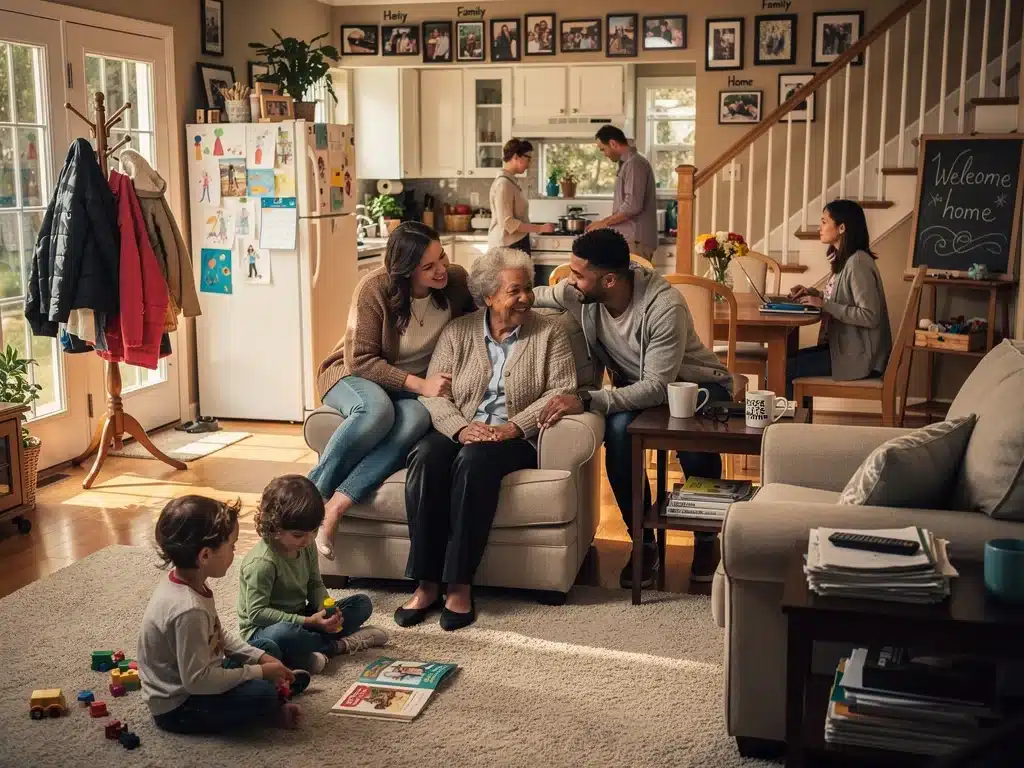
The aging of the US population is another significant demographic force. As life expectancy increases, more individuals are living longer, often alone or in multi-generational households where adult children care for elderly parents. This trend places increased demands on healthcare and social support systems.
The rise of the ‘sandwich generation’—adults caring for both their children and their aging parents—is a direct consequence of this demographic shift. This dynamic creates both challenges and opportunities for family bonding and support, redefining caregiving responsibilities within the family unit.
These demographic drivers collectively paint a picture of a nation undergoing profound change. From smaller families to more diverse compositions, the demographic forces at play are fundamentally reshaping family structures US 2026, requiring adaptive responses from institutions and communities alike.
Economic Influences on Household Formation
Economic conditions exert a substantial influence on how families are formed and how households are structured in the United States. Factors such as income inequality, housing affordability, and the cost of living directly impact decisions about marriage, childbearing, and cohabitation. These financial realities often dictate the practical arrangements of family life.
Understanding the economic pressures faced by American families is critical for comprehending the evolving landscape of family structures. Economic stability or instability can accelerate or decelerate trends in household formation, creating a ripple effect across society.
Housing Affordability and Multi-Generational Living
The escalating cost of housing in many parts of the US is a primary driver behind the increase in multi-generational households. Younger adults, facing student loan debt and stagnant wages, often find it financially prudent to live with parents or other relatives. Similarly, older adults may move in with their children for economic support or care.
This arrangement, while economically beneficial for some, can also introduce complexities in family dynamics, requiring clear communication and shared responsibilities. The economic rationale often outweighs traditional preferences for independent living, especially in high-cost urban areas.
Student Debt and Delayed Independence
A significant burden of student loan debt is a pervasive issue affecting millions of young Americans. This debt often delays major life milestones, such as marriage, homeownership, and starting a family. The financial pressure can prolong the period of economic dependence on parents, impacting household formation.
- Delayed Homeownership: Student debt can make it difficult to save for a down payment, pushing back the dream of owning a home.
- Later Marriage: Financial instability often leads to delaying marriage until a more secure economic footing is established.
- Reduced Savings: Debt repayment can significantly reduce disposable income and the ability to save for future family expenses.
The Gig Economy and Financial Instability
The rise of the gig economy, while offering flexibility, can also lead to financial instability for many workers. Irregular income and lack of benefits can make it challenging to plan for the long term, affecting decisions about family expansion and household structure. This can lead to greater reliance on family safety nets.
Families navigating the gig economy may opt for more fluid living arrangements, such as shared housing, to mitigate financial risks. The uncertainty inherent in this work model can influence everything from childcare choices to retirement planning, fundamentally altering how families manage their resources and structure their lives.
In summary, economic factors are powerful determinants of family structures US 2026. From housing costs to student debt and the nature of work, financial realities are compelling many Americans to adopt diverse and sometimes unconventional living arrangements, reshaping the very definition of a household.
Societal Norms and Cultural Shifts
Beyond demographics and economics, evolving societal norms and cultural shifts are profoundly reshaping family structures across the United States. Changing attitudes towards marriage, gender roles, and individual autonomy are leading to a broader acceptance of diverse family forms. These shifts reflect a more inclusive and less prescriptive view of what constitutes a family.
The interplay of these cultural forces with economic and demographic trends creates a dynamic environment where traditional expectations are continuously being re-evaluated. Understanding these shifts is crucial for grasping the full picture of American households in 2026.
Changing Perceptions of Marriage
Marriage, while still valued, is no longer seen as the only path to adulthood or family formation. More individuals are choosing to remain single, cohabit, or form families outside of traditional marital bounds. This reflects a greater emphasis on individual choice and personal fulfillment.
The institution of marriage itself is also adapting, with increasing acceptance of same-sex marriage and a broader understanding of partnership roles. These changes indicate a move away from rigid definitions towards a more flexible and individualized approach to committed relationships.
Evolving Gender Roles and Parental Responsibilities
Traditional gender roles within families are becoming increasingly fluid. More women are pursuing careers, and men are taking on more active roles in childcare and domestic responsibilities. This rebalancing of roles impacts everything from work-life balance to the division of labor within the household.
- Dual-Income Households: The norm for many families, requiring shared responsibilities and flexible work arrangements.
- Stay-at-Home Fathers: A growing trend, reflecting changing attitudes towards primary caregiver roles.
- Shared Parental Leave: Increasing availability and utilization, fostering greater involvement of both parents in early childcare.
Increased Acceptance of Diverse Family Forms
There is a growing societal acceptance of various family structures, including same-sex parent families, single-parent families by choice, and blended families. This inclusivity is driven by cultural shifts towards greater tolerance and understanding, reflected in media representation and public discourse.
This acceptance is not uniform across all regions or demographics but represents a significant national trend. As these diverse family forms become more visible and normalized, they contribute to a richer and more representative understanding of what family means in contemporary America.
Ultimately, societal norms and cultural shifts are powerful catalysts for change in family structures US 2026. They challenge established conventions and pave the way for a future where families are defined by love, commitment, and mutual support, rather than by rigid traditional models.
The Rise of Non-Traditional Households
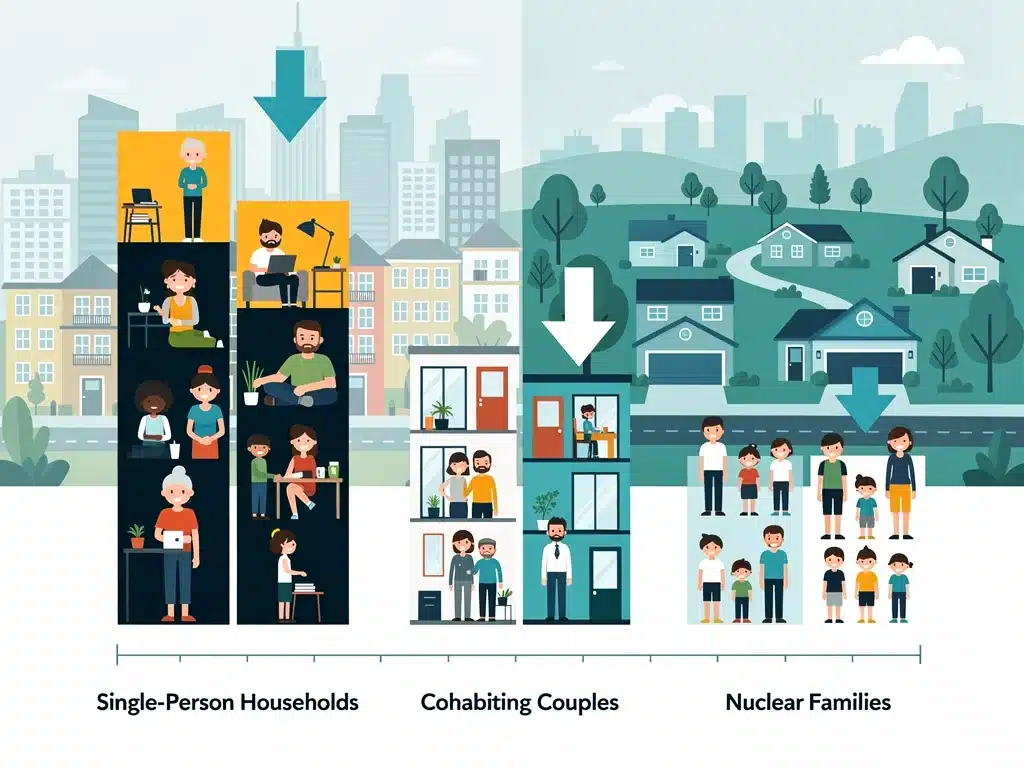
The landscape of US households is increasingly characterized by the proliferation of non-traditional living arrangements. These include single-person households, cohabiting couples without children, and various forms of chosen families. This diversification reflects a broader trend towards individualization and adaptation to modern life’s complexities.
As traditional family models continue to evolve, these non-traditional households are gaining prominence, challenging long-held assumptions about domestic life and community formation. Their growth requires a re-evaluation of social policies and urban planning to better accommodate their unique needs.
Single-Person Households on the Rise
The number of Americans living alone has been steadily increasing. This trend is influenced by delayed marriage, longer life expectancies, and a desire for independence. While some choose to live alone, others may do so due to circumstances such as widowhood or divorce.
Single-person households contribute to different consumption patterns and housing demands, often favoring smaller living spaces in urban environments. This demographic shift has implications for social engagement, community services, and the design of residential areas.
Cohabiting Couples and Chosen Families
Cohabitation has become a widely accepted living arrangement, particularly among younger generations. Many couples choose to live together as a step before marriage, or as a long-term alternative. This trend often reflects economic considerations and a desire for flexibility.
- Economic Advantages: Sharing expenses can be a significant motivator for cohabitation, especially in high-cost areas.
- Trial Period: Living together allows couples to test compatibility before making a long-term commitment like marriage.
- Personal Preference: Some individuals simply prefer cohabitation over marriage, valuing the autonomy it offers.
Beyond romantic partnerships, the concept of ‘chosen families’—groups of individuals who provide mutual support and consider themselves family, regardless of biological or legal ties—is also gaining recognition. This phenomenon is particularly prevalent in LGBTQ+ communities and among individuals who have moved away from their biological families.
The growing prevalence of non-traditional households underscores a fundamental shift in how Americans define and experience family life. These diverse arrangements highlight a move towards greater personal autonomy and a redefinition of support networks, profoundly influencing family structures US 2026.
Policy Implications and Future Outlook for US Families
The evolving landscape of family structures in the US presents significant challenges and opportunities for policymakers. As households become more diverse, traditional policies designed for nuclear families may no longer be adequate. A forward-thinking approach is necessary to ensure that all families receive the support they need to thrive.
Looking ahead to 2026 and beyond, understanding these implications is crucial for creating resilient communities and a supportive society. Policies must adapt to reflect the realities of modern American family life, fostering inclusivity and addressing emerging needs.
Adapting Social Services and Support Systems
Current social services often operate under assumptions rooted in traditional family models. As family structures diversify, there is an increasing need to adapt these services to be more inclusive and responsive to the needs of single-parent households, multi-generational families, and chosen families. This includes everything from childcare subsidies to elder care programs.
The demand for flexible work arrangements, affordable housing, and accessible mental health services will likely grow as families navigate complex living situations. Policymakers must consider these varied needs to build effective support systems that do not inadvertently exclude certain family types.
Rethinking Housing and Urban Planning
The shift towards smaller households, single-person dwellings, and multi-generational living calls for a re-evaluation of housing policies and urban planning. There is a need for more diverse housing options, including smaller units, accessory dwelling units (ADUs), and housing designed to accommodate multiple generations comfortably.
- Flexible Housing Options: Developing housing that can adapt to changing family sizes and compositions.
- Community-Oriented Design: Creating neighborhoods that foster social connections for diverse household types.
- Affordable Living Solutions: Addressing the housing affordability crisis to support various family structures.
Economic Policies for a Diverse Workforce
Economic policies must also evolve to support a workforce that increasingly comprises diverse family structures. This includes policies related to parental leave, sick leave, and flexible work schedules, which are vital for parents, caregivers, and individuals balancing multiple responsibilities.
Furthermore, policies aimed at reducing income inequality and providing a stronger social safety net will be crucial for the economic stability of all family types. The future of US households depends on economic policies that recognize and support the varied ways Americans form and maintain their families.
The future outlook for family structures US 2026 suggests a continued diversification, necessitating proactive policy responses. By embracing inclusivity and adapting our social and economic frameworks, we can ensure that all American families have the opportunity to thrive in an ever-changing world.
Navigating the Challenges and Embracing the Opportunities
The transformation of family structures in the US presents both significant challenges and unique opportunities. While adapting to new norms can be complex, it also opens doors for more inclusive communities, innovative social support systems, and a richer understanding of human connection. Addressing these aspects requires a balanced perspective that acknowledges difficulties while capitalizing on potential benefits.
As we move towards 2026, the ability of individuals and institutions to navigate these changes will determine the resilience and well-being of American families. It’s about fostering an environment where every family, regardless of its form, feels valued and supported.
Challenges in Adaptation and Support
One of the primary challenges lies in ensuring that social infrastructure and legal frameworks keep pace with the rapid evolution of family forms. Many existing systems, from tax codes to healthcare policies, were designed with a more traditional family unit in mind. Adapting these to accommodate single-parent, multi-generational, or chosen families can be a slow and arduous process.
Furthermore, societal biases and stigmas against non-traditional families, though diminishing, still exist in some areas. This can lead to feelings of isolation or lack of recognition for individuals and households that don’t fit conventional molds. Overcoming these challenges requires ongoing education and advocacy.
Opportunities for Community and Connection
Despite the challenges, the diversification of family structures also brings numerous opportunities. The rise of multi-generational households, for instance, can foster stronger intergenerational bonds, allowing for shared wisdom, mutual support, and increased resilience within the family unit. Grandparents might provide childcare, while younger generations offer technological assistance.
- Enhanced Support Networks: Diverse family forms often create broader, more flexible support systems, extending beyond immediate blood relatives.
- Richer Cultural Exchange: Blended and chosen families can bring together individuals from different backgrounds, fostering cultural understanding and empathy.
- Innovative Care Models: The need for adapted support encourages the development of new, creative solutions for childcare, elder care, and community engagement.
The increased acceptance of diverse family structures also creates opportunities for individuals to form relationships and living arrangements that genuinely meet their emotional and practical needs. This freedom of choice can lead to greater personal satisfaction and stronger, more authentic connections, ultimately enriching the social fabric of the nation.
Navigating the complex terrain of evolving family structures US 2026 demands both resilience and an open mind. By addressing the challenges head-on and embracing the opportunities for innovation and inclusivity, American society can build a future where all families are empowered to thrive, contributing to a more vibrant and supportive nation.
| Key Trend | Brief Description |
|---|---|
| Diversification of Family Units | Shift away from traditional nuclear families towards single-parent, blended, and chosen families. |
| Rise in Multi-Generational Households | Driven by economic pressures, housing costs, and caregiving needs for an aging population. |
| Increased Single-Person Households | Influenced by delayed marriage, longer lifespans, and personal independence. |
| Evolving Societal Acceptance | Growing embrace of varied family forms, including same-sex and cohabiting couples. |
Frequently Asked Questions About US Family Structures
The primary drivers include demographic shifts like declining birth rates and an aging population, economic factors such as housing affordability and student debt, and evolving societal norms concerning marriage and gender roles. These forces collectively contribute to a more diverse range of household compositions across the nation.
The rise of multi-generational households is increasing intergenerational support and resource sharing, often driven by economic necessity or caregiving needs. It affects housing demand, community services, and family dynamics, requiring new approaches to urban planning and social support systems.
Economic factors such as high housing costs, student loan debt, and financial instability from the gig economy significantly influence the formation of non-traditional households. Many individuals and couples choose cohabitation or multi-generational living to manage expenses and achieve greater financial security.
Yes, single-parent households are increasingly common, often facing challenges related to financial strain, childcare, and social support. These families demonstrate remarkable resilience but often require targeted policies and community resources to ensure their well-being and stability.
Evolving gender roles are leading to more equitable distribution of domestic and caregiving responsibilities, with more women pursuing careers and men taking active roles in parenting. This shift contributes to dual-income households and flexible work arrangements, redefining traditional family dynamics and expectations.
Conclusion
The portrait of American family life in 2026 is one of remarkable diversity and ongoing evolution. Driven by a confluence of demographic shifts, economic realities, and changing societal values, the traditional nuclear family model is increasingly complemented by a rich tapestry of single-parent, multi-generational, cohabiting, and chosen families. This dynamic landscape necessitates adaptive policies, inclusive social services, and a broader understanding of what it means to be a family in the 21st century. Embracing these changes with foresight and empathy will be key to fostering resilient communities and ensuring that all US households can thrive in the years to come.