Gig Economy’s Evolution: 7 Key Changes for US Workers in 2026

The gig economy is rapidly evolving, bringing significant shifts for US workers by 2026. These changes encompass new regulatory frameworks, enhanced benefits, and deeper technological integration, reshaping the future of work for millions.
The gig economy has fundamentally reshaped how Americans work, offering unprecedented flexibility and new avenues for earning. But what does the future hold? By 2026, a series of transformative shifts are expected to redefine this dynamic landscape. Understanding the gig economy’s evolution: 7 key changes for US workers to expect in 2026 is crucial for anyone navigating this increasingly prevalent work model.
Enhanced worker protections and benefits
As the gig economy matures, the debate surrounding worker classification and benefits has intensified. By 2026, US workers in the gig economy can anticipate more robust protections and access to benefits that were once exclusive to traditional employment.
This shift is driven by a combination of legislative efforts, court rulings, and increased advocacy from gig worker groups. The goal is to strike a balance between the flexibility inherent in gig work and the need for a social safety net.
The push for portable benefits
One of the most significant changes will be the widespread adoption of portable benefits models. These systems allow gig workers to accrue benefits like health insurance, paid time off, and retirement savings that are tied to the worker, not a single platform or employer.
- Health Savings Accounts (HSAs): Expect more platforms to facilitate contributions to HSAs, often with matching options.
- Retirement plans: Increased access to Roth IRAs or simplified 401(k)s tailored for independent contractors.
- Paid time off funds: Collective funds that gig workers can contribute to, allowing for paid sick leave or vacation time.
- Worker compensation alternatives: Innovative insurance products designed specifically for the unique risks faced by gig workers.
These portable benefits aim to address the precariousness often associated with gig work, providing a foundation of financial security and well-being. This will significantly alter the calculus for individuals considering or currently engaged in gig roles, making them more attractive and sustainable long-term career paths.
Stricter regulatory frameworks and classification clarity
The legal landscape surrounding gig work has been notoriously ambiguous, leading to ongoing disputes over worker classification. By 2026, expect a much clearer and potentially stricter regulatory environment for gig platforms and workers across the United States.
States and the federal government are increasingly recognizing the need for consistent rules to define who is an independent contractor versus an employee. This clarity will have profound implications for both platforms and the workers who rely on them.
Federal and state-level interventions
Several states have already taken steps to regulate the gig economy, with varying degrees of success and controversy. By 2026, a more harmonized approach, possibly with federal guidelines or model legislation, is likely to emerge.
- ABC test expansion: More states may adopt variations of the ‘ABC test’ to determine worker classification, making it harder for companies to classify workers as independent contractors.
- Industry-specific regulations: Certain sectors within the gig economy, such as ride-sharing and delivery, may face tailored regulations reflecting their unique operational models.
- Increased enforcement: Government agencies will likely increase their oversight and enforcement efforts to ensure compliance with new classification rules, leading to higher penalties for non-compliant platforms.
This regulatory evolution seeks to provide gig workers with greater legal protections and avenues for recourse, while also establishing a more predictable operating environment for gig companies. The days of operating in a largely unregulated grey area are drawing to a close, ushering in an era of greater accountability and standardization.

Rise of specialized and skilled gig work
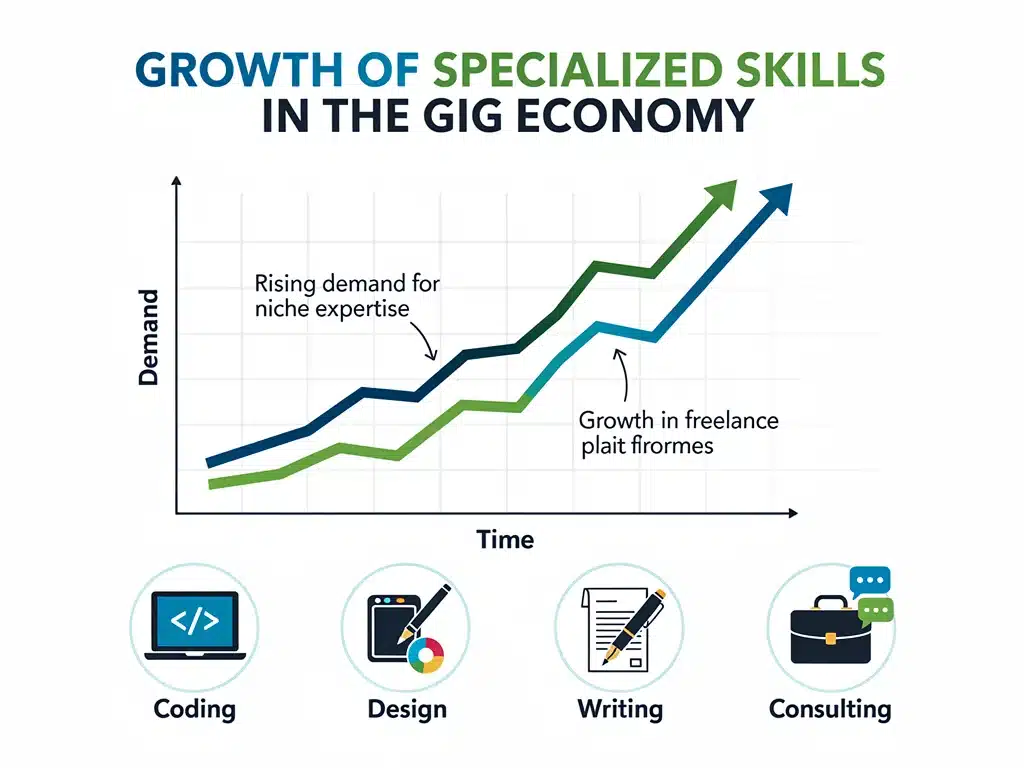
While the early gig economy was often characterized by low-skill, on-demand tasks, 2026 will see a significant acceleration in the demand for specialized and highly skilled gig workers. The market is maturing, and businesses are increasingly turning to flexible talent for complex projects.
This shift reflects a broader trend of companies optimizing their workforce for agility and access to niche expertise without the overhead of full-time employment. Gig workers with advanced skills will find themselves in high demand.
Premium skills in high demand
The types of skills commanding premium rates in the gig economy are expanding beyond traditional creative and tech roles. We’ll see a surge in opportunities for professionals in areas requiring deep knowledge and experience.
- AI and machine learning specialists: Companies will seek gig experts to develop, implement, and manage AI solutions.
- Data scientists and analysts: Demand for professionals who can extract insights from vast datasets will continue to grow.
- Cybersecurity consultants: As digital threats evolve, businesses will rely on gig specialists for robust protection.
- Digital marketing strategists: Experts in SEO, content marketing, and social media will be crucial for brand visibility.
This move towards specialized gig work means that continuous learning and skill development will be paramount for gig economy participants. Those who invest in acquiring and refining high-demand skills will be best positioned to thrive in this evolving landscape, commanding higher rates and more fulfilling projects.
Integration of AI and automation in gig platforms
Artificial intelligence and automation are not just creating new gig opportunities; they are also transforming how gig platforms operate. By 2026, AI will be deeply integrated into nearly every aspect of the gig economy, from task matching to performance evaluation.
This integration aims to enhance efficiency, personalize experiences, and optimize outcomes for both platforms and workers. While it brings significant benefits, it also raises questions about fairness and transparency.
AI-powered efficiency and personalization
Gig platforms will leverage AI to create more seamless and intelligent experiences. This will manifest in several ways, making gig work potentially more productive and tailored.
- Smarter task allocation: AI algorithms will match workers to tasks based on skills, location, availability, and even predicted performance, reducing idle time.
- Personalized learning paths: Platforms may offer AI-driven recommendations for skill development, helping workers stay competitive.
- Automated customer support: Chatbots and AI assistants will handle routine inquiries, freeing up human agents for complex issues.
- Dynamic pricing models: AI will continuously adjust pricing for tasks based on demand, supply, and other market factors, potentially benefiting both workers and clients.
While AI promises to streamline operations and enhance worker autonomy through better matching, it also necessitates a critical look at algorithmic bias and the need for human oversight. Understanding how these intelligent systems work will become increasingly important for gig workers to optimize their earnings and opportunities.
Increased focus on worker well-being and community
The isolated nature of gig work has often been cited as a challenge, leading to feelings of detachment and lack of support. By 2026, there will be a much stronger emphasis on fostering worker well-being and building communities within the gig economy.
Platforms and independent organizations are recognizing that a healthy and connected workforce is more productive and loyal. This focus will lead to innovative solutions designed to combat isolation and promote mental and physical health.
Building connections and support systems
Efforts to enhance gig worker well-being will go beyond just offering benefits, extending to creating environments where workers feel supported and connected.
- Platform-facilitated networks: Gig platforms will invest in features that allow workers to connect with peers, share experiences, and offer mutual support.
- Mental health resources: Access to counseling services, stress management tools, and mental health support will become more common.
- Co-working spaces: Partnerships with co-working facilities or creation of dedicated hubs for gig workers to foster collaboration and reduce isolation.
- Advocacy groups: The rise of more organized and influential gig worker associations advocating for better conditions and community building.
This emphasis on well-being and community is a crucial step towards making gig work a more holistic and sustainable career choice. It acknowledges the human element of independent contracting, moving beyond purely transactional relationships to foster a sense of belonging and shared purpose.
Hybrid work models and blended employment
The traditional dichotomy between full-time employment and gig work is blurring. By 2026, hybrid work models and blended employment structures will become increasingly common, allowing individuals to combine elements of both worlds.
This evolution reflects a desire for both stability and flexibility, with workers seeking arrangements that offer the best of both employment types. Companies, in turn, are becoming more open to innovative staffing solutions.
The rise of the ‘portfolio career’
Many workers will adopt a ‘portfolio career’ approach, combining a part-time traditional job with several gig contracts. This strategy offers diversification of income and skill development.
- Part-time traditional roles + gig projects: A stable base income combined with flexible, project-based work for supplementary earnings and skill variety.
- Retainers for gig workers: Companies offering long-term retainers to highly valued gig contractors, providing a form of stable income without full employee status.
- Project-based team integration: Gig workers being integrated into traditional project teams for specific durations, blurring the lines between internal and external talent.
- Unionization of gig workers: While still nascent, increased unionization efforts could lead to collective bargaining for better hybrid arrangements and benefits.
This blend of employment types offers workers greater control over their careers and financial stability. It also allows companies to tap into a wider talent pool, accessing specialized skills as needed without committing to permanent, full-time hires for every role.
Global competition and cross-border gig opportunities
The internet has always made the gig economy global, but by 2026, US gig workers will face intensified global competition while also gaining unprecedented access to cross-border opportunities. The digital marketplace is expanding, creating both challenges and vast potential.
This global interconnectedness means that skills and pricing will increasingly be benchmarked against an international talent pool. However, it also opens doors for US workers to offer their services to clients worldwide, diversifying their income streams.
Navigating the global gig landscape
Success in this globalized gig economy will require strategic thinking and adaptability. US workers will need to understand how to leverage their unique advantages while also preparing for increased competition.
- Highlighting unique value propositions: Emphasizing quality, reliability, and specialized skills that stand out in a global market.
- Understanding international payment systems: Familiarity with cross-border payment platforms and currency exchange rates.
- Cultural competency: Developing an understanding of different business cultures and communication styles for international clients.
- Time zone management: Efficiently managing projects and communication across diverse time zones to serve a global clientele.
The global gig economy presents a double-edged sword: increased competition from lower-cost labor markets and a vastly expanded client base. US gig workers who can adapt, specialize, and effectively market their skills on a global scale will find significant opportunities for growth and income diversification.
| Key Change | Brief Description |
|---|---|
| Worker Protections | Expect more robust benefits and safety nets for gig workers. |
| Regulatory Clarity | Stricter rules on worker classification to reduce ambiguity. |
| Specialized Gig Work | Increased demand for highly skilled professionals in niche areas. |
| AI Integration | AI and automation will streamline task matching and operations. |
Frequently asked questions
Yes, by 2026, it’s highly probable that gig workers will see increased access to portable benefits, including health insurance options, retirement plans, and paid time off. Legislative efforts and platform innovations are driving this shift, aiming to provide a more comprehensive safety net for independent contractors.
AI will significantly impact gig work by 2026, primarily through improved task matching and platform efficiency. While some routine tasks might be automated, AI will also create new demands for specialized skills in areas like AI development, data analysis, and digital strategy, leading to new opportunities for skilled gig workers.
The trend suggests a move towards clearer and potentially stricter worker classification rules by 2026. While not all gig workers will be reclassified as employees, there will be increased regulatory scrutiny, possibly through tests like the ‘ABC test,’ making it more challenging for platforms to classify workers as independent contractors in certain contexts.
Portable benefits refer to benefits like health insurance, retirement savings, and paid time off that are tied to the individual worker rather than a specific employer or platform. This model allows gig workers to maintain their benefits even as they switch between different gigs or platforms, providing crucial financial stability and security.
To prepare for increased global competition, US gig workers should focus on developing specialized, high-demand skills, highlighting unique value propositions, and understanding international payment systems and cultural nuances. Leveraging platforms that connect them with global clients can also open up new opportunities.
Conclusion
The gig economy in the United States is on the cusp of a profound transformation, with 2026 marking a pivotal point for workers. From enhanced protections and clearer regulations to the rise of specialized roles and deeper AI integration, the landscape is becoming more structured yet increasingly dynamic. Workers who proactively adapt to these changes by embracing continuous learning, seeking portable benefits, and understanding the evolving global marketplace will be best positioned to thrive. The future of gig work promises a more mature, integrated, and potentially more secure environment for millions, reshaping the very definition of employment in America.