Cybersecurity Threats U.S. Businesses Must Address by Q3 2026
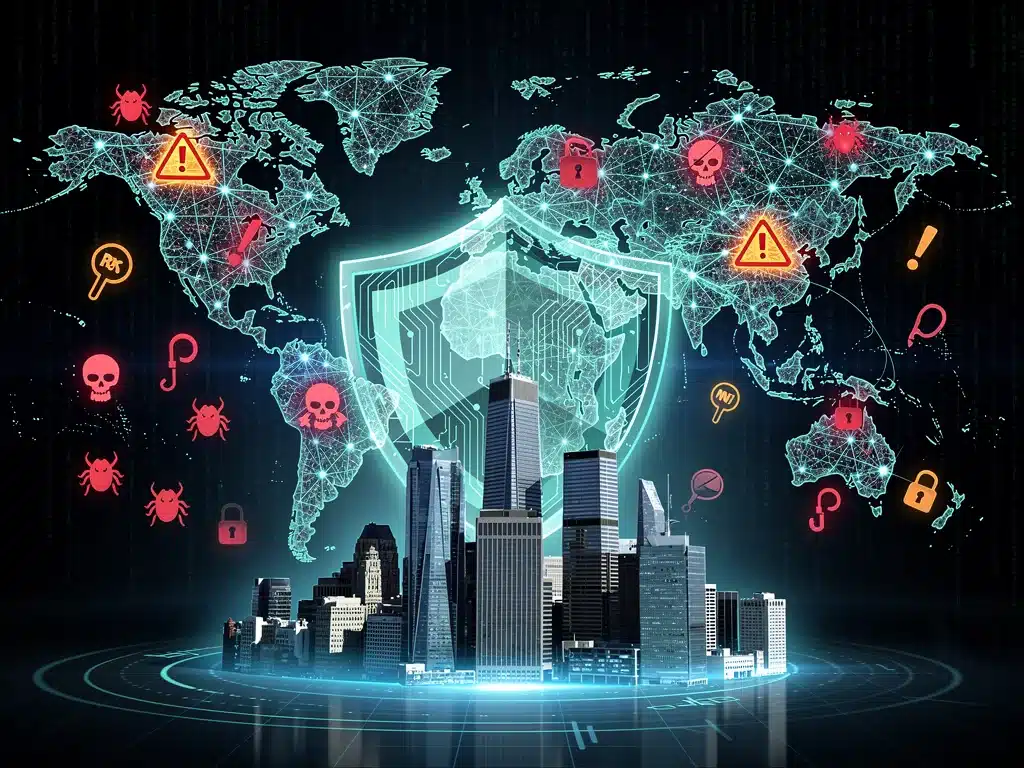
U.S. businesses must urgently address five critical cybersecurity threats by Q3 2026, including sophisticated AI-powered attacks, supply chain vulnerabilities, and persistent ransomware, to safeguard data and operational integrity.
The digital landscape is evolving at an unprecedented pace, presenting both opportunities and significant risks. For U.S. businesses, the window to fortify defenses against emerging cyber threats is rapidly closing, with a critical deadline looming: Q3 2026. Proactive measures are no longer optional; they are essential for survival. This article delves into the 5 Critical Cybersecurity Threats U.S. Businesses Must Address by Q3 2026 (TIME-SENSITIVE) to ensure resilience in an increasingly hostile online environment.
The rise of AI-powered cyber attacks
Artificial intelligence (AI) is a double-edged sword. While it offers immense potential for innovation and efficiency, it also equips malicious actors with unprecedented capabilities. By Q3 2026, AI-powered cyber attacks will become more sophisticated, personalized, and harder to detect, posing a significant challenge to traditional defense mechanisms. Businesses need to understand how these advanced threats operate to build effective countermeasures.
Automated reconnaissance and exploitation
AI algorithms can rapidly scan vast networks for vulnerabilities, identify patterns, and even craft custom exploit code far more efficiently than human attackers. This automation reduces the time between a vulnerability’s discovery and its exploitation, shrinking the window for defenders to patch systems. The speed and scale of these automated attacks demand equally rapid and intelligent responses from businesses.
- Targeted phishing campaigns: AI can generate highly convincing phishing emails, tailored to individual employees based on publicly available information, making them almost indistinguishable from legitimate communications.
- Polymorphic malware: AI-driven malware can constantly change its code signature, evading traditional signature-based antivirus software and making detection exceedingly difficult.
- Autonomous attack execution: AI agents can coordinate multi-stage attacks, adapting in real-time to defensive actions, making them highly persistent and effective.
The implications are clear: U.S. businesses must invest in AI-driven defensive solutions that can match the sophistication of AI-powered attacks. This includes advanced threat detection systems, behavioral analytics, and automated incident response platforms. Relying solely on human analysts will be insufficient against the speed and scale of these emerging threats.
Supply chain vulnerabilities: a growing attack vector
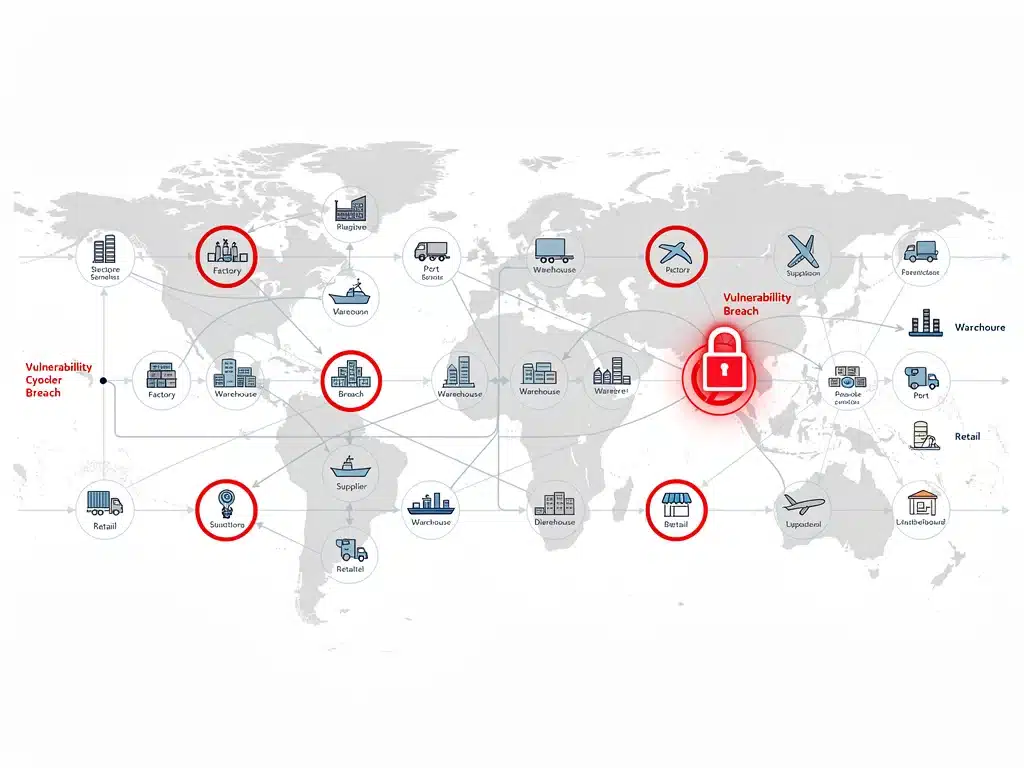
The interconnectedness of modern business ecosystems means that a breach in one organization can rapidly propagate through its entire supply chain. By Q3 2026, supply chain attacks are projected to be among the most damaging cyber threats, as attackers exploit the weakest link to gain access to more lucrative targets. Understanding and mitigating these risks is paramount for U.S. businesses.
Many organizations focus heavily on their internal security but overlook the vulnerabilities present in their third-party vendors, suppliers, and partners. These external entities often have access to critical systems, data, or intellectual property, making them attractive targets for cybercriminals. A single compromised vendor can open the floodgates to an entire network of businesses.
Key areas of supply chain risk
Supply chain vulnerabilities are multifaceted, extending beyond just software components. They encompass hardware, services, and even the human element within partner organizations. Businesses must adopt a holistic view of their supply chain security to identify and address potential weak points effectively.
- Software supply chain: Compromised open-source libraries, malicious updates, or backdoors inserted into commercial software can affect numerous downstream users.
- Hardware supply chain: Tampered hardware components or counterfeit devices can introduce vulnerabilities at the foundational level of IT infrastructure.
- Third-party service providers: Managed service providers (MSPs), cloud providers, and other vendors with privileged access to a business’s systems represent significant potential entry points.
To combat this threat, U.S. businesses need to implement robust vendor risk management programs, conduct thorough security assessments of all third-party partners, and enforce strict security clauses in contracts. Continuous monitoring of supply chain integrity will be crucial to detect and respond to compromises quickly.
Ransomware’s evolution: more sophisticated and targeted
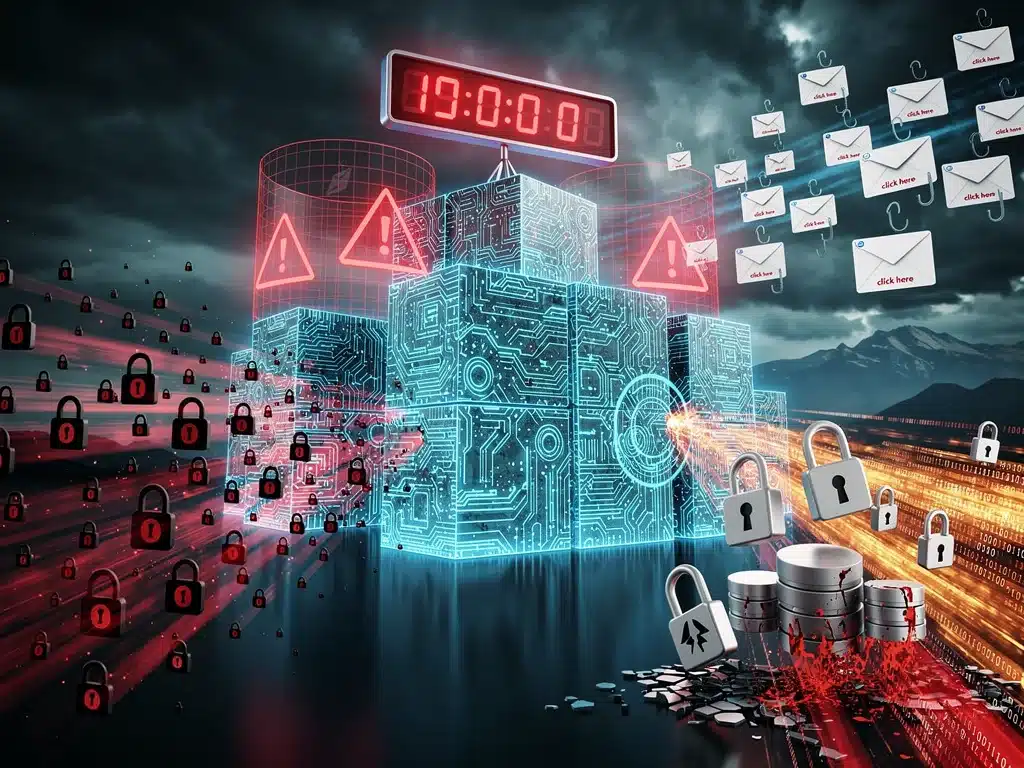
Ransomware has been a persistent threat for years, but by Q3 2026, it will evolve into an even more sophisticated and damaging form. Attackers are moving beyond simple encryption to multi-extortion tactics, targeting critical infrastructure, and leveraging advanced evasion techniques. This evolution demands a more resilient and proactive defense strategy from U.S. businesses.
Modern ransomware attacks often involve data exfiltration before encryption. This ‘double extortion’ tactic puts immense pressure on victims, as paying the ransom does not guarantee data will not be leaked or sold on the dark web. Furthermore, attackers are increasingly targeting specific industries and organizations with tailored campaigns, increasing their chances of success and maximizing potential payouts.
Advanced ransomware tactics
The sophistication of ransomware operations has grown significantly. Attackers now employ a range of techniques, from initial access to payload delivery, that are designed to bypass conventional security measures and maximize disruption. Understanding these tactics is the first step toward building effective defenses.
- Ransomware-as-a-Service (RaaS): This model lowers the barrier to entry for cybercriminals, making sophisticated ransomware readily available to a wider range of malicious actors.
- Targeting backups: Attackers increasingly aim to compromise and encrypt or delete backup systems, preventing organizations from recovering data without paying the ransom.
- Operational technology (OT) targeting: Ransomware is increasingly targeting industrial control systems (ICS) and OT environments, posing significant risks to critical infrastructure and manufacturing.
U.S. businesses must prioritize robust backup and recovery strategies, implement strong network segmentation, deploy advanced endpoint detection and response (EDR) solutions, and conduct regular incident response drills. Employee training on phishing and social engineering remains a crucial first line of defense against initial ransomware infiltration.
The persistent threat of advanced persistent threats (APTs)
Advanced Persistent Threats (APTs) represent a significant and ongoing danger to U.S. businesses, particularly those holding valuable intellectual property, critical infrastructure data, or sensitive government information. Unlike opportunistic attacks, APTs are characterized by their long-term presence, stealth, and specific targeting, often backed by nation-states or highly organized criminal groups. By Q3 2026, their sophistication and ability to remain undetected will pose an even greater challenge.
APTs often involve multiple phases, from initial compromise and privilege escalation to lateral movement within a network and data exfiltration. Their operators are patient, adaptable, and highly skilled, making them extremely difficult to detect with traditional security tools. They aim to establish a persistent foothold to achieve specific objectives, such as espionage, sabotage, or long-term data theft.
Tactics and characteristics of APTs
Understanding the modus operandi of APT groups is crucial for developing effective defensive strategies. Their methods are constantly evolving, but certain characteristics remain consistent, allowing organizations to tailor their security posture.
- Stealth and evasion: APTs employ sophisticated techniques to avoid detection, including custom malware, fileless attacks, and living-off-the-land binaries, blending into normal network traffic.
- Patience and persistence: These attackers are willing to spend months or even years inside a network, slowly gathering information and expanding their access until their objectives are met.
- Targeted social engineering: Highly customized phishing and spear-phishing campaigns are often used to gain initial access, exploiting specific individuals within an organization.
To counter APTs, U.S. businesses need a multi-layered security approach focusing on threat intelligence, continuous monitoring, behavioral analytics, and strong network segmentation. Investing in security operations centers (SOCs) or managed detection and response (MDR) services can provide the specialized expertise needed to identify and respond to these elusive threats.
Data privacy regulations and compliance risks
Beyond direct cyber attacks, U.S. businesses face increasing pressure from evolving data privacy regulations. Non-compliance by Q3 2026 can lead to severe financial penalties, reputational damage, and legal repercussions. The landscape of privacy laws, both federal and state-level, is complex and constantly shifting, requiring diligent attention to data governance and security practices.
Regulations like the California Consumer Privacy Act (CCPA), Virginia Consumer Data Protection Act (VCDPA), and upcoming federal privacy laws mandate specific requirements for how businesses collect, process, store, and protect personal data. These laws often grant consumers new rights over their data, such as the right to access, delete, or opt-out of sales, placing significant operational burdens on companies.
Navigating the regulatory maze
The patchwork of U.S. data privacy laws makes compliance a significant challenge. Businesses operating across different states or handling data from various jurisdictions must understand and adhere to multiple, sometimes conflicting, requirements. A proactive and comprehensive approach to data privacy is essential.
- Data mapping: Understanding what data is collected, where it is stored, how it is processed, and who has access to it is fundamental for compliance.
- Privacy by design: Integrating privacy considerations into the design of systems, products, and services from the outset helps ensure compliance and reduces risks.
- Consent management: Implementing robust mechanisms for obtaining, managing, and revoking user consent for data collection and processing is crucial.
U.S. businesses should establish a dedicated privacy program, appoint a data protection officer (or equivalent), conduct regular privacy impact assessments, and provide ongoing employee training. Legal counsel specializing in data privacy is invaluable for navigating the intricate regulatory environment and ensuring adherence to all applicable laws before the Q3 2026 deadline.
Building a resilient cybersecurity posture for the future
Addressing the critical cybersecurity threats outlined above requires more than just reactive measures; it demands a strategic, proactive, and continuously evolving approach. U.S. businesses must recognize that cybersecurity is not merely an IT issue but a fundamental business risk that requires executive-level attention and investment. The deadline of Q3 2026 is not just a date; it’s a call to action for comprehensive security transformation.
A truly resilient cybersecurity posture is built upon a foundation of robust technology, well-trained personnel, and well-defined processes. It involves fostering a security-aware culture throughout the organization, from the board room to the front lines. Ignoring these threats is no longer an option, as the financial, reputational, and operational consequences of a breach can be catastrophic.
Essential components of a future-ready defense
To effectively combat the evolving threat landscape, businesses need to integrate several key components into their cybersecurity strategy. These elements work synergistically to create a strong, adaptive defense against both current and future attacks.
- Zero Trust architecture: Implement a ‘never trust, always verify’ model, assuming no user or device is inherently trustworthy, regardless of location.
- Threat intelligence integration: Continuously monitor and integrate up-to-date threat intelligence to anticipate attacks and proactively strengthen defenses.
- Security awareness training: Regular and engaging training for all employees on the latest phishing techniques, social engineering, and security best practices.
- Incident response planning: Develop, test, and refine a comprehensive incident response plan to minimize the impact of successful attacks.
By Q3 2026, businesses that have invested in these areas will be far better positioned to withstand sophisticated cyber attacks and maintain operational continuity. Those that fail to adapt risk becoming statistics in an increasingly dangerous digital world. The time for action is now, focusing on layered security, continuous improvement, and a proactive mindset to safeguard assets and customer trust.
| Threat Category | Brief Description |
|---|---|
| AI-Powered Attacks | Sophisticated, automated attacks leveraging AI for reconnaissance, phishing, and malware, making them harder to detect and mitigate. |
| Supply Chain Vulnerabilities | Exploiting weak links in third-party vendors and partners to gain access to target organizations, affecting software, hardware, and services. |
| Evolving Ransomware | Ransomware becoming more targeted, using multi-extortion tactics, and increasingly targeting critical infrastructure and backups. |
| Data Privacy Compliance | Navigating complex and evolving federal and state data privacy regulations to avoid severe penalties and reputational damage. |
Frequently asked questions about cybersecurity threats
Q3 2026 represents a critical juncture due to the accelerated evolution of cyber threats, including advanced AI-driven attacks and more sophisticated ransomware. This timeline highlights the urgent need for businesses to implement robust defenses before these threats become unmanageable and cause widespread disruption and financial losses.
Defending against AI-powered attacks requires an adaptive approach. Businesses should deploy AI-driven defense systems, such as advanced threat detection and behavioral analytics, that can match the speed and sophistication of these threats. Continuous monitoring, machine learning-based anomaly detection, and automated response mechanisms are also vital.
Supply chain vulnerabilities pose risks such as data breaches originating from third-party vendors, introduction of malicious software through compromised updates, and hardware tampering. These breaches can cascade, affecting numerous interconnected organizations, leading to widespread operational disruptions and significant financial and reputational damage across the entire ecosystem.
To mitigate ransomware risks, businesses must implement robust data backup and recovery plans, practice strong network segmentation, and deploy advanced endpoint detection and response (EDR) solutions. Regular employee training on phishing awareness, multi-factor authentication (MFA), and incident response planning are also crucial for preventing and recovering from attacks.
Data privacy compliance is a critical threat because evolving regulations (e.g., CCPA, VCDPA) impose stringent requirements on data handling. Non-compliance can result in hefty fines, legal action, and severe reputational damage. Businesses must proactively implement privacy-by-design principles, data mapping, and consent management to avoid these significant legal and financial repercussions.
Conclusion
The cybersecurity landscape for U.S. businesses is undergoing a rapid and profound transformation. The approaching Q3 2026 deadline serves as a stark reminder that complacency is no longer an option. From the pervasive threat of AI-powered attacks and vulnerable supply chains to the evolving nature of ransomware, sophisticated APTs, and complex data privacy regulations, the challenges are multifaceted and demanding. Proactive investment in advanced security technologies, comprehensive employee training, and robust incident response planning are not just best practices; they are essential pillars for survival and resilience. Businesses that prioritize and strategically address these critical cybersecurity threats now will be the ones best positioned to thrive securely in the digital future, safeguarding their assets, their reputation, and their continued success.