Minimizing Cloud Sprawl: Cost-Saving for U.S. Tech in 2026
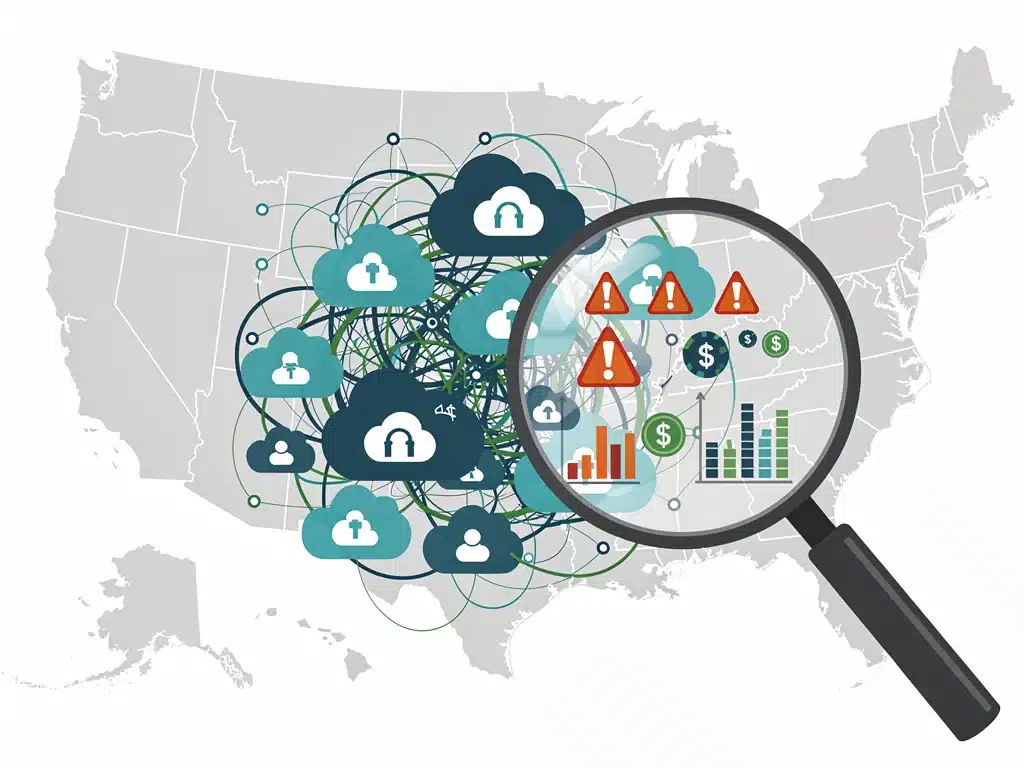
Effectively minimizing cloud sprawl is crucial for U.S. tech operations in 2026, requiring strategic approaches to resource management and cost optimization to enhance efficiency and reduce unnecessary expenditures.
In the dynamic landscape of U.S. tech operations, the challenge of minimizing cloud sprawl has become increasingly critical. As businesses continue to embrace cloud-native architectures and expand their digital footprints, the unchecked proliferation of cloud resources can lead to significant financial drain and operational inefficiencies. This article delves into practical, actionable strategies designed to help U.S. tech companies rein in their cloud environments, ensuring optimal performance without compromising fiscal responsibility in 2026.
Understanding Cloud Sprawl and Its Impact
Cloud sprawl refers to the uncontrolled growth of an organization’s cloud infrastructure, often characterized by unused, underutilized, or redundant resources. This phenomenon is a direct consequence of rapid cloud adoption, where provisioning resources becomes easier than monitoring and optimizing them. For U.S. tech operations, the financial implications of cloud sprawl can be substantial, leading to inflated bills and reduced return on investment.
Beyond financial costs, cloud sprawl introduces significant operational complexities. Managing a chaotic cloud environment can strain IT teams, increase security risks due to unmonitored assets, and hinder agility. As companies scale, addressing sprawl proactively becomes essential for maintaining competitive edge and operational excellence. Ignoring it only compounds the problem, making remediation more challenging and costly over time.
Common Causes of Cloud Sprawl
Several factors contribute to cloud sprawl, often stemming from a lack of centralized oversight and clear policies. Understanding these root causes is the first step toward effective mitigation.
- Decentralized Provisioning: Teams provisioning resources independently without a unified strategy.
- Lack of Decommissioning Policies: Resources remaining active long after their intended use, such as test environments or old projects.
- Shadow IT: Departments or individuals using unauthorized cloud services, leading to unmanaged assets.
- Over-provisioning: Allocating more resources than necessary, often as a precautionary measure, resulting in underutilization.
Effective management requires a holistic view of cloud assets and a commitment to continuous monitoring and optimization. By identifying and addressing these underlying issues, U.S. tech companies can lay the groundwork for a more efficient and cost-effective cloud infrastructure.
Implementing Robust Cloud Governance and Policy
Effective cloud governance is the cornerstone of preventing and minimizing cloud sprawl. Without clear policies and centralized control, even the most diligent teams can inadvertently contribute to resource proliferation. For U.S. tech operations, establishing a strong governance framework ensures that cloud resources are provisioned, managed, and decommissioned according to organizational standards.
A comprehensive governance strategy involves defining roles and responsibilities, setting budgetary controls, and establishing automated policies for resource lifecycle management. This proactive approach helps to curb uncontrolled growth before it becomes a significant issue, fostering a culture of accountability and efficiency across all cloud users.
Key Components of Cloud Governance
Building a robust governance framework requires attention to several critical areas, each designed to bring order and control to cloud environments.
- Centralized Resource Management: Implementing tools and processes for a single pane of glass view of all cloud assets.
- Tagging and Naming Conventions: Enforcing consistent tagging to track ownership, purpose, and cost allocation for every resource.
- Automated Policy Enforcement: Using cloud provider services or third-party tools to automatically enforce rules for resource provisioning, scaling, and decommissioning.
- Access Control and Permissions: Implementing strict access controls to prevent unauthorized resource creation or modification.
These components work in concert to create an environment where cloud resources are managed strategically, reducing the likelihood of sprawl and ensuring that every dollar spent in the cloud delivers maximum value. Regular audits and reviews are also vital to ensure policies remain relevant and effective.
Leveraging Automated Cloud Cost Optimization Tools
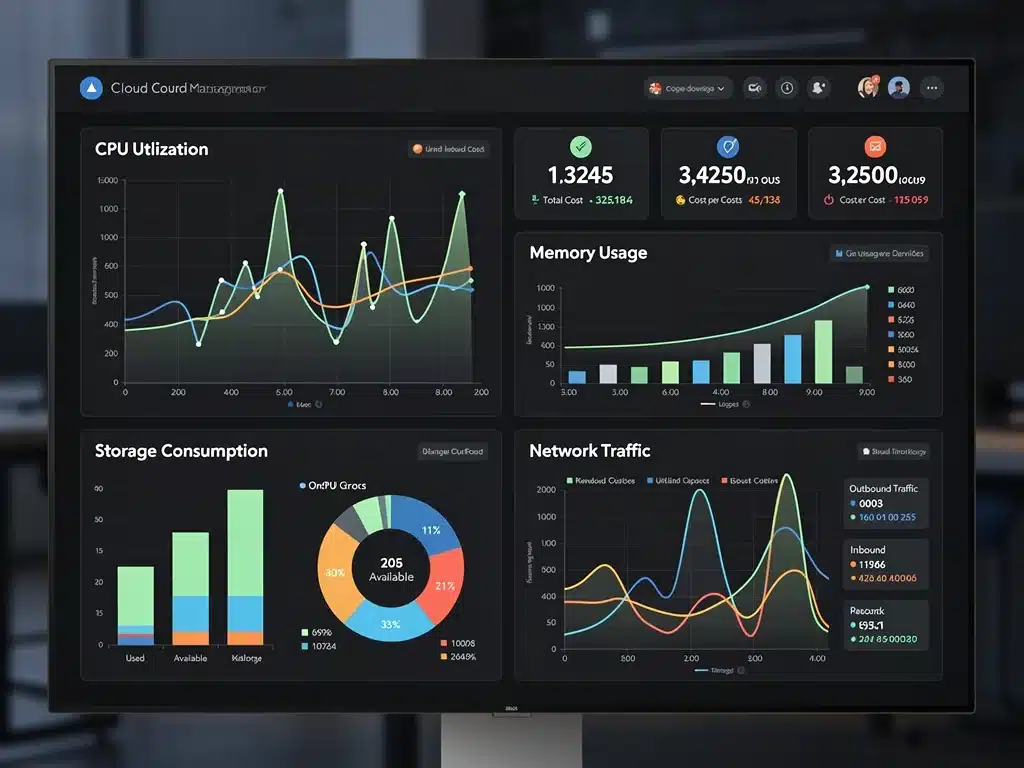
In 2026, manual cloud cost management is simply not sustainable for U.S. tech operations facing complex and dynamic cloud environments. Automated cost optimization tools are indispensable for identifying waste, rightsizing resources, and enforcing budget limits. These solutions provide real-time visibility into spending patterns and offer actionable recommendations to reduce costs without impacting performance.
By automating the process of identifying idle resources, optimizing storage tiers, and managing reserved instances, companies can achieve significant savings. These tools often integrate with existing cloud platforms, offering a seamless experience for engineers and finance teams alike, enabling data-driven decisions that directly impact the bottom line.
Benefits of Automation in Cost Management
Automated tools offer a multitude of advantages, transforming how U.S. tech companies approach cloud financial management.
- Real-time Cost Visibility: Instantly identify where money is being spent and uncover unexpected charges.
- Resource Rightsizing: Automatically adjust resource capacities (CPU, RAM) to match actual demand, eliminating over-provisioning.
- Idle Resource Detection: Flag and often automatically shut down or de-provision unused instances, databases, or storage volumes.
- Commitment Management: Optimize the use of Reserved Instances (RIs) and Savings Plans (SPs) to maximize discounts.
The integration of these tools into daily operations not only reduces costs but also frees up valuable engineering time, allowing teams to focus on innovation rather than manual resource adjustments. This shift towards intelligent, automated optimization is a key strategy for minimizing cloud sprawl effectively.
Adopting FinOps Principles for Financial Accountability
FinOps, or Cloud Financial Operations, is a cultural practice that brings financial accountability to the variable spend model of the cloud. It’s an operational framework that unites finance, technology, and business teams to make data-driven spending decisions. For U.S. tech operations, adopting FinOps principles is crucial for achieving continuous cloud cost optimization and actively minimizing cloud sprawl.
FinOps promotes collaboration, visibility, and optimization, ensuring that every dollar spent in the cloud is justified and aligned with business objectives. It moves beyond simply reacting to cloud bills by embedding cost awareness into the entire software development lifecycle, from design to deployment and beyond. This proactive approach helps to instill a sense of financial ownership among technical teams.
Pillars of a Successful FinOps Implementation
A successful FinOps framework is built upon three core pillars: Inform, Optimize, and Operate, each with distinct activities and objectives.
- Inform: Providing accurate, timely, and granular visibility into cloud costs to all stakeholders. This includes detailed dashboards, cost allocation reports, and anomaly detection.
- Optimize: Taking action based on cost insights, such as rightsizing instances, managing commitments (RIs/SPs), and identifying idle resources. This pillar often involves close collaboration between engineering and finance.
- Operate: Continuously improving FinOps practices through automation, policy enforcement, and establishing a feedback loop for ongoing optimization. This ensures sustained cost efficiency.
By integrating these principles, U.S. tech companies can transform their cloud spending from a reactive expense into a strategic investment, fostering a culture where cost efficiency is a shared responsibility and a continuous pursuit. This holistic approach is invaluable for minimizing cloud sprawl and achieving sustainable cloud value.
Strategic Resource Tagging and Lifecycle Management
One of the most effective yet often overlooked strategies for minimizing cloud sprawl is the implementation of robust resource tagging and comprehensive lifecycle management. For U.S. tech operations, consistent tagging provides essential metadata for every cloud resource, enabling better visibility, cost allocation, and automated management. Without proper tagging, identifying the purpose, owner, or environment of a resource becomes a significant challenge, leading to orphaned or forgotten assets.
Lifecycle management, on the other hand, defines clear rules for how resources are provisioned, used, and ultimately decommissioned. This ensures that temporary resources are not left running indefinitely and that old projects are properly cleaned up. Together, tagging and lifecycle management create a structured approach to cloud resource governance, directly combating the disarray that defines cloud sprawl.

Best Practices for Tagging and Lifecycle Management
To maximize the benefits, U.S. tech companies should adhere to specific best practices when implementing tagging and lifecycle strategies.
- Standardized Tagging Policy: Develop and enforce a company-wide tagging policy that includes essential tags like ‘Owner’, ‘Project’, ‘Environment’, ‘Cost Center’, and ‘Expiration Date’.
- Automated Tag Enforcement: Utilize cloud provider services or third-party tools to automatically apply and validate tags during resource provisioning.
- Regular Tag Audits: Periodically review tags for accuracy and completeness, correcting any inconsistencies.
- Automated Decommissioning: Implement scripts or policies to automatically terminate resources based on their ‘Expiration Date’ or after a period of inactivity.
These practices not only help in minimizing cloud sprawl but also significantly improve cost allocation, security posture, and compliance. By integrating tagging and lifecycle management into their operational DNA, organizations can ensure their cloud environment remains lean, efficient, and cost-effective.
Optimizing Storage and Network Costs
Beyond compute instances, storage and network services represent significant cost drivers in cloud environments, often contributing substantially to cloud sprawl if not managed effectively. For U.S. tech operations, optimizing these areas can unlock considerable savings and enhance overall cloud efficiency. Data retention policies, storage tiering, and network traffic management are critical components of a comprehensive cost-saving strategy.
Many organizations default to expensive, high-performance storage for all data, even for infrequently accessed archives. Similarly, unmonitored data transfer charges, especially egress fees, can quickly escalate. Addressing these aspects requires a granular understanding of data access patterns and network usage, enabling informed decisions on resource allocation and configuration.
Strategies for Storage and Network Cost Reduction
Targeted strategies can significantly reduce expenses associated with storage and network services, directly contributing to minimizing cloud sprawl.
- Intelligent Storage Tiering: Automatically move data to less expensive storage classes (e.g., cold storage) based on access frequency and retention policies.
- Data Lifecycle Management: Implement policies to delete or archive data that is no longer needed after a defined period, preventing indefinite storage of obsolete information.
- Network Optimization: Analyze network traffic patterns to identify unnecessary data transfers and optimize routing to minimize egress costs.
- Content Delivery Networks (CDNs): Utilize CDNs to reduce origin server load and lower data transfer costs by caching content closer to users.
By actively managing data lifecycles and optimizing network configurations, U.S. tech companies can ensure that they are only paying for the storage and bandwidth they truly need, at the most appropriate cost. This focused approach on storage and network services is a vital part of minimizing cloud sprawl and achieving a more financially sound cloud infrastructure.
Embracing Serverless and Containerization
The adoption of serverless computing and containerization technologies offers powerful avenues for U.S. tech operations to not only enhance agility but also significantly contribute to minimizing cloud sprawl. These modern architectural patterns fundamentally change how applications are deployed and scaled, often leading to more efficient resource utilization and reduced operational overhead compared to traditional virtual machine-based approaches.
Serverless functions, such as AWS Lambda or Azure Functions, execute code only when triggered, meaning organizations pay only for the compute time consumed. This eliminates the need to provision and manage servers, directly combating the idle resource problem inherent in sprawl. Containerization, using technologies like Docker and Kubernetes, allows for highly efficient packaging and deployment of applications, maximizing resource density and simplifying management.
Impact on Cloud Resource Management
Serverless and containerization offer distinct advantages that directly address the challenges of cloud sprawl.
- Reduced Idle Resources: Serverless eliminates idle compute costs as resources are only active during execution.
- Improved Resource Density: Containers allow multiple applications to run efficiently on fewer underlying virtual machines, reducing the total number of provisioned instances.
- Automated Scaling: Both technologies offer robust auto-scaling capabilities, ensuring resources precisely match demand, preventing over-provisioning.
- Simplified Management: Abstraction of underlying infrastructure reduces the operational burden, freeing up engineering time and reducing management costs.
By strategically migrating suitable workloads to serverless functions and containerized environments, U.S. tech companies can achieve a leaner, more agile, and inherently cost-efficient cloud footprint. This not only helps in minimizing cloud sprawl but also positions organizations for greater innovation and scalability in the future.
| Key Strategy | Brief Description |
|---|---|
| Cloud Governance | Establish policies and centralized control for resource provisioning and management. |
| Automated Optimization | Utilize tools for real-time cost visibility, rightsizing, and idle resource detection. |
| FinOps Adoption | Integrate financial accountability across tech and business teams for cloud spending. |
| Strategic Tagging | Implement consistent tagging and lifecycle management for all cloud resources. |
Frequently Asked Questions About Cloud Sprawl
Cloud sprawl refers to the uncontrolled growth of cloud resources, including unused or underutilized instances. It’s a problem because it leads to excessive costs, operational complexity, increased security risks, and inefficient resource allocation, hindering a company’s ability to innovate and scale effectively.
FinOps fosters a culture of financial accountability by aligning finance, operations, and business teams. It provides visibility into cloud spending, encourages data-driven decisions, and promotes continuous optimization, directly addressing the root causes of sprawl by embedding cost awareness into daily workflows.
Yes, automated cloud cost optimization tools are essential. They provide real-time insights, automatically identify idle resources, suggest rightsizing opportunities, and manage commitment plans, making it impossible to manually achieve the same level of efficiency and cost savings in complex cloud environments.
Tagging is fundamental. Consistent and standardized tags provide metadata for every cloud resource, enabling organizations to track ownership, purpose, environment, and cost centers. This visibility is crucial for identifying and managing resources throughout their lifecycle, preventing them from becoming orphaned or forgotten.
Absolutely. Serverless architectures reduce idle compute costs by paying only for execution time. Containerization improves resource density, allowing more applications to run on fewer instances. Both technologies offer automated scaling, ensuring optimal resource utilization and significantly contributing to a leaner, more efficient cloud footprint.
Conclusion
For U.S. tech operations in 2026, proactively minimizing cloud sprawl is not merely a cost-cutting measure but a strategic imperative for sustained growth and innovation. By implementing robust cloud governance, leveraging automated optimization tools, embracing FinOps principles, and applying diligent resource tagging and lifecycle management, companies can transform their cloud environments from potential liabilities into powerful assets. The shift towards serverless and containerization further solidifies these efforts, ensuring that cloud investments yield maximum value while maintaining operational agility and security. The journey to a lean, efficient cloud is continuous, requiring commitment and a proactive mindset, but the rewards in cost savings and enhanced performance are undeniable.