Master 5-Zone Weekly Meal Prep: Cut Kitchen Time by 40%
Advertisements
A 5-Zone Weekly Meal Prep Schedule organizes planning, shopping, preparation, cooking, and storage into structured activities that can reduce repetitive kitchen tasks, improve household organization, and support more efficient meal preparation.
A 5-Zone Weekly Meal Prep Schedule offers a practical approach to organizing household meals, reducing repetitive kitchen responsibilities, and making everyday cooking more manageable.
Dividing meal preparation into five distinct stages helps households coordinate ingredient purchases, simplify cooking routines, and maintain better control over available food supplies.
With consistent organization and realistic planning, reducing weekly kitchen time by 40% may be achievable, although actual results depend on existing routines and household requirements.
Understanding the 5-Zone Weekly Meal Prep Framework
The five-zone framework divides meal preparation into planning, shopping, preparation, cooking, and storage, creating a structured sequence that helps reduce unnecessary kitchen activities.
Rather than completing every preparation task separately each day, households can consolidate related responsibilities into dedicated periods that support greater organization and efficiency.
A 5-Zone Weekly Meal Prep Schedule encourages consistency while allowing individuals to adapt their routines according to work commitments, family preferences, and dietary requirements.
Defining Each Zone for Optimal Efficiency
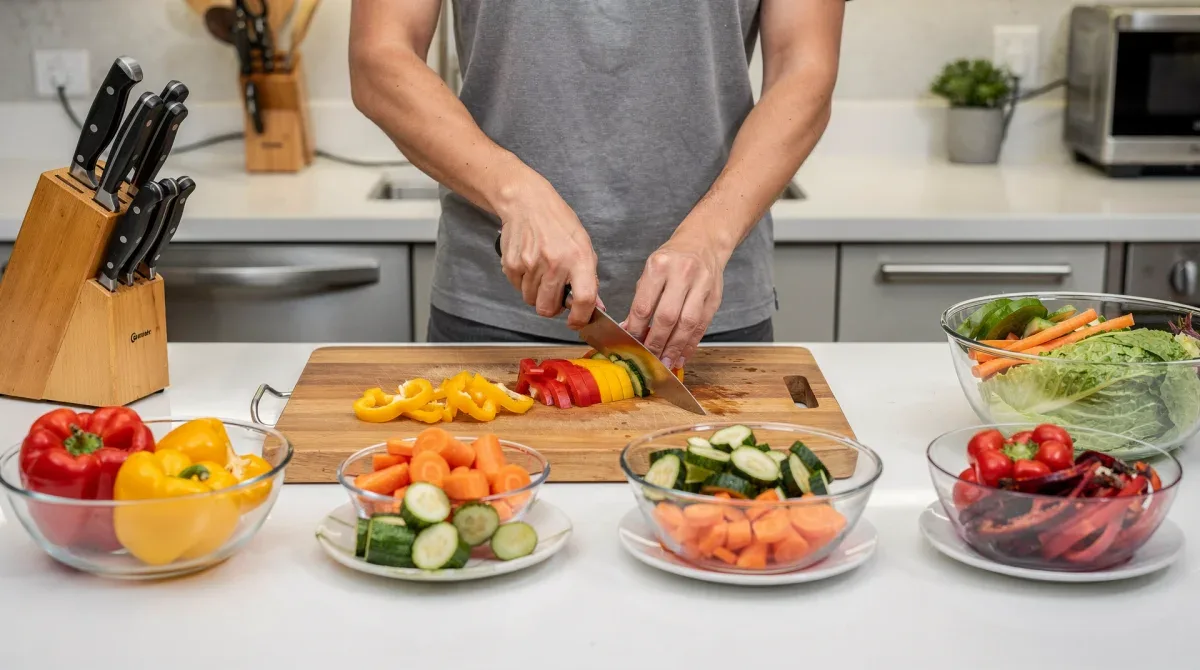
Each zone serves a specific purpose within the overall framework, helping households complete necessary responsibilities without repeatedly interrupting their preparation and cooking activities.
Planning and shopping establish the foundation, while ingredient preparation and batch cooking transform available groceries into practical meal components suitable for different occasions.
The storage stage completes the process by organizing prepared ingredients and meals according to appropriate food safety requirements and anticipated consumption during the week.
Zone 1: Planning Your Weekly Menu
Begin by identifying the meals your household needs throughout the week, considering work schedules, family commitments, available ingredients, and individual food preferences.
Select recipes that share complementary ingredients, allowing vegetables, grains, proteins, and seasonings to be used across several different meals without creating excessive repetition.
Planning provides the foundation of a 5-Zone Weekly Meal Prep Schedule by helping households avoid unnecessary purchases and repeated decisions about what to prepare.
Zone 2: Shopping With a Structured Grocery List
Create a grocery list based on your selected recipes, checking existing pantry, refrigerator, and freezer supplies before purchasing additional ingredients for the week.
Organize shopping lists according to grocery store departments, such as produce, dairy, frozen foods, proteins, and pantry products, to simplify the purchasing process.
Buying appropriate quantities helps ensure ingredients remain available when needed while reducing the possibility of purchasing more perishable food than your household can consume.
Zone 3: Preparing Ingredients in Advance
Ingredient preparation involves washing appropriate produce, chopping vegetables, measuring seasonings, and organizing ingredients into suitable quantities before beginning the main cooking activities.
Completing related preparation tasks together can reduce repeated equipment setup, ingredient searches, and cleaning responsibilities that commonly occur when preparing individual meals separately.
Within a 5-Zone Weekly Meal Prep Schedule, ingredient preparation should account for food safety, expected storage duration, and the requirements of individual recipes.
Zone 4: Batch Cooking and Meal Assembly
Batch cooking involves preparing sufficient quantities of selected recipes or individual meal components to support several meals throughout the upcoming days.
Cooked grains, roasted vegetables, beans, soups, and suitable protein sources can be combined in different ways to create convenient and varied meal options.
Organizing cooking activities around compatible recipes helps households use available kitchen equipment efficiently without requiring every meal to be prepared from the beginning.
Zone 5: Organizing Food Storage
The storage zone focuses on organizing prepared ingredients and cooked meals within refrigerators, freezers, and appropriate containers to maintain accessibility and suitable food storage conditions.
Labeling containers with preparation dates and contents helps identify which meals should be consumed first and which portions should remain frozen until needed.
A successful 5-Zone Weekly Meal Prep Schedule depends on practical storage arrangements that prevent forgotten ingredients, unnecessary waste, and unsafe food preservation practices.
Strategic Implementation: Breaking Down Kitchen Time
Implementing the five-zone framework requires establishing realistic preparation periods that fit your household's existing commitments, available equipment, and preferred cooking routines.
Dedicated activity blocks can reduce unnecessary transitions between tasks while making it easier to complete related responsibilities within a structured weekly schedule.
Combining meal preparation with effective time management practices can help households establish more manageable cooking routines without creating unnecessarily restrictive schedules or unrealistic expectations.
Creating a Practical Weekly Meal Prep Schedule
Friday evening can serve as a convenient opportunity to review available ingredients, establish the following week's menu, and prepare a detailed grocery list.
Saturday may be used for grocery shopping, while Sunday provides an opportunity to complete ingredient preparation, batch cooking, and appropriate meal storage activities.
A shorter midweek preparation session can supplement the original 5-Zone Weekly Meal Prep Schedule by replenishing fresh ingredients and preparing meals for later days.
How a 40% Reduction in Kitchen Time Is Possible
Consider a household spending approximately 60 minutes each day preparing meals and cleaning the kitchen, resulting in seven hours of weekly kitchen activity.
Under an illustrative organized schedule, one 112-minute preparation session, one 35-minute midweek session, and seven daily 15-minute tasks would total 252 minutes.
Compared with the original 420 minutes, this hypothetical schedule reduces kitchen activity by 168 minutes, equivalent to a 40% reduction in weekly kitchen time.
Tracking Your Actual Time Savings
Before adopting a 5-Zone Weekly Meal Prep Schedule, record how much time your household currently spends preparing ingredients, cooking meals, and cleaning equipment.
Repeat the measurement after implementing the organized framework, using the same categories and accounting for any additional shopping, planning, or storage responsibilities separately.
This comparison provides a personalized assessment of efficiency without assuming that every household will achieve the same percentage of time savings.
Maximizing Efficiency in the Prep and Cooking Zones
The preparation and cooking stages offer opportunities to reduce repeated activities by consolidating ingredient handling, equipment setup, and suitable cooking responsibilities into organized sessions.
Preparing complementary recipes together can help households use available kitchen space efficiently while reducing the number of times cookware and utensils require cleaning.
A well-organized 5-Zone Weekly Meal Prep Schedule balances these efficiency opportunities with safe food handling and realistic expectations about available preparation time.
Using Batch Cooking Effectively
Batch cooking works particularly well for recipes that can be prepared in larger quantities without requiring substantial changes to their ingredients or cooking procedures.
Soups, stews, cooked beans, roasted vegetables, and suitable grain dishes can provide flexible components for multiple meals when stored and reheated safely.
Preparing appropriate quantities helps reduce repeated cooking responsibilities while allowing households to maintain variety through different seasonings, side dishes, and ingredient combinations.
Preparing Modular Meals to Increase Variety
Modular meal preparation involves cooking individual components separately so they can be combined into different recipes according to daily preferences and nutritional requirements.
For example, cooked quinoa, roasted vegetables, and prepared chicken can support grain bowls, salads, wraps, and other meals throughout their safe storage periods.
Using modular combinations within a 5-Zone Weekly Meal Prep Schedule can reduce meal fatigue without requiring completely different ingredients and cooking procedures every day.
Using One-Pot and Sheet-Pan Recipes
One-pot meals and sheet-pan recipes can simplify preparation by reducing the number of cooking vessels needed to prepare complete dishes or complementary ingredients.
These methods are particularly useful when multiple ingredients have compatible cooking requirements, although different foods may need to be added at different stages.
Choosing straightforward recipes can reduce cleanup responsibilities and make weekly meal preparation more approachable for households with limited kitchen space or available time.
Preventing Cross-Contamination During Preparation
Keep raw meat, poultry, seafood, and their juices separate from ready-to-eat ingredients to reduce the risk of transferring harmful microorganisms between different foods.
Wash hands, utensils, cutting boards, and working surfaces appropriately after handling raw animal products and before preparing ingredients intended for immediate consumption.
Food safety should remain central to every 5-Zone Weekly Meal Prep Schedule because greater preparation efficiency must not compromise the safety of household meals.
The Critical Role of the Storage Zone
Appropriate storage protects prepared foods from unnecessary deterioration and helps households organize meals according to expected consumption dates and individual food safety requirements.
Refrigeration, freezing, suitable containers, and clear labeling provide practical methods for maintaining organized food supplies throughout different stages of the weekly preparation process.
The storage zone is essential to a 5-Zone Weekly Meal Prep Schedule because preparing meals in advance requires realistic planning around their safe storage periods.
Best Practices for Meal Preservation
The United States Department of Agriculture provides official food storage guidelines recommending refrigerator temperatures no higher than 40°F and freezer temperatures of 0°F or lower.
Most cooked leftovers should be consumed within three to four days when properly refrigerated, while portions intended for later consumption should be frozen.
Using suitable sealed containers and identifying preparation dates can help households manage available food more effectively while avoiding unnecessarily prolonged storage of prepared meals.
Cooling and Refrigerating Cooked Foods Safely
Perishable cooked foods should be refrigerated within two hours, or within one hour when surrounding temperatures exceed 90°F, to reduce food safety risks.
Divide large quantities of cooked food into smaller portions and shallow containers to promote faster cooling rather than leaving large cooking vessels at room temperature.
A 5-Zone Weekly Meal Prep Schedule should include prompt refrigeration without requiring cooked meals to reach room temperature before being placed inside the refrigerator.
Freezing Meals for the Second Half of the Week
Preparing meals for an entire week does not mean every cooked dish should remain refrigerated for seven consecutive days before being consumed.
Portions intended for later days should be frozen promptly, using suitable containers that protect food quality and accommodate the characteristics of individual recipes.
Organizing frozen meals according to their intended consumption dates helps households maintain convenient options without exceeding recommended refrigerator storage durations.
Reheating Prepared Meals Correctly
Previously cooked leftovers should generally reach an internal temperature of 165°F during reheating, with a food thermometer providing a more dependable temperature assessment.
When using a microwave, distribute heat evenly by covering, stirring, or rotating food as appropriate, following the appliance and container manufacturer's instructions.
A properly managed 5-Zone Weekly Meal Prep Schedule includes reheating procedures that maintain convenience without overlooking essential food safety considerations during daily meal assembly.
Leveraging Technology for Enhanced Meal Prep
Digital tools can support household meal preparation by organizing recipes, coordinating grocery lists, tracking available ingredients, and simplifying routine planning responsibilities throughout the week.
Kitchen appliances may also help streamline specific cooking tasks when their functions, capacity, and operating requirements align with the household's preferred preparation methods.
Incorporating technology into a 5-Zone Weekly Meal Prep Schedule can provide practical advantages without requiring expensive equipment or complicated digital systems.
Digital Tools for Streamlined Planning and Shopping
Meal planning applications such as Paprika and Mealime can help users organize recipes, develop shopping lists, and establish more consistent weekly cooking routines.
Online grocery services may reduce time spent traveling and shopping in physical stores, although delivery fees, product substitutions, and availability should be considered.
The most suitable digital tools are those that reduce repetitive responsibilities without introducing unnecessary costs, additional administrative work, or complicated subscription requirements.
Using Kitchen Appliances More Efficiently
Pressure cookers, slow cookers, air fryers, and food processors can assist with selected meal preparation activities when used according to their recommended operating procedures.
Programmable cooking functions may allow household members to complete compatible preparation responsibilities while particular ingredients or recipes cook under appropriate supervision.
Before purchasing additional equipment for a 5-Zone Weekly Meal Prep Schedule, evaluate whether existing appliances can already perform the necessary activities efficiently.
Creating a Digital Recipe Collection
Maintaining an organized collection of frequently prepared recipes can reduce time spent searching for meal ideas, ingredient quantities, and suitable cooking instructions.
Recipes can be grouped according to preparation time, ingredient similarities, freezer suitability, dietary preferences, and other characteristics relevant to individual household routines.
A manageable recipe collection provides a reliable foundation for planning varied meals without requiring entirely new preparation strategies during every weekly cooking session.
Overcoming Common Meal Prep Challenges
Meal preparation routines may become difficult to maintain when household schedules change, food preferences evolve, or available preparation time becomes more limited than anticipated.
Recognizing common challenges helps individuals establish realistic alternatives that maintain convenience without creating excessive pressure or requiring strict adherence to predetermined menus.
A flexible 5-Zone Weekly Meal Prep Schedule should accommodate changing circumstances rather than requiring households to follow identical routines regardless of personal commitments.
Strategies for Sustained Meal Prep Success
Rotating familiar recipes with occasional new meal ideas can help maintain variety while avoiding the additional responsibilities associated with preparing completely different dishes every week.
Household members can share suitable planning, shopping, preparation, and cleanup responsibilities according to individual schedules, abilities, and levels of cooking experience.
Establishing a few convenient backup meal options can also help maintain the usefulness of an organized preparation routine when unexpected circumstances disrupt planned activities.
Preventing Meal Fatigue
Eating identical meals repeatedly may reduce enthusiasm for advance preparation, particularly when individual household members prefer different flavors, textures, or types of ingredients.
Preparing versatile components and storing selected sauces separately can create opportunities to adjust meals without repeatedly completing entire cooking procedures from the beginning.
Maintaining variety within a 5-Zone Weekly Meal Prep Schedule helps households develop an organized routine that remains compatible with their long-term food preferences.
Adapting Meal Prep to Unexpected Schedule Changes
Work responsibilities, social events, travel, and other unexpected circumstances may influence when household members have opportunities to consume meals that were prepared in advance.
Keeping appropriately frozen portions available provides flexibility because these meals can remain stored for future use without depending on immediate consumption during the planned week.
Adjusting the original menu when necessary helps prevent an organized preparation routine from becoming excessively restrictive or contributing to unnecessary food waste.
Nutritional Benefits and Healthy Eating Opportunities
Preparing meals in advance provides opportunities to make intentional decisions about ingredients, dietary variety, and household access to convenient home-prepared food options.
Planning can help individuals incorporate vegetables, fruits, whole grains, and suitable protein sources according to their preferences, available resources, and individual nutritional requirements.
Although a 5-Zone Weekly Meal Prep Schedule can support organized eating habits, it does not independently guarantee weight loss or other specific health outcomes.
Promoting Balanced Diets and Mindful Eating
Creating varied meals allows households to include different food groups and explore recipes that accommodate individual dietary requirements, cultural preferences, and everyday activity levels.
Preparing individual servings can simplify meal assembly, although appropriate portion sizes should remain flexible according to appetite, nutritional needs, and personal health circumstances.
A balanced approach to meal preparation encourages households to enjoy convenient food options without establishing unnecessarily restrictive rules concerning individual eating habits.
Including Greater Ingredient Variety
Rotating vegetables, grains, legumes, and protein sources throughout different weekly menus can provide households with opportunities to enjoy varied flavors and nutritional characteristics.
Using complementary ingredients across multiple recipes can improve preparation efficiency while allowing individual meals to retain distinct combinations of seasonings, textures, and presentations.
A 5-Zone Weekly Meal Prep Schedule should remain adaptable enough to accommodate different food preferences and avoid unnecessary monotony within everyday household meals.
Managing Individual Dietary Requirements
Households with food allergies, intolerances, or medically prescribed dietary requirements should consider these circumstances when selecting recipes and organizing shared preparation activities.
Separating relevant ingredients, using clearly identified containers, and preventing cross-contact can help reduce potential problems when multiple dietary requirements exist within the same household.
Individuals requiring specialized nutritional guidance should follow recommendations from qualified healthcare professionals rather than relying exclusively on generalized meal preparation advice.
Economic Advantages of Strategic Meal Prep
Organized meal preparation may help households manage grocery expenses by improving purchasing decisions, increasing ingredient utilization, and reducing unnecessary replacement purchases throughout the week.
Effective meal planning can also reduce reliance on unplanned food purchases when convenient home-prepared options remain available during busy periods or unexpected schedule changes.
The financial benefits of a 5-Zone Weekly Meal Prep Schedule depend on grocery prices, existing spending habits, household size, and actual food consumption patterns.
Budgeting and Smart Shopping Techniques
Creating a detailed grocery list helps households identify necessary purchases and avoid buying ingredients that are already available within their pantry, refrigerator, or freezer.
Comparing unit prices, evaluating seasonal produce, and considering appropriate bulk purchases can support more informed grocery shopping decisions within an established household budget.
However, purchasing larger quantities only provides meaningful savings when ingredients remain usable and can be consumed or preserved before their quality deteriorates.
Calculating Potential Grocery Savings
Consider a hypothetical household spending $150 each week on groceries and reducing unnecessary purchases and discarded food expenses by $20 through better organization.
This example would reduce weekly grocery expenditure to $130, producing potential savings of $80 over four weeks if the same spending pattern continues.
These illustrative figures demonstrate how a 5-Zone Weekly Meal Prep Schedule could improve financial efficiency without establishing a guaranteed savings percentage for every household.
Reducing Food Waste Through Better Organization
Review available ingredients before shopping and prioritize products approaching their recommended storage limits when selecting recipes for the upcoming household meal preparation schedule.
Freezing suitable surplus ingredients and using remaining prepared components can support more thoughtful and sustainable consumption practices when appropriate food safety procedures are consistently followed.
Reducing avoidable food waste can help households make better use of purchased ingredients while potentially limiting unnecessary expenditure on replacement products.
A Practical Example of a Five-Day Meal Prep Menu
Creating a simple five-day menu demonstrates how complementary ingredients can support different meals without requiring entirely separate shopping and cooking activities every day.
For example, a household could prepare chicken, beans, brown rice, roasted vegetables, and several suitable fresh ingredients as the foundation for its weekday meals.
This approach illustrates how a 5-Zone Weekly Meal Prep Schedule can maintain variety while consolidating preparation responsibilities and organizing ingredients according to safe storage requirements.
Monday and Tuesday: Using Freshly Prepared Components
Monday's meal could combine prepared chicken, brown rice, roasted vegetables, and an appropriate dressing to create a convenient and customizable grain bowl.
Tuesday could feature wraps containing suitable prepared proteins, washed salad ingredients, and complementary vegetables, offering a different presentation using several familiar ingredients.
These combinations demonstrate how advance preparation can simplify everyday meal assembly while allowing individuals to adjust seasonings, serving sizes, and ingredient selections.
Wednesday: Refreshing Ingredients and Supplies
A short Wednesday preparation session can replenish suitable fresh ingredients, review remaining refrigerated meals, and organize frozen portions intended for consumption later in the week.
Additional vegetables or grains can be prepared when necessary, depending on available time, existing food supplies, and the household's changing meal requirements.
Including a midweek session within a 5-Zone Weekly Meal Prep Schedule helps maintain flexibility without requiring every cooked meal to remain refrigerated until Friday.
Thursday and Friday: Using Safely Stored Meals
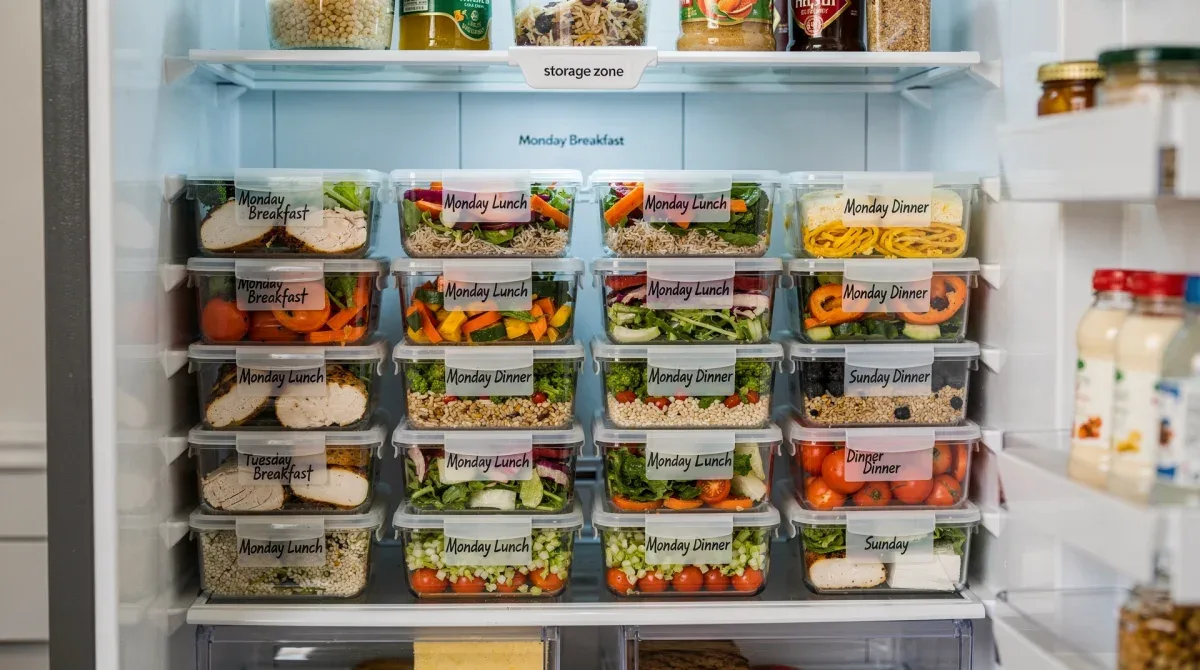
Meals intended for Thursday and Friday can use portions frozen promptly during the original preparation session or ingredients prepared during the shorter midweek refresh.
Suitable frozen portions can be thawed safely in the refrigerator and reheated according to appropriate food safety recommendations before being combined with fresh ingredients.
This approach supports convenient end-of-week meals while maintaining realistic storage practices and reducing unnecessary dependence on last-minute cooking or unplanned food purchases.
Key Takeaways for an Efficient Weekly Meal Prep Routine
Successful advance preparation combines realistic menu planning, thoughtful grocery purchases, efficient ingredient handling, suitable cooking methods, and properly organized food storage arrangements.
The 5-Zone Weekly Meal Prep Schedule provides a flexible framework that households can adapt according to their preferred recipes, available equipment, and everyday responsibilities.
The following overview summarizes potential benefits, although actual time savings, nutritional improvements, and financial outcomes depend on individual preparation habits and household circumstances.
Key Point | Brief Description |
|---|---|
Time Savings | Reduces kitchen time by up to 40% through structured zones. |
Nutritional Control | Enables healthier food choices and precise portion management. |
Financial Benefits | Cuts grocery expenses and minimizes food waste significantly. |
Enhanced Organization | Provides a clear, systematic approach to meal preparation. |
Frequently Asked Questions About 5-Zone Meal Prep
What exactly are the five zones in meal prep?
The five zones are planning, shopping, ingredient preparation, cooking, and storage. Each stage organizes a specific group of responsibilities to help households establish more efficient and manageable meal preparation routines.
How much time can I realistically save with this method?
Actual savings depend on your current cooking habits, household size, recipe choices, and available equipment. A 40% reduction is mathematically achievable, but it should not be considered a guaranteed result.
Is a 5-Zone Weekly Meal Prep Schedule suitable for beginners?
Yes. Beginners can start with simple recipes, prepare meals for two or three days, and gradually expand their routines as they become more comfortable with organized meal preparation.
What are the essential tools needed for five-zone meal prep?
Basic equipment includes suitable knives, cutting boards, cookware, a food thermometer, and food-safe storage containers. Additional appliances may improve convenience but are not essential for every household.
How does this method impact grocery expenses?
Meal planning may reduce unnecessary purchases, improve ingredient utilization, and limit avoidable food waste. Actual savings depend on household spending habits, grocery prices, and purchasing decisions.
Can I prepare meals for an entire week on Sunday?
Yes, but cooked leftovers should generally remain refrigerated for no longer than three to four days. Freeze portions intended for later consumption or schedule a shorter midweek preparation session.
What is the recommended refrigerator temperature for meal preparation?
The USDA recommends maintaining refrigerators at 40°F or below. Using an appliance thermometer can help confirm that prepared meals remain within appropriate refrigerated storage conditions.
What temperature should a freezer maintain?
Freezers should generally remain at 0°F or below to maintain appropriate frozen food storage conditions. Use suitable containers to help preserve food quality.
Should cooked meals cool completely before refrigeration?
No. Divide large portions into shallow containers and refrigerate them promptly. Leaving cooked food at room temperature for extended periods can increase food safety risks.
What temperature should prepared meals reach when reheated?
Previously cooked leftovers should generally reach an internal temperature of 165°F. A food thermometer helps confirm that the food has been heated thoroughly.
Can meal preparation help reduce food waste?
Yes. Checking existing ingredients, purchasing appropriate quantities, labeling containers, and freezing suitable surplus portions can help households reduce avoidable food waste.
How can I prevent meal fatigue during the week?
Prepare versatile meal components, rotate recipes, vary seasonings, and include suitable fresh ingredients. This allows households to create different meals without repeatedly completing full preparation procedures.
Do I need expensive appliances to follow a 5-Zone Weekly Meal Prep Schedule?
No. Most households can establish an effective preparation routine using ordinary kitchen equipment. Additional appliances should be evaluated according to their practical usefulness and cost.
Is meal preparation suitable for large families?
Yes. Larger households can adapt ingredient quantities, divide responsibilities, and organize cooking sessions according to available equipment, individual preferences, and appropriate food safety requirements.
Does weekly meal prep guarantee healthier eating or weight loss?
No. Organized meal preparation can support thoughtful ingredient choices and convenient access to home-prepared meals, but individual health outcomes depend on numerous dietary, medical, and lifestyle factors.
Is the 40% kitchen time reduction supported by a specific scientific study?
No specific study was established for this percentage in the original article. The figure is presented as an illustrative comparison between seven hours and four hours and twelve minutes of weekly kitchen activity.
Conclusion: Building a More Efficient Weekly Meal Prep Routine
A 5-Zone Weekly Meal Prep Schedule provides a practical framework for organizing household cooking responsibilities, reducing repetitive activities, and improving the management of available ingredients.
Combining realistic planning, strategic shopping, efficient preparation, batch cooking, and safe storage can support meaningful improvements in household organization, although individual results will vary.
By maintaining flexible routines and following appropriate food safety recommendations, households can develop sustainable meal preparation habits that complement their schedules, preferences, and financial circumstances.