AI Automation Solutions for U.S. Small Businesses: Boost Efficiency by 15%

U.S. small businesses can unlock substantial efficiency gains, potentially exceeding 15%, by strategically implementing practical AI automation solutions across various operational areas, from customer service to data analysis.
In today’s competitive landscape, U.S. small businesses are constantly seeking innovative ways to optimize their operations and gain an edge. One of the most transformative technologies emerging is artificial intelligence (AI), particularly its application in automation. Exploring practical AI automation solutions is no longer a luxury but a strategic imperative for small businesses aiming to unlock significant efficiency improvements and foster sustainable growth.
The imperative for AI in small business operations
The digital age has ushered in an era where data and efficiency are paramount. For small businesses, traditionally constrained by limited resources and tighter budgets, the ability to do more with less is crucial for survival and prosperity. AI automation offers a compelling pathway to achieve this, moving beyond simple task delegation to intelligent process optimization.
Many small business owners might view AI as a complex, expensive technology reserved for large corporations. However, the reality is that numerous accessible and scalable AI tools are now available, specifically designed to address common pain points faced by smaller enterprises. These solutions promise not only cost savings but also enhanced productivity, improved customer experiences, and better decision-making capabilities.
Bridging the resource gap with AI
Small businesses often struggle to compete with larger entities that boast extensive teams and advanced infrastructure. AI automation acts as a force multiplier, allowing small teams to perform tasks that would otherwise require significant human capital. This includes everything from managing customer inquiries to analyzing market trends, effectively leveling the playing field.
- Automating repetitive administrative tasks.
- Enhancing data processing and analysis.
- Providing scalable customer support without adding staff.
- Optimizing marketing campaigns for better ROI.
By leveraging AI, small businesses can allocate their valuable human resources to more strategic, creative, and customer-facing activities, leading to greater job satisfaction and a more engaged workforce. This strategic reallocation is a cornerstone of unlocking that crucial 15% efficiency gain.
Ultimately, embracing AI is about future-proofing the business. It’s about building resilience and adaptability in a rapidly changing market, ensuring that the business can not only survive but thrive amidst evolving challenges and opportunities.
Streamlining customer service with AI-powered chatbots
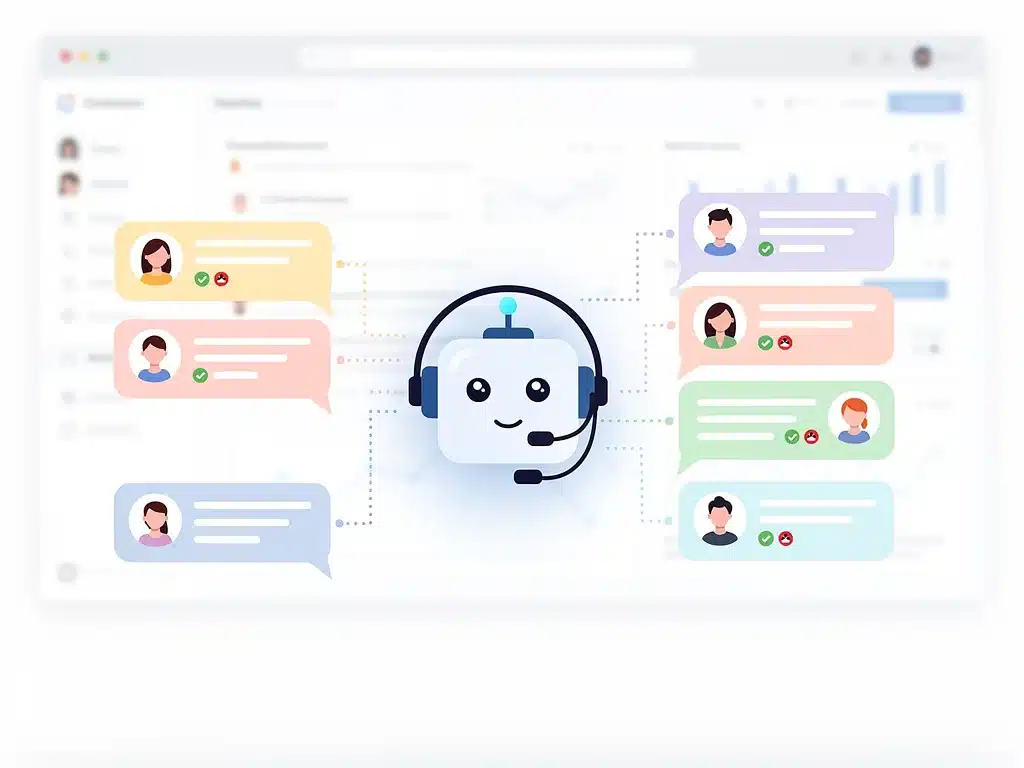
Customer service is often the frontline of any business, and for small businesses, delivering exceptional support can be a differentiator. However, managing a high volume of inquiries with limited staff can be challenging. This is where AI-powered chatbots and virtual assistants become invaluable, offering a scalable and efficient solution.
Chatbots can handle routine questions, provide instant answers, and guide customers through common issues, freeing up human agents to focus on more complex or sensitive interactions. This dual approach ensures that customers receive prompt assistance while human expertise is reserved for situations where it’s most needed.
Implementing intelligent conversational AI
Modern chatbots are far more sophisticated than their early predecessors. They utilize natural language processing (NLP) to understand customer intent, allowing for more fluid and helpful conversations. They can be integrated across various platforms, including websites, social media, and messaging apps, providing consistent support wherever customers are.
- 24/7 availability for customer support.
- Instant responses to frequently asked questions.
- Personalized customer interactions based on past data.
- Lead qualification and routing to appropriate departments.
The benefits extend beyond customer satisfaction. By automating initial customer interactions, small businesses can significantly reduce response times, increase first-contact resolution rates, and ultimately, improve the overall customer experience. This efficiency directly contributes to a stronger brand reputation and customer loyalty.
The deployment of AI in customer service isn’t about replacing human interaction entirely, but rather augmenting it. It’s about providing a layer of intelligent automation that handles the predictable, allowing human agents to excel at the unpredictable, fostering a more effective and empathetic customer service ecosystem.
Automating administrative tasks and data entry
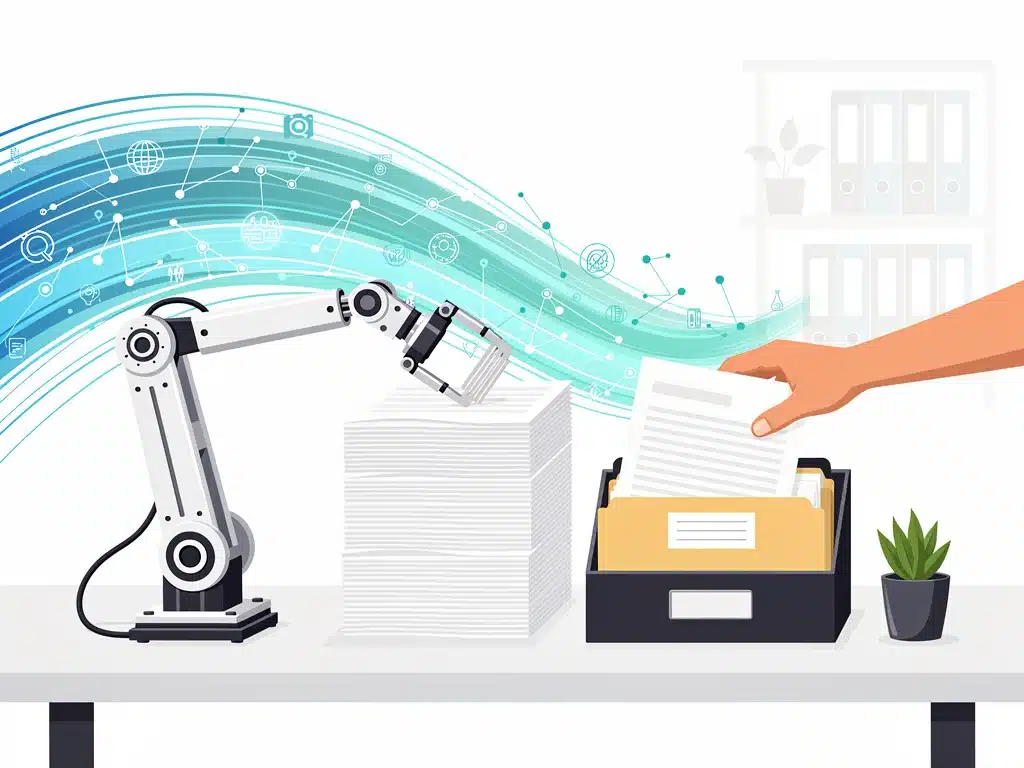
Administrative tasks, while essential, can be incredibly time-consuming and prone to human error. For small businesses, this often means valuable hours spent on repetitive data entry, scheduling, and document management that could be better utilized elsewhere. AI automation offers a powerful solution to these inefficiencies.
Robotic Process Automation (RPA), a subset of AI, is particularly effective here. RPA bots can mimic human actions to interact with digital systems, automating tasks like invoice processing, inventory updates, and customer record management. This not only speeds up processes but also drastically reduces the potential for errors.
Enhanced accuracy and speed with AI
Consider the daily grind of processing invoices or updating CRM systems. These tasks, when done manually, are not only tedious but also carry a risk of mistakes that can lead to financial discrepancies or missed opportunities. AI-driven automation tools can execute these tasks with near-perfect accuracy and at a speed unmatched by human effort.
- Automating invoice and expense processing.
- Streamlining customer relationship management (CRM) data entry.
- Managing appointment scheduling and reminders.
- Automating report generation and data aggregation.
By offloading these monotonous tasks to AI, small business employees are freed from drudgery, allowing them to focus on higher-value activities that require critical thinking, creativity, and direct customer engagement. This shift in focus is a key driver for the desired 15% efficiency boost, transforming how work is perceived and executed within the organization.
The impact of automating administrative tasks extends beyond immediate time savings. It creates a more organized, less error-prone operational backbone, which is fundamental for scaling operations and maintaining compliance without increasing overhead costs.
Optimizing marketing and sales processes with AI
In the competitive U.S. market, effective marketing and sales are critical for small business growth. AI automation offers sophisticated tools that can revolutionize how businesses attract, engage, and convert customers, making these processes more targeted, efficient, and ultimately, more profitable.
From personalized email campaigns to predictive analytics for sales forecasting, AI can provide insights and execute actions that were previously only feasible for businesses with large marketing departments. This democratization of advanced marketing capabilities is a game-changer for small enterprises.
Personalized customer engagement at scale
AI can analyze vast amounts of customer data to identify patterns and preferences, allowing small businesses to deliver highly personalized marketing messages. This goes beyond simple segmentation; AI can predict which products a customer is most likely to be interested in or what content will resonate best with them.
- Automating email marketing personalization.
- Predictive lead scoring to prioritize sales efforts.
- Optimizing ad spend across various digital platforms.
- Generating data-driven content recommendations.
Furthermore, AI can automate sales outreach, follow-ups, and even some aspects of lead qualification. This means sales teams can spend more time closing deals and less time on administrative tasks or chasing unqualified leads. The result is a more efficient sales funnel and a significant uplift in conversion rates.
By integrating AI into marketing and sales, small businesses can achieve a level of precision and responsiveness that was once unimaginable. This not only enhances customer experience but also directly translates into stronger revenue streams and a more efficient allocation of marketing resources.
Enhancing data analysis and decision-making
Data is often referred to as the new oil, but for many small businesses, extracting value from it can be overwhelming. AI automation simplifies complex data analysis, transforming raw information into actionable insights that drive smarter business decisions. This capability is vital for staying agile and competitive.
AI tools can sift through sales figures, customer feedback, market trends, and operational metrics much faster and more accurately than manual methods. This allows business owners to identify opportunities, detect potential problems, and make informed choices based on solid evidence rather than intuition.
Unlocking hidden patterns and trends
Traditional data analysis often requires specialized skills and considerable time. AI, with its machine learning capabilities, can automatically identify correlations, anomalies, and trends that might be missed by human analysts. This includes forecasting demand, optimizing inventory levels, and understanding customer churn.
- Automating financial reporting and anomaly detection.
- Predictive analytics for sales and inventory management.
- Identifying customer behavior patterns for strategic planning.
- Optimizing pricing strategies based on market dynamics.
For a small business, having access to such powerful analytical capabilities means being able to react quickly to market shifts, fine-tune product offerings, and make strategic investments with greater confidence. This intelligence directly contributes to operational efficiency and provides a clear competitive advantage.
The ability to harness data effectively through AI automation ensures that decisions are not only faster but also more robust. This leads to reduced waste, improved resource allocation, and a clearer path towards achieving business objectives, solidifying the 15% efficiency goal.
Implementing AI automation: practical steps for small businesses
The prospect of integrating AI into a small business can seem daunting, but a structured approach can make the process manageable and successful. The key is to start small, identify specific pain points, and gradually scale AI solutions as confidence and expertise grow.
It’s not about overhauling everything at once, but rather identifying high-impact areas where AI can deliver immediate and tangible benefits. This often involves focusing on tasks that are repetitive, rule-based, and consume significant time or resources.
A phased approach to AI adoption
The first step involves a thorough assessment of current operations to pinpoint bottlenecks and areas ripe for automation. This could be anything from customer support inquiries to internal document processing. Once identified, research and select AI tools that specifically address these needs, prioritizing user-friendly and cost-effective options.
- Conduct an internal audit to identify automation opportunities.
- Start with pilot projects in low-risk, high-impact areas.
- Invest in user-friendly, scalable AI platforms.
- Train employees to work alongside AI tools effectively.
Pilot programs are crucial for testing the waters. Begin with a single department or a specific set of tasks to evaluate the AI solution’s effectiveness and gather feedback. This iterative approach allows for adjustments and fine-tuning before broader deployment, minimizing disruption and maximizing success.
Crucially, successful AI implementation also involves training and upskilling employees. AI is a tool, and its full potential is realized when human workers understand how to leverage it effectively. This collaborative approach ensures that AI enhances, rather than replaces, human capabilities, leading to a more efficient and innovative workplace.
By following these practical steps, U.S. small businesses can confidently embark on their AI automation journey, paving the way for increased efficiency, improved competitiveness, and sustained growth in the years to come.
| Key Area | AI Automation Benefit |
|---|---|
| Customer Service | 24/7 support, instant answers, reduced human agent workload. |
| Administrative Tasks | Automated data entry, invoice processing, and scheduling, minimizing errors. |
| Marketing & Sales | Personalized campaigns, predictive lead scoring, optimized ad spend. |
| Data Analysis | Actionable insights from complex data, demand forecasting, strategic decision-making. |
Frequently asked questions about AI automation for small businesses
Initial costs for AI automation vary, but many solutions offer subscription-based models, making them accessible. Focus on tools with clear ROI, often starting with free trials or low monthly fees, scaling as your business grows and benefits become evident.
AI improves customer satisfaction by providing instant 24/7 support through chatbots, personalizing interactions based on customer history, and ensuring quicker resolution of common queries, leading to a more positive and efficient customer experience.
Not necessarily. Many modern AI automation tools are designed with user-friendly interfaces and require minimal technical expertise. Look for ‘no-code’ or ‘low-code’ platforms that simplify integration and operation, making them ideal for small business owners.
Key challenges include data quality, employee training, selecting the right tools, and managing integration with existing systems. Starting with clear objectives and pilot projects can mitigate these issues, ensuring a smoother transition and greater success.
AI enables small businesses to automate tasks, personalize customer experiences, and gain data-driven insights without extensive human resources. This allows them to operate more efficiently, scale effectively, and offer competitive services, bridging the resource gap.
Conclusion
The journey towards unlocking 15% or more efficiency for U.S. small businesses through AI automation is not just a theoretical concept but a tangible reality. By strategically integrating practical AI solutions across customer service, administrative tasks, marketing, sales, and data analysis, businesses can achieve significant operational improvements. The key lies in a phased, thoughtful approach, focusing on high-impact areas and empowering employees to work alongside these innovative tools. Embracing AI is about building a more resilient, competitive, and profitable future, ensuring sustained growth and adaptability in an ever-evolving market.