Affirmative Action in 2026: Navigating Post-Supreme Court Changes
The future of affirmative action in 2026 is profoundly shaped by recent Supreme Court rulings, creating a complex legal and social environment impacting admissions, hiring, and broader diversity efforts nationwide.
The landscape of affirmative action in 2026 is undergoing a significant transformation, primarily driven by the United States Supreme Court’s pivotal decisions in 2023. These rulings have fundamentally altered how race can be considered in admissions processes, sending ripples across various sectors, from higher education to corporate employment. Understanding these changes is crucial for institutions and individuals navigating this evolving legal and social terrain.
The Supreme Court’s Landmark Rulings and Their Immediate Aftermath
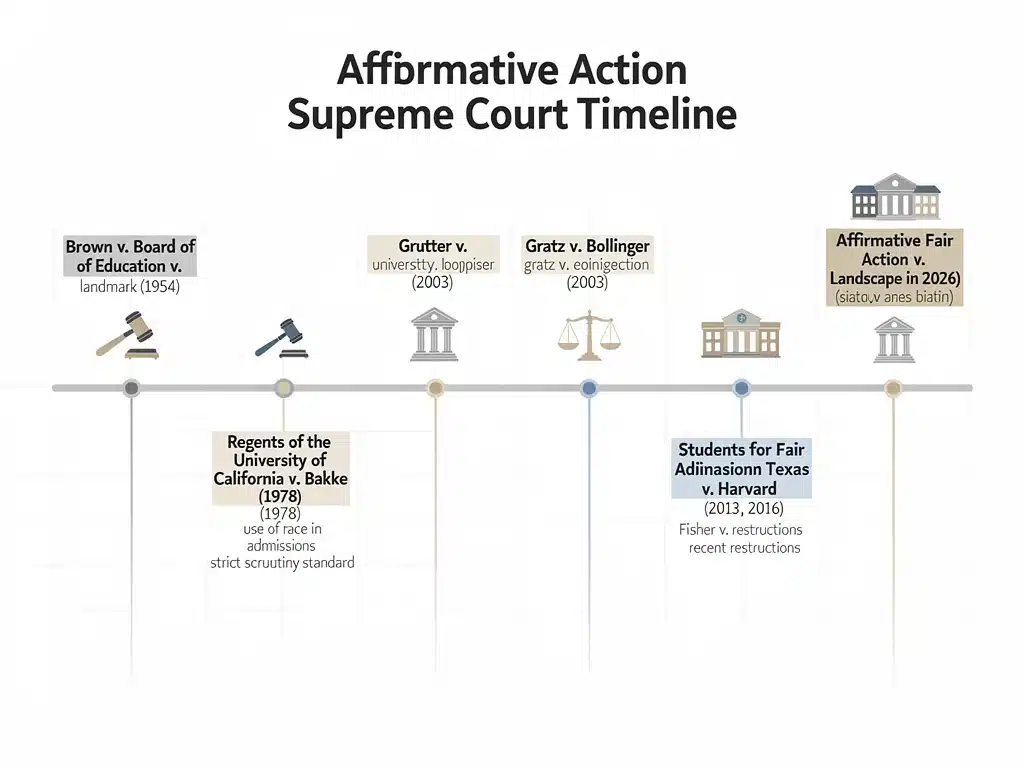
The Supreme Court’s decisions in Students for Fair Admissions v. Harvard and Students for Fair Admissions v. University of North Carolina marked a watershed moment for affirmative action. These rulings effectively ended race-conscious admissions in higher education, asserting that such practices violate the Equal Protection Clause of the Fourteenth Amendment. The Court’s majority opinion emphasized a colorblind approach, arguing that considering race in admissions, even for remedial purposes, is unconstitutional.
The immediate aftermath of these decisions saw a flurry of activity as universities and colleges across the nation scrambled to adjust their admissions policies. Many institutions quickly issued statements reaffirming their commitment to diversity while outlining new strategies to achieve it within the confines of the Court’s ruling. This period of rapid adaptation underscored the deep entrenchment of affirmative action in institutional practices and the challenge of fostering diverse environments without direct race-conscious measures.
Redefining Diversity in Higher Education
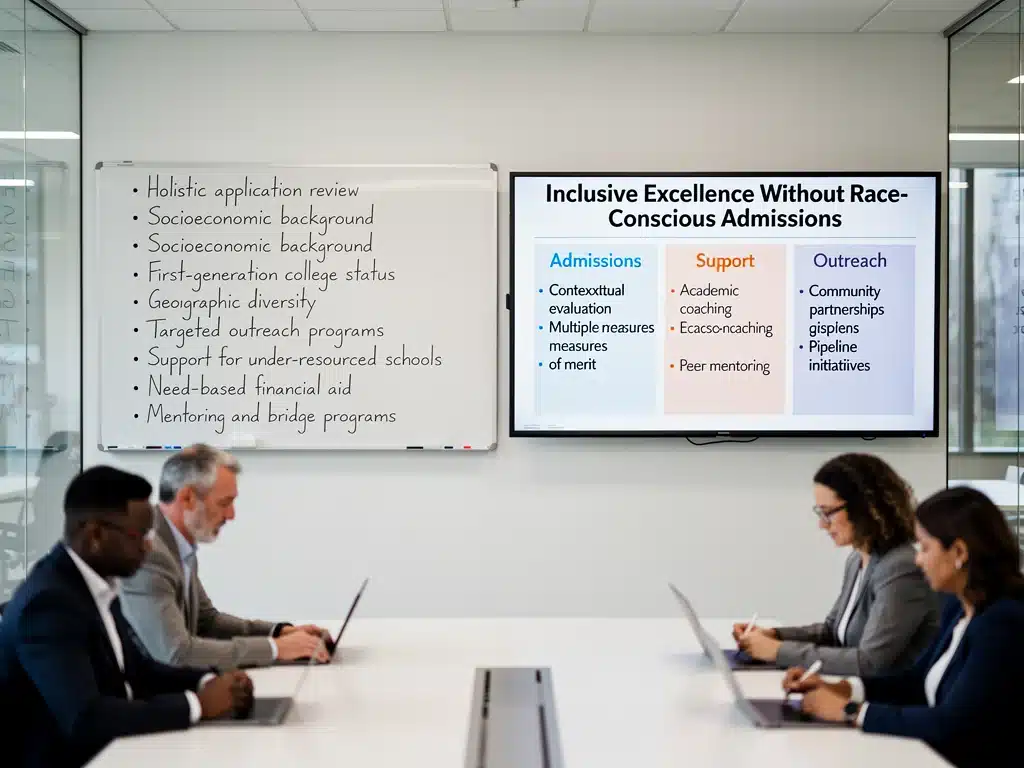
With race-conscious admissions now prohibited, universities are exploring alternative avenues to cultivate diverse student bodies. These strategies often involve a more holistic review of applicants, focusing on individual experiences and backgrounds rather than racial categories. The goal is to identify students who can contribute to a rich and varied campus environment through non-racial factors.
- Holistic Review Processes: Admissions committees are increasingly emphasizing essays, recommendations, and extracurricular activities to understand an applicant’s unique life experiences, including how race may have affected their journey.
- Socioeconomic Considerations: Many institutions are enhancing efforts to recruit students from low-income backgrounds or those who are first-generation college students, recognizing that socioeconomic disadvantage often correlates with racial minority status.
- Targeted Outreach Programs: Universities are investing more in outreach to underserved communities and high schools with diverse student populations, aiming to broaden their applicant pools.
- Pipeline Programs: Developing partnerships with K-12 schools to prepare a more diverse group of students for higher education, focusing on academic readiness and access.
The shift towards these new strategies is not without its critics, who argue that they may not be as effective in achieving racial diversity as direct race-conscious policies. However, institutions are determined to demonstrate their commitment to diversity within the new legal framework, seeking innovative ways to ensure their student populations reflect the broader society.
In essence, the Supreme Court’s rulings have forced a fundamental re-evaluation of how diversity is pursued in higher education. While the direct consideration of race is off the table, the underlying goal of fostering inclusive and representative learning environments remains a priority for many institutions, driving the development of new, legally compliant approaches.
Impact on Corporate America and Employment Practices
While the Supreme Court’s rulings directly addressed university admissions, their implications extend far beyond academia, significantly influencing corporate America and employment practices. Many businesses have historically embraced diversity, equity, and inclusion (DEI) initiatives, often drawing parallels to the principles of affirmative action in their efforts to create diverse workforces. The judicial shift has prompted a re-evaluation of these corporate strategies.
Companies are now scrutinizing their DEI programs to ensure compliance with the spirit, if not the letter, of the Supreme Court’s decisions. The primary concern is avoiding any perception of reverse discrimination or the use of racial quotas, which could expose them to legal challenges. This has led to a more cautious approach, with some companies rephrasing or restructuring their diversity objectives.
Legal Scrutiny and Evolving DEI Strategies
The legal landscape for corporate DEI is becoming more complex. While employment law has its own set of regulations, the Supreme Court’s emphasis on colorblindness creates a precedent that could embolden challenges to race-conscious corporate policies. Companies are therefore focusing on skill-based hiring, meritocratic principles, and broad-based outreach to attract diverse talent.
- Inclusive Hiring Practices: Implementing blind resume reviews and standardized interview processes to minimize unconscious bias and focus solely on qualifications and experience.
- Skill-Based Development: Investing in training and development programs that enhance the skills of all employees, creating opportunities for advancement based on merit rather than demographic characteristics.
- Broadened Talent Sourcing: Expanding recruitment efforts to a wider array of institutions and communities, ensuring access to diverse talent pools without specific racial targeting.
- Emphasis on Belonging and Culture: Shifting focus from purely diversity metrics to fostering a culture of belonging where all employees feel valued and respected, believing that an inclusive environment will naturally attract and retain diverse talent.
The re-evaluation of DEI strategies in corporate settings is a delicate balancing act. Businesses aim to maintain their commitment to diversity and inclusion, recognizing its benefits for innovation, market understanding, and employee engagement, while simultaneously ensuring their practices are legally sound and defensible. This often means emphasizing diversity of thought and experience, which can indirectly lead to racial diversity without explicit race-based considerations.
Ultimately, corporate America is adapting to a new era where diversity initiatives must be carefully crafted to avoid legal pitfalls. The focus is shifting towards creating equitable processes and inclusive cultures that naturally foster diversity, rather than relying on methods that could be interpreted as preferential treatment based on race.
Political and Social Ramifications in 2026
The Supreme Court’s decisions on affirmative action have ignited a fervent political and social debate that continues to shape public discourse into 2026. The rulings have been met with both fervent support and strong condemnation, deepening existing ideological divides. Politically, the issue remains a potent talking point, influencing electoral campaigns and policy discussions at both federal and state levels.
Advocacy groups on both sides of the issue are actively engaged, either pushing for further restrictions on race-conscious policies or seeking new legislative avenues to promote diversity. This ongoing contention underscores the deeply ingrained nature of affirmative action within the broader American discussion on equality and justice. Socially, the rulings have prompted introspection within communities about the meaning of merit, fairness, and opportunity in a diverse society.
Legislative Responses and Public Opinion
In response to the Supreme Court’s actions, various legislative bodies are considering new laws and policies. Some states, already having banned affirmative action prior to the federal ruling, are reinforcing their existing frameworks. Others are exploring new approaches to ensure diversity within their legal boundaries.
- State-level Legislation: Some states may attempt to pass laws that either codify the Supreme Court’s ruling or seek to find workarounds that promote diversity without explicit racial preferences.
- Federal Debates: Discussions in Congress are ongoing regarding potential federal legislation that could either reinforce or challenge the Supreme Court’s interpretation, though significant bipartisan consensus on this issue remains elusive.
- Public Opinion Shifts: While support for affirmative action has historically been mixed, the Supreme Court’s decisions have prompted a renewed public dialogue, potentially shifting opinions as the practical implications become clearer.
- Judicial Challenges: Further legal challenges to diversity initiatives, both in education and employment, are likely to emerge as the boundaries of the Supreme Court’s rulings are tested.
The social ramifications extend to how individuals perceive their opportunities and experiences. For some, the rulings represent a step towards true equality and meritocracy, where individual achievement is paramount. For others, they signify a retreat from the goal of addressing historical injustices and systemic inequalities, potentially hindering progress towards a more equitable society. These differing perspectives highlight the complex societal impact of the decisions.
As 2026 unfolds, the political and social landscape surrounding affirmative action will continue to be dynamic. The interplay between legal interpretations, legislative actions, public sentiment, and advocacy efforts will ultimately determine the long-term trajectory of diversity and inclusion initiatives in the United States.
Challenges and Opportunities for Diversity Initiatives
The post-Supreme Court era presents both significant challenges and unique opportunities for diversity initiatives across the United States. The immediate challenge lies in navigating a legal framework that prohibits race-conscious considerations, forcing institutions to rethink established practices. This requires careful legal analysis and creative policy development to ensure compliance while upholding commitments to diversity.
Another challenge is the potential for a decline in racial diversity metrics, particularly in highly selective environments, as direct race-based preferences are no longer permissible. This could lead to difficult conversations about the efficacy of new strategies and the long-term impact on representation. However, these challenges also create an imperative for innovation and a deeper understanding of what true equity entails.
Innovative Approaches to Foster Inclusion
The new legal landscape compels organizations to move beyond superficial diversity metrics and delve into more substantive aspects of inclusion and belonging. This shift can lead to more robust and sustainable diversity initiatives that benefit all individuals.
- Data-Driven Strategies: Utilizing data analytics to identify and address systemic barriers to diversity that are not race-based, such as access to resources, mentorship, or specific educational pathways.
- Cultivating Inclusive Cultures: Focusing on creating environments where individuals from all backgrounds feel welcomed, respected, and empowered to contribute fully, which can naturally attract and retain diverse talent.
- Partnerships and Community Engagement: Forming stronger ties with diverse communities and organizations to build pipelines and create opportunities for underrepresented groups through non-race-specific programs.
- Leadership Accountability: Holding leaders accountable for fostering diverse and inclusive teams through performance metrics that emphasize equitable practices and outcomes, rather than just demographic targets.
The opportunities arising from this new environment include a chance to re-examine and strengthen the fundamental principles behind diversity efforts. By focusing on equity, access, and inclusion for all, regardless of race, institutions can build more resilient and genuinely meritocratic systems. This could lead to a broader definition of diversity that encompasses socioeconomic background, geographic origin, life experiences, and diverse perspectives, ensuring a richer tapestry of talent and ideas.
Ultimately, while the path forward is complex, the necessity to adapt can spur innovation. The focus is now on developing comprehensive, legally sound strategies that not only achieve diversity but also foster truly inclusive environments where every individual has an equal opportunity to thrive.
Rethinking Merit and Opportunity in a New Era
The ongoing discourse surrounding affirmative action in 2026 has inevitably led to a profound re-examination of the concepts of merit and opportunity. Critics of affirmative action have long argued that race-conscious policies undermine meritocracy by giving preferential treatment based on race. With these policies largely curtailed, the focus now shifts to how institutions define and measure merit in a way that is both fair and inclusive, ensuring that opportunity is genuinely accessible to all, irrespective of background.
This re-evaluation requires a nuanced understanding of how historical and systemic factors can influence an individual’s path and preparation. True meritocracy, many argue, is not simply about evaluating individuals at a single point in time, but also about understanding the journey and the obstacles overcome. This perspective challenges institutions to look beyond traditional metrics and consider a broader range of qualifications.
Broadening the Definition of Merit
Institutions are now exploring how to assess merit more comprehensively, moving beyond standardized test scores and GPA to include a wider array of indicators that reflect an applicant’s potential and contributions. This holistic approach aims to identify true talent and drive, acknowledging that these qualities manifest differently across diverse backgrounds.
- Contextualized Review: Evaluating academic achievements within the context of an applicant’s available resources and opportunities, understanding that high achievement in a challenging environment can be a stronger indicator of merit.
- Life Experience and Resilience: Giving weight to personal narratives that demonstrate resilience, leadership, unique skills, and the ability to overcome adversity, which are valuable attributes for any educational or professional setting.
- Diverse Skill Sets: Recognizing and valuing a wider range of skills beyond traditional academic prowess, such as creativity, problem-solving abilities, and cross-cultural communication skills, which are increasingly important in a globalized world.
- Commitment to Community: Assessing an individual’s contributions to their community and their potential to contribute to the institutional community, which can enrich the environment for everyone.
The concept of opportunity is also being redefined. It’s not enough to simply remove overt barriers; institutions must actively create pathways and support systems that level the playing field. This includes investing in early education, providing robust mentorship programs, and ensuring access to high-quality resources for students from all socioeconomic strata. The aim is to ensure that all individuals have a genuine chance to develop their talents and compete effectively.
In this new era, the challenge is to build systems that not only identify merit but also cultivate it, ensuring that every individual has the opportunity to reach their full potential. This requires a proactive and thoughtful approach to education, recruitment, and development, fostering a society where success is truly a reflection of individual effort and capability, supported by equitable access to resources.
The Future Landscape of Equity and Inclusion
Looking ahead to 2026 and beyond, the future landscape of equity and inclusion in the United States will be shaped by the ongoing adaptation to the Supreme Court’s affirmative action rulings. This period will likely be characterized by a continuous search for effective, legally compliant strategies that promote diversity without resorting to race-conscious preferences. The emphasis will increasingly be on creating systemic changes that foster genuine equity and inclusion from the ground up, rather than relying on top-down directives.
The dialogue will inevitably evolve from focusing solely on racial diversity to embracing a broader definition of diversity that includes socioeconomic status, geographic origin, veteran status, disability, and diverse thought. This expanded view can help build more robust and resilient institutions that are truly representative of the multifaceted American population. The goal is to move towards a society where all individuals have the opportunity to succeed, and institutions reflect the rich tapestry of human experience.
Long-Term Implications and Evolving Norms
The long-term implications of these changes are still unfolding, but several trends are emerging. There will be a continued push for transparent and equitable processes in admissions and hiring. Furthermore, the focus on creating inclusive environments will intensify, recognizing that diversity alone is insufficient without a culture of belonging.
- Increased Focus on Socioeconomic Equity: A greater emphasis on policies and programs designed to address socioeconomic disparities, which often correlate with racial inequalities, as a primary means of promoting diversity.
- Advancements in Data and Analytics: More sophisticated use of data to understand and address barriers to equity, allowing institutions to identify and target interventions effectively without explicit racial classifications.
- Rethinking Educational Pathways: A re-evaluation of how students are prepared for higher education and careers, with a focus on strengthening K-12 education in underserved communities and expanding access to high-quality learning opportunities.
- Broader Advocacy for Inclusion: Advocacy groups will likely broaden their strategies, focusing on systemic changes and universal access initiatives rather than race-specific policies.
The evolving norms around equity and inclusion will require a sustained commitment from leaders in education, business, and government. It will involve an ongoing process of learning, adaptation, and innovation to ensure that the principles of fairness and equal opportunity are upheld for all. The conversation will shift from simply ‘what is allowed’ to ‘what is truly effective’ in creating a society where every individual can thrive.
Ultimately, the future of equity and inclusion in the United States hinges on the collective ability to develop and implement strategies that are both legally sound and genuinely transformative. This new era demands creativity, resolve, and a deep understanding of the systemic factors that influence opportunity, ensuring that the pursuit of a diverse and inclusive society remains a central goal.
| Key Point | Brief Description |
|---|---|
| Supreme Court Rulings | Ended race-conscious admissions in higher education, requiring new diversity strategies. |
| Higher Education Adaptation | Universities now use holistic reviews, socioeconomic factors, and targeted outreach for diversity. |
| Corporate Impact | Companies are re-evaluating DEI initiatives to ensure legal compliance and focus on inclusive practices. |
| Rethinking Merit | Shift towards broader definitions of merit, considering life experiences and contextual achievements. |
Frequently Asked Questions About Affirmative Action in 2026
▼
The landmark 2023 Supreme Court rulings in Students for Fair Admissions v. Harvard and Students for Fair Admissions v. University of North Carolina effectively prohibited race-conscious admissions in higher education, deeming them unconstitutional under the Equal Protection Clause.
▼
Universities are now employing holistic review processes, emphasizing socioeconomic factors, unique individual experiences, and targeted outreach to diverse communities. The aim is to foster diversity without explicitly considering race in admissions decisions.
▼
While directly addressing education, the rulings have prompted corporate America to re-evaluate DEI programs for legal compliance. Companies are focusing on inclusive hiring, skill-based development, and fostering a culture of belonging to achieve diversity.
▼
Rethinking merit involves broadening its definition beyond traditional metrics. Institutions are now considering an applicant’s life experiences, resilience, unique skills, and contributions to their community as indicators of potential and capability.
▼
The long-term prospects involve a shift towards systemic changes that foster genuine equity and inclusion. This includes a greater focus on socioeconomic equity, data-driven strategies, and strengthening educational pathways for all, ensuring broad access and opportunity.
Conclusion
The landscape of affirmative action in 2026 is undeniably complex, shaped by the Supreme Court’s landmark decisions that have reshaped the legal boundaries of diversity initiatives. These rulings have necessitated a fundamental re-evaluation of how institutions, from universities to corporations, approach equity and inclusion. While the direct consideration of race in admissions and hiring is now largely curtailed, the commitment to fostering diverse and inclusive environments remains a priority for many. The emerging strategies emphasize holistic reviews, socioeconomic considerations, and the cultivation of inclusive cultures, aiming to achieve diversity through legally compliant and genuinely equitable means. The ongoing political and social discourse surrounding these changes underscores the deep societal implications, prompting a broader re-examination of merit and opportunity. As the nation navigates this new era, the focus is shifting towards innovative, data-driven approaches that address systemic barriers and create pathways to success for all individuals, ensuring that the pursuit of a truly representative and equitable society continues to evolve and adapt.