2026 Social Security Reform: 3 Key Proposals for Your Retirement

The 2026 Social Security reform debate critically examines three primary proposals designed to address the program’s financial challenges, directly influencing the future of retirement benefits and the economic security of American retirees.
As 2026 approaches, discussions around The 2026 Social Security Reform Debate: What 3 Key Proposals Mean for Your Retirement are intensifying, drawing significant attention from current retirees, future beneficiaries, and policymakers alike. Understanding these potential changes is crucial for anyone planning their financial future in the United States.
The Urgency of Social Security Reform in 2026
Social Security, a cornerstone of American retirement security for decades, faces significant financial challenges as we look towards 2026 and beyond. The program, which provides vital income to millions of retirees, disabled individuals, and survivors, is projected to be unable to meet its full obligations in the coming years without legislative intervention. This looming fiscal cliff necessitates a serious discussion about comprehensive reform.
The demographic shifts, including a declining birth rate and increasing life expectancy, have placed immense pressure on the system. Fewer workers are contributing for each beneficiary, leading to an imbalance that threatens the long-term solvency of the trust funds. This situation isn’t new, but the urgency is growing as the projected depletion date of the Old-Age and Survivors Insurance (OASI) trust fund draws nearer.
Understanding the Trust Fund Shortfall
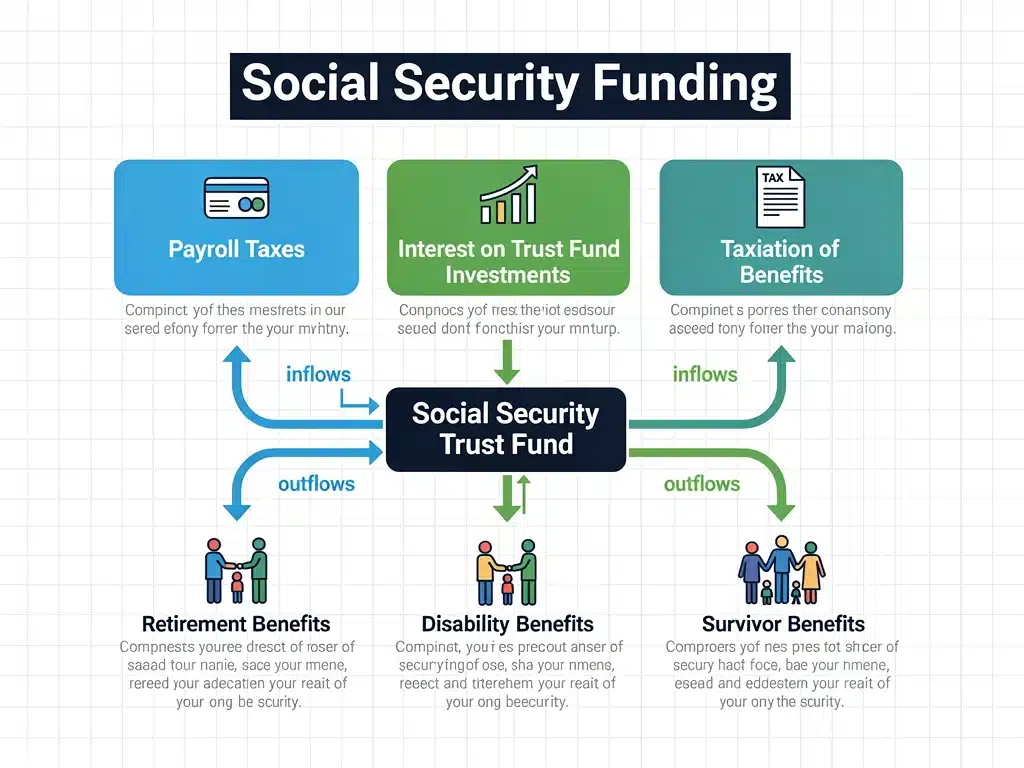
The Social Security trust funds are not a piggy bank in the traditional sense but rather an accounting of the difference between tax revenues and expenditures. When revenues exceed expenditures, the trust funds grow. However, for several years, the system has been paying out more in benefits than it collects in taxes, drawing down its reserves. If no action is taken, the system would only be able to pay approximately 80% of promised benefits once the trust funds are depleted.
- Demographic Shifts: A primary driver of the shortfall is the changing ratio of workers to retirees.
- Increased Life Expectancy: People are living longer, meaning they collect benefits for more years than initially projected.
- Wage Stagnation: Slower wage growth impacts the amount of payroll taxes collected.
- Inflation: Rising costs of living can put pressure on benefit adjustments.
The current projections indicate that by 2033, the OASI trust fund will be exhausted. This date is critical because it signifies when the program would only be able to pay a portion of scheduled benefits, relying solely on incoming payroll taxes. Such a scenario would have profound implications for millions of Americans who depend on Social Security for a substantial portion of their retirement income.
Addressing this issue before it becomes a crisis is paramount. Policymakers are exploring various options, each with its own set of advantages and disadvantages, aiming to find a sustainable path forward for Social Security. The debate is complex, involving economic, social, and political considerations that impact every American.
Proposal 1: Adjusting the Full Retirement Age
One of the most frequently discussed proposals to shore up Social Security’s finances involves adjusting the full retirement age (FRA). Currently, the FRA is gradually increasing to 67 for those born in 1960 or later. This proposal suggests further raising the FRA, perhaps to 68 or even 69, to align with increasing life expectancies and reduce the total payout period for future retirees.
The rationale behind raising the FRA is straightforward: if people are living longer, they will collect benefits for a greater number of years. By pushing back the age at which full benefits can be claimed, the system can reduce its overall expenditures. This approach is often seen as a way to adapt the program to modern demographic realities without directly cutting benefits for current retirees or significantly increasing taxes.
Impact on Future Retirees
Raising the full retirement age would primarily affect younger generations and those still in the workforce, as they would need to work longer to receive their full benefits. For someone planning to retire at 66, an increase to 68 or 69 would mean either delaying retirement or accepting a reduced benefit amount if they choose to retire earlier. This necessitates a significant shift in personal retirement planning and expectations.
- Delayed Retirement: Individuals would work more years, contributing more in payroll taxes and delaying benefit claims.
- Reduced Benefits: Those who retire at the current FRA would receive a permanently reduced benefit amount.
- Financial Planning Adjustments: Future retirees would need to save more independently to bridge the gap or work longer.
Critics argue that this proposal disproportionately impacts individuals in physically demanding jobs or those with shorter life expectancies, who may find it challenging to work longer. It could also exacerbate economic inequality, as those with fewer resources might be forced to work well into their later years, potentially in declining health. However, proponents argue it is a necessary adjustment to reflect advancements in health and longevity across the population.
The debate around raising the FRA highlights the delicate balance between ensuring the solvency of Social Security and maintaining its role as a safety net for all Americans. Any changes would need to be carefully phased in to allow individuals ample time to adjust their retirement plans accordingly.
Proposal 2: Modifying Payroll Tax Contributions
Another major proposal in The 2026 Social Security Reform Debate focuses on adjusting the payroll tax structure. Social Security is primarily funded through dedicated payroll taxes, known as FICA taxes, paid by both employees and employers. Currently, there’s a cap on earnings subject to Social Security taxes; earnings above this cap ($168,600 in 2024) are not taxed for Social Security purposes.
Proposals to modify payroll taxes generally fall into two categories: increasing the tax rate or raising/eliminating the taxable earnings cap. Increasing the tax rate would mean both employees and employers contribute a higher percentage of wages to Social Security. Raising or eliminating the earnings cap would subject a larger portion of high earners’ incomes to Social Security taxes.
Raising the Taxable Earnings Cap
Eliminating or significantly raising the taxable earnings cap is a popular option among those who advocate for higher contributions from wealthier individuals. If the cap were eliminated, all earnings, regardless of amount, would be subject to Social Security taxes. This would significantly increase the program’s revenue, potentially closing a large portion of the funding gap.
- Increased Revenue: More income would be subject to tax, boosting the trust funds.
- Progressive Impact: Higher earners would contribute more, potentially easing the burden on lower and middle-income workers.
- Economic Considerations: Concerns about the impact on economic growth and competitiveness for businesses.
While this approach is viewed as more progressive, critics express concerns about its potential impact on high-income earners and businesses. They argue that it could disincentivize work and investment, or lead to businesses relocating to avoid higher payroll tax burdens. However, proponents counter that the impact on high earners would be manageable and necessary to preserve the program for everyone.
Another variation of this proposal involves a slight increase in the overall payroll tax rate for all earners. A small percentage increase could generate substantial additional revenue over time. This approach would spread the burden more broadly across all contributors, but could also be felt more acutely by lower and middle-income households.
Modifying payroll tax contributions is a powerful lever for addressing Social Security’s financial challenges. The specific implementation—whether through adjustments to the tax rate or the earnings cap—will have distinct economic and social consequences that are central to the reform debate.
Proposal 3: Adjusting Benefit Formulas and Cost-of-Living Adjustments (COLAs)
The third key area of reform involves adjusting how Social Security benefits are calculated and how they keep pace with inflation through Cost-of-Living Adjustments (COLAs). These adjustments directly impact the amount beneficiaries receive, making them a sensitive but crucial component of the reform discussion. Several approaches are being considered to reduce future benefit outlays without necessarily cutting benefits for current retirees.
One common idea is to modify the benefit formula for future retirees. Social Security benefits are calculated based on a worker’s average indexed monthly earnings (AIME) over their 35 highest-earning years. Proposals include slowing the growth of initial benefits for higher earners, making the system more progressive, or adjusting the indexation method used to calculate initial benefits.
Revising the COLA Calculation
Cost-of-Living Adjustments (COLAs) are designed to ensure that the purchasing power of Social Security benefits doesn’t erode due to inflation. Currently, COLAs are based on the Consumer Price Index for Urban Wage Earners and Clerical Workers (CPI-W). A proposed change involves shifting to the Chained Consumer Price Index (Chained CPI).
- Chained CPI: This index generally grows more slowly than the CPI-W, as it accounts for consumers substituting cheaper goods when prices rise.
- Slower Benefit Growth: Using Chained CPI would result in smaller annual COLA increases, gradually reducing benefit growth over time.
- Impact on Beneficiaries: While not an outright cut, it would mean benefits would keep pace with inflation less effectively, impacting purchasing power.
The shift to Chained CPI is controversial. Proponents argue it more accurately reflects how consumers adapt to price changes, thus providing a more realistic measure of inflation. Opponents contend that it would lead to a stealth cut in benefits, particularly for older retirees who often face higher healthcare costs that are not adequately captured by the Chained CPI.
Another aspect of benefit formula adjustments could involve changing the minimum or maximum benefit amounts, or altering the spousal and survivor benefits. These changes would aim to redistribute benefits or to ensure that the most vulnerable beneficiaries receive adequate support, while potentially trimming benefits for those with higher lifetime earnings.
Adjusting benefit formulas and COLAs presents a complex challenge. While these changes could significantly improve the long-term solvency of Social Security, they also directly affect the financial well-being of millions of Americans, making them a focal point of intense public and political debate.
Economic and Social Implications of Reform Proposals
Each of the three key proposals for 2026 Social Security Reform carries significant economic and social implications that extend far beyond individual retirement accounts. Understanding these broader impacts is essential for a comprehensive view of the ongoing debate. The choices made will shape not only the financial landscape for future generations but also the social contract between citizens and the government.
Economically, any reform will have ripple effects. Raising the full retirement age could impact labor force participation rates, potentially keeping older workers in the job market longer. This could affect job opportunities for younger workers or lead to increased competition in certain sectors. Conversely, it could also mean a more experienced workforce contributing to the economy for a longer period.
Impact on Intergenerational Equity
The debate often touches on intergenerational equity – the fairness of resource allocation between different generations. Younger generations, who face the prospect of working longer or contributing more while potentially receiving fewer benefits, often feel that the current system disproportionately burdens them. Conversely, older generations rely heavily on promised benefits and fear any changes could undermine their financial security in retirement.
- Younger Generations: May face higher taxes or delayed benefits, impacting their long-term financial planning.
- Current Retirees: Generally protected from immediate cuts, but future COLAs could be affected.
- Economic Growth: Reforms could influence consumer spending, savings rates, and overall economic activity.
Socially, Social Security is more than just a retirement program; it’s a fundamental safety net that reduces poverty among the elderly and disabled. Any changes to benefit formulas or eligibility could have profound effects on vulnerable populations, potentially increasing poverty rates or exacerbating existing inequalities. The program also provides essential survivor benefits, supporting families after the loss of a primary wage earner.

The choices made in the reform debate will reflect societal values regarding collective responsibility and individual autonomy. Policymakers must weigh the need for fiscal solvency against the program’s foundational role in providing a dignified retirement for all Americans. Striking this balance requires careful consideration of both the immediate and long-term consequences of each proposed change.
Ultimately, the economic and social implications are intertwined, and a successful reform will need to address both aspects thoughtfully. It’s not just about balancing the books but about ensuring a fair and sustainable future for Social Security.
Navigating the Political Landscape of Social Security Reform
The political landscape surrounding 2026 Social Security Reform is notoriously complex and fraught with partisan divisions. Social Security is often dubbed the “third rail” of American politics because touching it can be politically hazardous. This sensitivity stems from the program’s universal appeal and the deep reliance millions of Americans place on its benefits. Any proposed change inevitably faces intense scrutiny and opposition from various interest groups.
Democrats and Republicans often approach Social Security reform from different philosophical standpoints. Democrats typically favor solutions that protect benefits, often through increased taxation on higher earners or by raising the payroll tax cap. They emphasize the program’s role as a social safety net and worry about the impact of benefit cuts on vulnerable populations.
Bipartisan Challenges and Opportunities
Achieving bipartisan consensus on Social Security reform is a formidable challenge, yet it is widely recognized as essential for long-term stability. Past attempts at comprehensive reform have often stalled due to political deadlock, with each side wary of making concessions that could be used against them in future elections. However, the looming trust fund depletion date creates a powerful incentive for cooperation.
- Political Will: The biggest hurdle is often the lack of political courage to enact unpopular but necessary changes.
- Public Opinion: Broad public support for Social Security makes any cuts politically risky.
- Compromise: Solutions likely require a combination of benefit adjustments and revenue increases to gain bipartisan backing.
Republicans, on the other hand, often lean towards solutions that involve adjusting benefit formulas, raising the full retirement age, or finding ways to reduce government spending. They tend to focus on fiscal responsibility and the long-term sustainability of the program, sometimes advocating for market-based solutions or individual retirement accounts, though these are typically not part of mainstream reform proposals.
Finding common ground will likely require a package of reforms that includes elements from both sides of the political spectrum. This could involve a modest increase in the payroll tax rate for all earners, coupled with a slight adjustment to the full retirement age and a revision of the COLA calculation. Such a grand bargain would require significant political will and a willingness to compromise from all parties involved.
The political maneuvering leading up to 2026 will be critical. The urgency of the situation may finally compel lawmakers to set aside partisan differences and work towards a sustainable solution for Social Security, ensuring its continued viability for future generations.
Preparing Your Retirement for Potential Social Security Changes
Given the ongoing debate around The 2026 Social Security Reform Debate, it is more important than ever for individuals to proactively prepare their own retirement plans. While the exact nature of future changes remains uncertain, understanding the potential impacts of the three key proposals can help you make informed decisions and build a more resilient financial future. Relying solely on Social Security for retirement income has become increasingly risky.
One of the most crucial steps is to diversify your retirement savings. Social Security was designed to be a component of retirement income, not the sole source. Maximize contributions to 401(k)s, IRAs, and other investment vehicles. The more robust your personal savings, the less dependent you will be on Social Security benefits, regardless of any future adjustments.
Strategies for Financial Resilience
Consider various scenarios when planning your retirement. What if the full retirement age increases? What if your COLA adjustments are smaller than anticipated? By running different projections, you can gauge your financial readiness under various reform outcomes. This scenario planning can reveal potential shortfalls and motivate you to adjust your savings or investment strategies.
- Maximize Personal Savings: Utilize tax-advantaged retirement accounts like 401(k)s and IRAs.
- Consider Working Longer: Even a few extra years of work can significantly boost savings and Social Security benefits.
- Professional Financial Advice: Consult a financial planner to tailor a strategy to your specific situation.
- Stay Informed: Keep abreast of legislative developments and potential reforms to adjust your plans as needed.
For those still in the workforce, working a few extra years could be a powerful strategy. Not only does it allow for more savings contributions, but it also increases your Social Security benefit amount by delaying claims. Each year you delay claiming benefits past your full retirement age, up to age 70, your benefits increase by a certain percentage, providing a significant boost to your monthly income.
Additionally, staying healthy and active can help you remain in the workforce longer, if necessary, and reduce healthcare costs in retirement. Investing in your health is an investment in your financial future. The landscape of retirement is evolving, and taking proactive steps now can provide peace of mind and greater financial security, regardless of how the Social Security reform debate concludes.
| Key Proposal | Brief Description |
|---|---|
| Adjust Full Retirement Age | Increases the age at which full Social Security benefits can be claimed, reducing total payouts. |
| Modify Payroll Tax | Raises the taxable earnings cap or increases the payroll tax rate to boost program revenue. |
| Adjust Benefit Formulas/COLAs | Changes how initial benefits are calculated or alters the cost-of-living adjustment method (e.g., Chained CPI). |
Frequently Asked Questions About Social Security Reform
Social Security faces a projected shortfall, with the Old-Age and Survivors Insurance (OASI) trust fund expected to be depleted by 2033. Without reform, the program would only be able to pay about 80% of scheduled benefits, necessitating action to ensure long-term solvency.
If the full retirement age is raised, you would need to work longer to receive your full Social Security benefits. Retiring at your current planned age might result in a reduced benefit amount, requiring adjustments to your personal financial planning.
Modifying payroll taxes typically involves either increasing the percentage of wages contributed by workers and employers or raising/eliminating the cap on earnings subject to Social Security taxes. This aims to increase the program’s overall revenue.
The Chained CPI is an alternative measure of inflation that accounts for consumer substitution of cheaper goods. If adopted for COLAs, it would result in smaller annual benefit increases compared to the current CPI-W, gradually reducing the growth of benefits over time.
Most reform proposals aim to protect current retirees from direct benefit cuts. However, adjustments to Cost-of-Living Adjustments (COLAs) could still affect the purchasing power of their benefits over time. Future beneficiaries are more likely to see changes to their initial benefit calculations or retirement age.
Conclusion
The 2026 Social Security reform debate is a critical juncture for the future of retirement security in the United States. The three key proposals—adjusting the full retirement age, modifying payroll tax contributions, and altering benefit formulas and COLAs—each offer distinct pathways to address the program’s financial challenges. While these proposals aim to ensure the long-term solvency of Social Security, they also carry significant implications for current and future beneficiaries. The path forward will undoubtedly involve complex negotiations and compromises, balancing the need for fiscal sustainability with the program’s vital role as a social safety net. For individuals, staying informed and proactively planning for retirement, diversifying savings, and considering various scenarios are paramount to navigating these potential changes successfully.