Sustainable Fashion Standards 2026: 5 Textile Certifications
Advertisements
Understanding sustainable fashion standards in 2026 is crucial for buyers to ensure ethical sourcing and minimize environmental impact, with key textile certifications guiding responsible purchasing decisions.
The fashion industry stands at a pivotal moment, with increasing demands for transparency and accountability. Navigating the landscape of sustainable fashion standards in 2026 requires a deep understanding of textile certifications. For every buyer, discerning which certifications truly represent ethical and environmental integrity is no longer optional but essential for responsible procurement.
The Evolving Landscape of Sustainable Fashion Standards
The concept of sustainable fashion has rapidly evolved from a niche concern to a mainstream imperative. As we approach 2026, the expectations placed on brands and buyers are higher than ever, driven by consumer awareness, regulatory pressures, and a clearer understanding of environmental and social impacts. This section explores how these standards are shifting and what it means for the industry.
Previously, sustainability often focused solely on environmental aspects like organic materials. However, the modern definition encompasses a much broader spectrum, including social equity, ethical labor practices, and circular economy principles. This holistic approach demands a more nuanced understanding of the entire supply chain, from raw material cultivation to garment disposal. Brands are now expected to demonstrate verifiable commitments across these dimensions, not just make vague claims.
The Shift Towards Holistic Sustainability
The industry's move towards holistic sustainability means that certifications must cover more than just the ecological footprint of a fabric. They must also address:
- Fair wages and safe working conditions for all laborers.
- Responsible water and energy management throughout production.
- Minimization of chemical use and pollution.
- Traceability and transparency in the supply chain.
This comprehensive view helps combat greenwashing, ensuring that claims of sustainability are backed by tangible, verifiable practices. Buyers must scrutinize these aspects to make truly informed decisions.

The increasing complexity of global supply chains also presents challenges. Ensuring that every step, from cotton farm to cutting room, adheres to stringent ethical and environmental guidelines requires robust monitoring and third-party verification. This is where textile certifications become indispensable tools, offering a standardized framework for evaluating and communicating sustainable practices. Without them, navigating the myriad claims of 'eco-friendly' or 'ethical' would be nearly impossible for buyers seeking genuine sustainability.
In conclusion, the evolving sustainable fashion landscape in 2026 mandates a comprehensive understanding of standards that extend beyond mere environmental impact. Buyers must prioritize certifications that reflect a holistic commitment to social equity, ethical labor, and circularity, ensuring genuine responsible sourcing.
Understanding Textile Certifications: Why They Matter
Textile certifications serve as crucial benchmarks in the sustainable fashion journey, offering third-party verification that a product or process meets specific environmental and social criteria. For buyers, these certifications are more than just labels; they are assurances of integrity, providing a clear path through the often-opaque world of global manufacturing. They help differentiate genuinely sustainable products from those making unsubstantiated claims.
The proliferation of various certifications can sometimes be overwhelming, making it difficult to ascertain which ones hold the most weight and relevance. However, understanding the fundamental purpose of these certifications is key. They typically cover different aspects of the textile value chain, from the origin of raw materials to the final product's chemical safety and social compliance in factories. A robust certification system provides transparency, accountability, and a common language for sustainability claims.
Key Benefits of Certification for Buyers
For buyers, leveraging textile certifications offers several significant advantages:
- Risk Mitigation: Reduces the risk of reputational damage associated with unethical labor practices or environmental harm.
- Consumer Trust: Builds confidence among consumers who are increasingly demanding sustainable products.
- Supply Chain Transparency: Provides verifiable data on product origins and manufacturing processes.
- Compliance: Helps meet growing regulatory requirements for environmental and social responsibility.
These benefits contribute to a more resilient and ethical supply chain, aligning business practices with broader sustainability goals. Certifications act as a due diligence mechanism, simplifying the process of identifying responsible suppliers and products.
Furthermore, certifications often involve rigorous audits and assessments, which can drive continuous improvement within the supply chain. Suppliers striving for certification are incentivized to adopt better practices, leading to a ripple effect of positive change throughout the industry. This collective effort is vital for achieving systemic transformation in fashion. Buyers who prioritize certified products are actively contributing to this positive shift, promoting a more responsible and sustainable future for textiles.
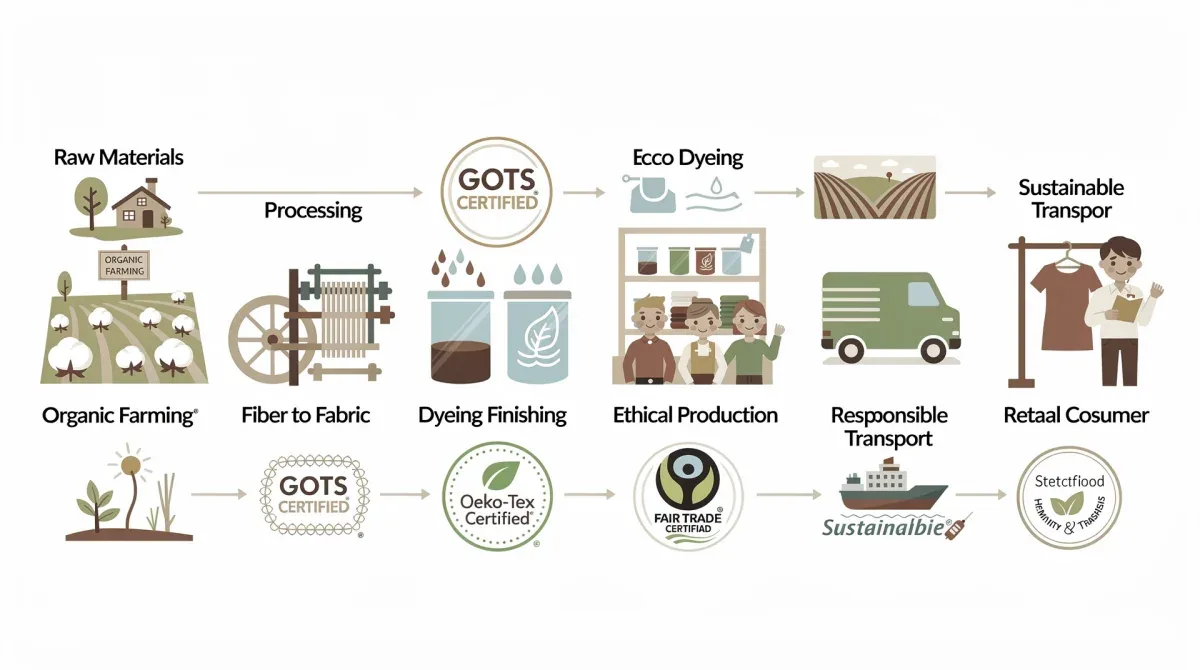
In essence, textile certifications are indispensable tools for buyers navigating the complexities of sustainable fashion. They provide credible, third-party verification, mitigate risks, build consumer trust, and drive continuous improvement across the supply chain, ultimately fostering a more responsible industry.
Global Organic Textile Standard (GOTS): A Deep Dive
The Global Organic Textile Standard (GOTS) is arguably one of the most comprehensive and widely recognized certifications for organically produced textiles. It establishes stringent criteria for the entire textile supply chain, from the harvesting of raw materials to environmentally and socially responsible manufacturing, and labeling. For any buyer focused on truly organic and ethically produced garments, GOTS is a non-negotiable standard.
GOTS covers the processing, manufacturing, packaging, labeling, trading, and distribution of all textiles made from at least 70% certified organic natural fibers. This holistic approach ensures that not only are the fibers organic, but the entire processing chain adheres to high environmental and social standards. This includes strict requirements for chemical inputs, wastewater treatment, and fair labor practices, making it a robust benchmark for sustainability.
Key Aspects of GOTS Certification
Understanding the core components of GOTS is crucial for buyers:
- Organic Fiber Content: Requires a minimum of 70% certified organic natural fibers, with a 'GOTS Organic' label requiring 95%.
- Environmental Criteria: Prohibits toxic heavy metals, formaldehyde, aromatic solvents, and GMOs; mandates wastewater treatment.
- Social Criteria: Based on the International Labour Organization (ILO) core conventions, including no child labor, fair wages, and safe working conditions.
- Traceability: Ensures full traceability throughout the supply chain, from farm to finished product.
These criteria make GOTS a powerful tool for ensuring both ecological integrity and social responsibility. Buyers can confidently source products bearing the GOTS label, knowing they meet some of the highest standards in the industry.
The certification process itself involves on-site inspections and annual audits, ensuring continuous compliance. This rigorous oversight provides an additional layer of assurance for buyers. Furthermore, GOTS promotes a transparent supply chain, allowing brands and consumers to trace the journey of their textiles. This level of detail empowers buyers to make choices that align with their ethical and environmental values, moving beyond simple claims to verifiable facts. The standard's global reach also means it provides a consistent benchmark across different manufacturing regions.
In summary, GOTS is a leading certification for organic textiles, encompassing strict environmental and social criteria across the entire supply chain. Its comprehensive nature and rigorous auditing provide buyers with confidence in sourcing genuinely sustainable and ethically produced garments.
Oeko-Tex Standard 100: Ensuring Product Safety
While many sustainable fashion standards focus on environmental impact and social conditions, Oeko-Tex Standard 100 specifically addresses product safety for consumers. This certification ensures that textiles and textile products are free from harmful substances, making it a critical consideration for buyers prioritizing consumer health and safety. It's a testament to a product's harmlessness, regardless of its origin or production method.
Oeko-Tex Standard 100 tests for a wide range of harmful chemicals, including pesticides, heavy metals, formaldehyde, and allergenic dyes, which are often used in textile production. The certification applies to all stages of processing, from raw materials to finished products, and covers accessories like buttons, zippers, and linings. This comprehensive testing ensures that the final product coming into contact with skin is safe for use by consumers, including infants and young children, who are particularly vulnerable.
Levels of Oeko-Tex Certification
Oeko-Tex Standard 100 categorizes products into four classes, based on their intended use and skin contact levels:
- Product Class I: Articles for babies and toddlers (up to 3 years old), with the strictest requirements.
- Product Class II: Articles worn close to the skin (e.g., underwear, bedding).
- Product Class III: Articles used away from the skin (e.g., jackets, belts).
- Product Class IV: Furnishing and decoration materials (e.g., curtains, tablecloths).
Buyers should pay close attention to the product class, as it indicates the level of chemical safety required for specific applications. A higher product class (like I or II) signifies more rigorous testing and lower permissible limits for harmful substances, offering greater assurance for sensitive applications.
The Oeko-Tex certification process involves independent testing by accredited institutes, with annual re-certification required to maintain the label. This ongoing verification ensures that manufacturers continue to meet the stringent safety standards. For buyers, choosing Oeko-Tex certified products minimizes the risk of product recalls due to chemical contamination and enhances brand reputation by demonstrating a commitment to consumer well-being. It provides a straightforward way to communicate product safety to end-users, an increasingly important factor in purchasing decisions. This focus on human ecology complements other environmental and social certifications, offering a well-rounded approach to textile sustainability.
In conclusion, Oeko-Tex Standard 100 is vital for ensuring textile product safety, guaranteeing freedom from harmful substances. Its tiered product classes and rigorous testing provide buyers with confidence in consumer health, complementing broader sustainable fashion standards.
Fair Trade Certified Textiles: Empowering Workers
Fair Trade certification in textiles goes beyond environmental concerns, focusing primarily on social sustainability and ethical labor practices. For buyers committed to supporting workers and communities, Fair Trade Certified textiles offer a guarantee that products are made under fair conditions, with transparent supply chains and equitable treatment for farmers and factory employees. This standard directly addresses issues like poverty, exploitation, and unsafe working environments.
The core philosophy of Fair Trade is to empower producers in developing countries by ensuring fair prices, safe working conditions, environmental protection, and community development. In the textile sector, this means that workers involved in the production of Fair Trade Certified garments receive fair wages, have the right to organize, and benefit from premium funds invested back into their communities. It's a powerful mechanism for driving positive social change within the fashion industry.
Impact of Fair Trade Certification
Fair Trade certification creates a tangible impact on the lives of textile workers and their communities:
- Fair Wages: Ensures workers receive wages that meet or exceed minimum wage standards and cover basic needs.
- Safe Working Conditions: Mandates health and safety protocols, protecting workers from hazardous environments.
- Community Development: Fair Trade Premiums are used by worker committees to fund projects like schools, healthcare, or clean water initiatives.
- Empowerment: Promotes democratic decision-making and empowers workers through collective bargaining.
By choosing Fair Trade Certified products, buyers directly contribute to improving livelihoods and fostering sustainable development in textile-producing regions. This makes it an essential certification for brands looking to build an ethical supply chain that truly puts people first.
The certification process involves regular audits of farms and factories to ensure compliance with Fair Trade standards. These audits verify everything from wage structures and working hours to environmental management and premium fund usage. This transparency allows buyers to trace the social impact of their purchases. Furthermore, Fair Trade encourages long-term relationships between buyers and producers, fostering stability and mutual respect. This model moves beyond transactional exchanges, building partnerships that are resilient and equitable. For buyers, integrating Fair Trade Certified textiles into their procurement strategy demonstrates a strong commitment to human rights and social justice, resonating deeply with conscious consumers.

In conclusion, Fair Trade Certified textiles are crucial for social sustainability, ensuring fair wages, safe conditions, and community empowerment for workers. Buyers integrating this certification support ethical labor practices and drive positive social change within the fashion industry.
Recycled Claim Standard (RCS) and Global Recycled Standard (GRS)
As the fashion industry increasingly embraces circularity, certifications like the Recycled Claim Standard (RCS) and the Global Recycled Standard (GRS) have become indispensable. These standards verify the presence and amount of recycled material in a final product, ensuring transparency and credibility in claims of recycled content. For buyers focused on reducing waste and promoting resource efficiency, understanding these certifications is paramount.
Both RCS and GRS are supply chain standards that track recycled content from input to the final product. RCS verifies the percentage of recycled content in a product, while GRS takes a more comprehensive approach, including additional environmental and social requirements related to processing. These standards address the growing demand for products that contribute to a circular economy, diverting waste from landfills and reducing the need for virgin resources.
Distinguishing RCS and GRS
While both standards focus on recycled content, there are key differences:
- RCS (Recycled Claim Standard): Verifies the presence and quantity of recycled material in a product through third-party certification. It does not include social or environmental processing requirements beyond recycled content.
- GRS (Global Recycled Standard): A more robust standard that not only verifies recycled content (minimum 20%) but also includes social and environmental criteria for processing, and chemical restrictions.
Buyers should consider their specific sustainability goals when choosing between RCS and GRS. If the primary focus is simply verifying recycled content, RCS may suffice. However, for a broader commitment to responsible production, GRS offers a more holistic assurance, encompassing both recycled materials and ethical manufacturing practices. This distinction helps buyers align their sourcing decisions with their overall sustainability strategy.
The certification process for both RCS and GRS involves rigorous auditing by independent third parties, tracing recycled materials through every stage of the supply chain. This ensures that claims of recycled content are verifiable and transparent, combating potential greenwashing. For buyers, opting for RCS or GRS certified products helps meet targets for waste reduction and resource conservation, while also appealing to environmentally conscious consumers. These standards are critical enablers of the circular economy in fashion, promoting the reuse of materials and minimizing environmental footprint. They provide a clear framework for brands to communicate their commitment to using recycled resources responsibly.
To summarize, RCS and GRS are vital for verifying recycled content in textiles, with GRS offering a more comprehensive approach including environmental and social criteria. These standards are crucial for buyers committed to circularity and waste reduction in the fashion industry.
Navigating Certifications for a Sustainable Future
The journey towards a truly sustainable fashion industry is complex, but textile certifications provide an invaluable compass for buyers. As explored, each certification, whether GOTS, Oeko-Tex, Fair Trade, RCS, or GRS, addresses distinct yet interconnected facets of sustainability. Understanding their specific scopes and requirements is crucial for making informed purchasing decisions that align with ethical, environmental, and social responsibilities. The challenge lies not just in recognizing these labels, but in strategically integrating them into procurement processes.
For buyers, the optimal approach often involves a combination of certifications, depending on the product type and specific sustainability goals. For instance, an organic cotton t-shirt might carry both GOTS (for organic content and ethical processing) and Oeko-Tex Standard 100 (for chemical safety). A recycled polyester garment might feature GRS, ensuring both recycled content and responsible manufacturing. This multi-certification strategy provides a more comprehensive assurance of sustainability, addressing various concerns from raw material to end-product safety and worker welfare.
Strategic Integration in Procurement
To effectively navigate and utilize these certifications, buyers should consider:
- Supplier Vetting: Prioritize suppliers who already hold relevant certifications or are actively working towards them.
- Product Specificity: Match certifications to the specific sustainability claims and requirements of each product.
- Continuous Monitoring: Regularly verify certification validity and compliance through audits and documentation.
- Education and Training: Ensure procurement teams are well-versed in the nuances of each standard.
By embedding these considerations into their procurement strategies, buyers can drive positive change across their supply chains and meet the growing demands for transparency and accountability. This proactive approach not only mitigates risks but also enhances brand reputation and fosters consumer trust, positioning businesses as leaders in the sustainable fashion movement.
Furthermore, staying updated on emerging standards and evolving best practices is essential. The sustainable fashion landscape is dynamic, with new innovations and improved methodologies constantly emerging. Engaging with industry bodies, attending relevant conferences, and participating in expert networks can help buyers remain at the forefront of sustainable sourcing. Ultimately, the goal is to move beyond mere compliance to genuine commitment, fostering a fashion industry that is regenerative, equitable, and resilient. This collective effort, driven by informed buyers, will shape the future of fashion for the better, making sustainability the norm rather than the exception.
In conclusion, navigating textile certifications requires strategic integration into procurement processes, often combining multiple standards to achieve comprehensive sustainability. By continuously educating themselves and prioritizing certified suppliers, buyers can drive positive change and contribute to a more sustainable future for fashion.
| Certification | Key Focus |
|---|---|
| GOTS | Organic fiber content, environmental, and social criteria across the entire supply chain. |
| Oeko-Tex Standard 100 | Product safety, ensuring textiles are free from harmful substances for consumer health. |
| Fair Trade Certified | Social sustainability, fair wages, safe conditions, and community development for workers. |
| GRS/RCS | Verification of recycled material content, with GRS including broader social/environmental criteria. |
Frequently Asked Questions About Sustainable Fashion Certifications
Why are textile certifications important for buyers in 2026?▼Textile certifications are crucial for buyers in 2026 as they provide independent verification of environmental and social claims. They help mitigate risks, build consumer trust, ensure supply chain transparency, and aid in meeting increasing regulatory requirements for sustainable sourcing, combating greenwashing effectively.
What is the main difference between GOTS and Oeko-Tex Standard 100?▼GOTS (Global Organic Textile Standard) focuses on organic fiber content and comprehensive environmental/social criteria throughout the entire supply chain. Oeko-Tex Standard 100, conversely, primarily ensures product safety, guaranteeing textiles are free from harmful substances, regardless of their organic origin.
How does Fair Trade certification empower textile workers?▼Fair Trade certification empowers textile workers by ensuring fair wages, safe working conditions, and the right to organize. It also provides a Fair Trade Premium fund for community development projects, fostering economic stability and social improvements in producer communities, and giving workers a voice.
What distinguishes the Global Recycled Standard (GRS) from the Recycled Claim Standard (RCS)?▼RCS verifies the presence and quantity of recycled content in a product. GRS is more comprehensive, verifying recycled content (minimum 20%) while also including strict social and environmental criteria for processing, along with chemical restrictions, offering a broader sustainability assurance.
Can a single garment have multiple sustainable fashion certifications?▼Yes, a single garment can absolutely have multiple certifications. For example, an organic cotton t-shirt might be GOTS certified for its organic fibers and ethical processing, and Oeko-Tex Standard 100 certified for its chemical safety, providing a holistic view of its sustainability attributes.
Conclusion
Navigating the complex world of sustainable fashion standards in 2026 is an imperative for responsible buyers. By understanding and prioritizing certifications like GOTS, Oeko-Tex Standard 100, Fair Trade, RCS, and GRS, buyers can confidently source products that align with ethical, environmental, and social values. These certifications are not merely labels but powerful tools that drive transparency, mitigate risks, and foster a truly sustainable and equitable textile industry for the future.
