Overhauling Higher Education Aid: 5% Discretionary Income Cap
Advertisements
The proposed 5% discretionary income cap on student debt seeks to significantly alleviate financial pressure for borrowers by tying monthly payments to a smaller percentage of their disposable income, thereby reshaping federal student loan repayment structures.
The landscape of higher education finance is constantly evolving, and one of the most significant proposals currently on the table is the idea of overhauling higher education aid: analyzing the social impact of the 5% discretionary income cap on student debt. This policy aims to fundamentally alter how millions of Americans manage their student loan obligations, potentially freeing up significant portions of household budgets and fostering broader economic stability. But what exactly does this cap entail, and how might it ripple through society, affecting not just borrowers but also educational institutions, the job market, and future generations?
Understanding the 5% discretionary income cap
The concept of a discretionary income cap on student debt repayments is not entirely new, but the proposed 5% threshold marks a significant shift from previous income-driven repayment (IDR) plans. Historically, IDR plans have typically required borrowers to pay 10% or more of their discretionary income. Reducing this to 5% could dramatically lower monthly payments for a vast number of individuals, particularly those with lower incomes relative to their debt.
Discretionary income is generally defined as the amount of income remaining after taxes and essential living expenses are paid. By capping repayments at a mere 5% of this figure, the policy intends to make student loan payments more manageable and predictable, preventing debt from becoming an overwhelming burden that stifles economic participation and personal growth. This move is designed to offer substantial relief, especially for recent graduates entering competitive job markets or those in public service careers with modest salaries.
How the cap works in practice
To understand the mechanics, consider a borrower earning $50,000 annually with a family size that places their poverty line at $20,000. Under current IDR plans, their discretionary income calculation might use a higher percentage of the difference between their income and a multiple of the poverty line. With a 5% cap, their monthly payment would be significantly lower. This simplified approach aims for greater equity and ease of understanding for borrowers.

- Reduced Monthly Payments: Borrowers would see their required monthly payments decrease, potentially freeing up hundreds of dollars each month.
- Faster Path to Financial Stability: Lower payments mean less financial strain, allowing individuals to save for a down payment, invest, or address other financial goals sooner.
- Simpler Repayment Calculations: A fixed, lower percentage can simplify the often-complex world of student loan repayment, making it more accessible.
The implications extend beyond individual budgets. When borrowers have more disposable income, they are more likely to spend, invest, and contribute to the economy. This policy could therefore act as a stimulus, injecting capital into various sectors and fostering broader economic growth. However, it also raises questions about the long-term fiscal sustainability for the government and the potential impact on future tuition costs. The balance between providing relief and maintaining fiscal responsibility is a delicate one that policymakers must carefully navigate.
Social and economic implications for borrowers
The primary beneficiaries of a 5% discretionary income cap would undoubtedly be student loan borrowers, particularly those struggling with high debt loads relative to their earnings. The current student debt crisis in the United States is well-documented, with millions facing substantial financial pressure that affects major life decisions, from starting a family to buying a home. A reduced payment cap could fundamentally alter this dynamic.
For many, the prospect of lower monthly payments translates directly into improved quality of life. The psychological burden of overwhelming debt can be immense, leading to stress, anxiety, and even depression. By easing this burden, the policy could contribute to better mental health outcomes for borrowers. Furthermore, greater financial flexibility allows individuals to pursue careers that might not offer high salaries but are personally fulfilling or contribute significantly to society, such as teaching, social work, or non-profit roles.
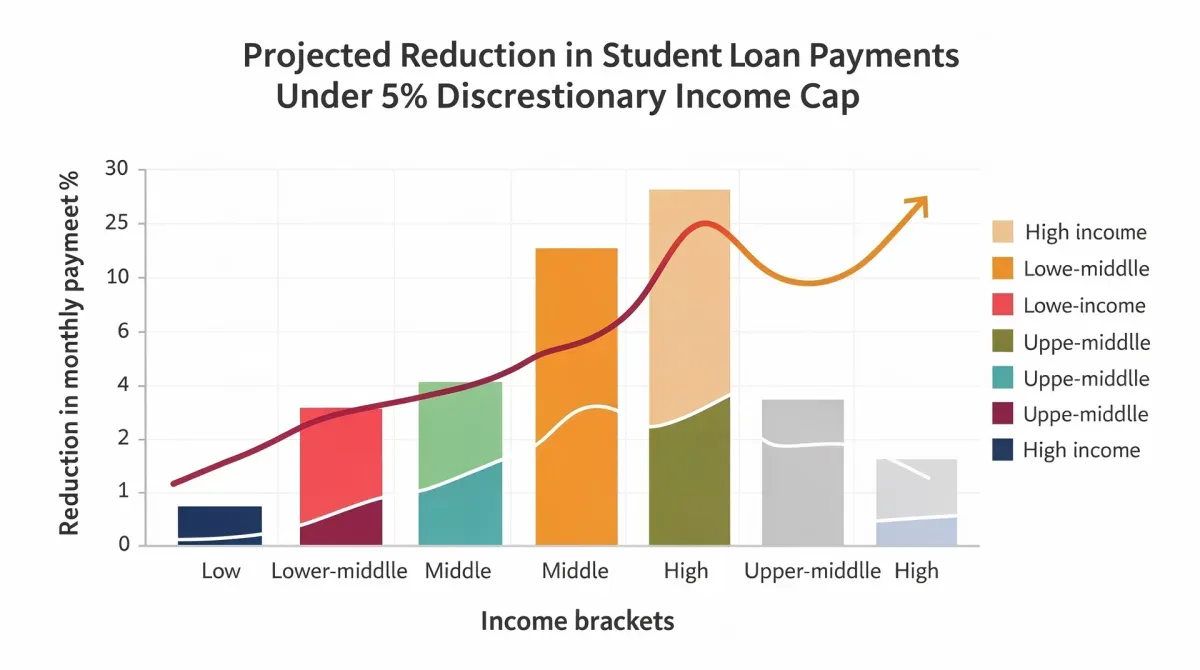
Economically, the impact could be substantial. When borrowers have more disposable income, they are more likely to engage in consumer spending, purchase homes, or start businesses. This increased economic activity can stimulate growth across various sectors. Young graduates, no longer tethered by crippling debt, might feel more confident about making significant investments in their future, which in turn benefits the broader economy.
Impact on specific demographic groups
The policy could have a disproportionately positive impact on certain demographic groups. Historically, marginalized communities and individuals from lower socioeconomic backgrounds often carry a heavier student debt burden, partly due to systemic inequalities and limited access to generational wealth. A 5% cap could offer these groups a more equitable path to financial stability and upward mobility, helping to close existing wealth gaps.
- Low-Income Borrowers: Will experience the most significant relief, potentially freeing up crucial funds for basic necessities or savings.
- Public Service Workers: Those in lower-paying public service jobs will find their careers more financially sustainable, encouraging retention in vital sectors.
- First-Generation College Students: Often face greater financial challenges; this cap could provide a much-needed safety net.
However, it's also important to consider potential unintended consequences. While the cap aims to help, some critics argue it might inadvertently incentivize universities to raise tuition fees, knowing that students' repayment burdens are capped. This could exacerbate the underlying issue of rising college costs, shifting the financial burden from students to taxpayers over the long term. Balancing immediate relief with long-term systemic solutions is crucial for effective policy-making.
Challenges for higher education institutions
While a 5% discretionary income cap offers significant advantages for borrowers, it also presents a complex set of challenges and considerations for higher education institutions. The financial ecosystem of universities and colleges is intricately linked to student aid and repayment structures. Any major shift in federal policy can have profound effects on their operational models, tuition strategies, and overall financial health.
One of the primary concerns for institutions is the potential impact on tuition revenue. If students perceive that their repayment burden is significantly reduced, there might be less pressure on universities to contain tuition costs. This could lead to an inflationary spiral, where tuition continues to rise, making the underlying cost of education even more expensive, despite the cap on repayments. While the cap helps students manage debt, it doesn't address the fundamental issue of escalating college costs, which remains a significant structural problem.
Funding mechanisms and institutional stability
Federal student aid, including various loan programs, plays a crucial role in the financial sustainability of many institutions. A change in repayment structures could indirectly affect the flow of funds or the perceived value of federal loans. Universities might need to rethink their financial aid packages, scholarship offerings, and even their recruitment strategies to adapt to the new environment. There's also the question of whether a more generous repayment system might reduce the incentive for students to carefully consider the return on investment of their chosen degree programs.
- Tuition Inflation: Risk of colleges increasing tuition, knowing student repayment is capped.
- Budgetary Adjustments: Institutions may need to revise financial aid and operational budgets.
- Accountability for Costs: Increased pressure for universities to justify their costs and provide transparent pricing.
Furthermore, institutions, particularly those heavily reliant on federal funding, might face increased scrutiny regarding their administrative costs and educational outcomes. If the government is taking on a larger share of the repayment risk, there might be a greater demand for accountability from colleges to ensure that students are receiving a valuable education that justifies the public investment. This could lead to new regulatory frameworks or performance-based funding models, pushing institutions to be more efficient and student-outcome focused.
The broader economic landscape: inflation and workforce
The introduction of a 5% discretionary income cap on student debt could send ripples through the broader economic landscape, influencing everything from inflation to workforce participation. The immediate effect of freeing up disposable income for millions of Americans is likely to stimulate consumer spending, which, while beneficial for economic growth, also carries the potential for inflationary pressures.
If a significant portion of the population suddenly has more money to spend on goods and services, demand could outpace supply, leading to price increases. Policymakers would need to carefully monitor these dynamics, potentially using other fiscal or monetary tools to mitigate unwanted inflation. However, the exact magnitude of this effect is debatable, as the freed-up funds might also be directed towards savings, investments, or paying down other forms of debt, rather than solely consumer purchases.

In terms of the workforce, the policy could have a transformative effect. Reduced student debt burdens might empower individuals to pursue higher education or specialized training that they might have otherwise avoided due to financial concerns. This could lead to a more skilled and educated workforce, enhancing productivity and innovation across various industries. It might also encourage entrepreneurship, as individuals feel more secure in taking financial risks to start new ventures.
Workforce mobility and career choices
One of the often-cited benefits of alleviating student debt is increased workforce mobility. Graduates might be less tethered to high-paying jobs they dislike simply to service their loans. This could lead to a more dynamic labor market where individuals are free to move into roles that better align with their skills and passions, potentially increasing job satisfaction and overall productivity. It could also encourage more people to enter public service or other essential but often lower-paying fields.
- Increased Consumer Spending: Potential boost to the economy, but also a risk of inflation.
- Skilled Workforce: More individuals might pursue higher education, leading to a more educated labor pool.
- Enhanced Entrepreneurship: Reduced debt burden could encourage risk-taking and business creation.
- Improved Job Satisfaction: Greater freedom for individuals to choose careers based on passion, not just salary.
Conversely, some argue that if the repayment burden is too low, it might reduce the perceived importance of earning a high income to pay off debt, potentially impacting career choices or the willingness to take on challenging roles. However, the prevailing view is that empowering individuals to make choices based on their true interests and aptitudes ultimately leads to a more engaged and productive workforce, benefiting society as a whole.
Equity and access in higher education
The discussion around overhauling higher education aid: analyzing the social impact of the 5% discretionary income cap on student debt is deeply intertwined with issues of equity and access. One of the core arguments for such a policy is its potential to level the playing field for students from diverse socioeconomic backgrounds, ensuring that higher education remains an accessible pathway to opportunity, not just for the privileged few.
For decades, rising tuition costs have disproportionately affected low-income students and students of color, often forcing them to take on larger loans or forgo higher education altogether. By significantly reducing the financial burden of repayment, a 5% cap could make the prospect of attending college less daunting, encouraging more individuals from underserved communities to pursue degrees. This could lead to a more diverse student body and, consequently, a more equitable distribution of highly educated professionals across various sectors of society.
Addressing historical disparities
The policy has the potential to address some of the historical disparities embedded within the higher education system. Many students from marginalized groups lack the family wealth or support networks that can cushion the blow of student debt. A more forgiving repayment system could act as a vital safety net, preventing these students from being trapped in a cycle of debt that hinders their economic progress for years after graduation.
- Increased Enrollment from Underserved Groups: Making college more affordable could boost participation from low-income and minority students.
- Reduced Achievement Gaps: Financial relief can allow students to focus more on their studies and less on financial stress.
- Greater Social Mobility: Higher education becomes a more reliable tool for upward economic and social mobility.
However, it's also crucial to ensure that the policy doesn't inadvertently create new forms of inequity. For instance, if the cap primarily benefits students attending expensive private institutions, it might not fully address the needs of those attending more affordable public colleges who still struggle with living expenses and other costs. A comprehensive approach would also need to examine how the cap interacts with other forms of financial aid, such as grants and scholarships, to ensure a truly equitable outcome. The goal should be to create a system where financial barriers are minimized for all deserving students, regardless of their background.
Long-term sustainability and future policy considerations
While the immediate benefits of a 5% discretionary income cap on student debt are clear, its long-term sustainability and the broader implications for future higher education policy require careful consideration. Any large-scale federal intervention comes with a price tag, and understanding how this cap would be funded, and its impact on the national budget, is paramount.
The primary concern regarding sustainability revolves around the federal budget. If a significant portion of student loan repayments is reduced, the government will either need to absorb those costs, find alternative funding sources, or increase taxes. This could lead to debates about fiscal responsibility and how to balance widespread student relief with other national priorities. There's also the question of whether this policy could set a precedent for future interventions in other sectors, potentially expanding the scope of federal financial responsibility.
Potential for future reforms
The implementation of a 5% cap could also pave the way for further reforms in higher education financing. It might encourage a deeper look into the underlying causes of rising tuition costs, such as administrative bloat, lavish campus amenities, or insufficient state funding for public institutions. If the government is taking on more of the repayment risk, it might also demand greater accountability from universities regarding their cost structures and the value they provide to students.
- Fiscal Impact: Significant costs to the federal government, requiring careful budget management.
- Tuition Control Mechanisms: Could spur policies aimed at controlling college tuition hikes.
- Accountability for Institutions: Increased pressure on universities to demonstrate value and manage costs effectively.
- Broader Systemic Reforms: Potential catalyst for a complete overhaul of higher education funding.
Ultimately, the success of the 5% discretionary income cap will depend not just on its immediate impact, but on how it integrates into a broader, sustainable strategy for higher education. This includes addressing issues like tuition transparency, the role of state funding, and the effectiveness of career counseling and job placement services. A holistic approach that combines borrower relief with systemic reforms is essential to ensure a robust and equitable higher education system for generations to come. Without addressing these deeper issues, even well-intentioned policies like the 5% cap might only offer temporary relief without resolving the root causes of the student debt crisis.
| Key Policy Aspect | Brief Description |
|---|---|
| Discretionary Income Cap | Limits student loan payments to 5% of a borrower's discretionary income, aiming to ease financial burdens. |
| Social Impact | Expected to improve borrower well-being, increase economic mobility, and reduce stress for millions. |
| Economic Effects | Potential for increased consumer spending, a more skilled workforce, and enhanced entrepreneurship. |
| Institutional Challenges | Universities may face tuition inflation pressures and a need to adjust financial aid models. |
Frequently asked questions about the 5% discretionary income cap
What is discretionary income in the context of student loans?▼Discretionary income refers to the portion of a borrower's income that remains after essential expenses and taxes are accounted for. For student loan purposes, it's typically calculated as the difference between a borrower's adjusted gross income and a certain percentage (e.g., 150%) of the federal poverty line for their family size.
How does a 5% cap compare to current income-driven repayment plans?▼Most existing income-driven repayment (IDR) plans require borrowers to pay 10% or more of their discretionary income. A 5% cap would significantly reduce monthly payments for many borrowers, potentially halving their current IDR obligations and offering much greater financial relief and flexibility.
Will this cap affect all types of student loans?▼Typically, such caps primarily apply to federal student loans, particularly those eligible for income-driven repayment plans. Private student loans usually have different terms and are generally not covered by federal repayment programs or caps. Borrowers should always verify specific loan eligibility.
What are the potential benefits for the US economy?▼By freeing up disposable income, the 5% cap could stimulate consumer spending, boost housing markets, and encourage entrepreneurship. It might also lead to a more skilled and mobile workforce, as individuals can pursue education and careers based on interest rather than solely high income to manage debt.
Could the 5% cap lead to increased tuition costs?▼Some critics express concern that if repayment burdens are significantly eased, universities might have less incentive to control tuition hikes, potentially leading to increased costs. This highlights the need for accompanying policies to address the underlying issue of rising educational expenses and institutional accountability.
Conclusion
The proposed 5% discretionary income cap on student debt represents a pivotal moment in the ongoing conversation about higher education aid and its social impact. While offering substantial relief to millions of borrowers and potentially invigorating the economy, its implementation demands a careful balancing act. Addressing concerns about fiscal sustainability, potential tuition inflation, and ensuring true equity across all demographic groups will be crucial. Ultimately, for this policy to achieve its full potential, it must be part of a broader, holistic strategy that not only alleviates immediate financial burdens but also tackles the systemic issues that contribute to the escalating cost of higher education in the first place.