Maximize Daily Energy: 90-Minute Sleep Cycle for Parents
Advertisements
A 90-minute sleep cycle routine can provide a flexible framework for organizing bedtime, understanding sleep stages, and developing healthier sleeping habits for working parents managing demanding professional and family responsibilities.
A 90-minute sleep cycle routine can help working parents understand their sleeping patterns and establish more consistent schedules around their daily responsibilities.
Balancing professional commitments, household tasks, and childcare can make sufficient sleep challenging, potentially affecting concentration, emotional well-being, and daytime energy.
This guide explains sleep cycles, practical bedtime planning, and evidence-informed habits that support restorative sleep without relying on rigid timing rules.
Understanding the 90-Minute Sleep Cycle
Human sleep involves recurring stages that support different aspects of physical recovery, brain function, memory processing, and overall health.
The 90-minute sleep cycle routine uses an approximate cycle duration as a planning reference rather than a precise biological timetable.
Individual sleep cycles naturally vary in length, and their composition changes throughout the night according to normal physiological processes.
The Stages of Sleep and Their Importance
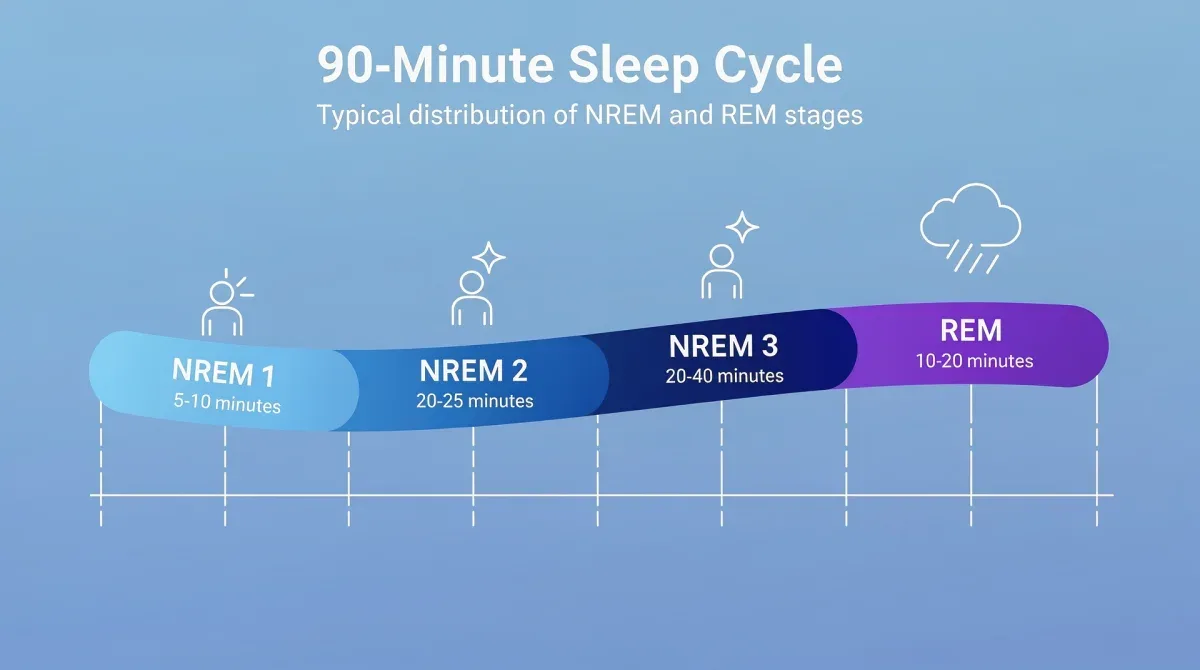
Non-rapid eye movement sleep includes three stages, beginning with lighter sleep and progressing toward deeper, slow-wave sleep.
Rapid eye movement sleep involves increased brain activity and frequently includes vivid dreaming, although dreaming can also occur during other stages.
Both REM and non-REM sleep contribute to normal functioning, making adequate total sleep more important than targeting individual stages.
Why Sleep Cycles Are Not Exactly 90 Minutes
According to the National Heart, Lung, and Blood Institute, sleep cycles generally repeat approximately every 80 to 100 minutes.
Deep sleep usually occurs more prominently earlier in the night, while REM sleep becomes more abundant during later sleeping periods.
A 90-minute sleep cycle routine should therefore remain flexible because mathematical bedtime calculations cannot reliably predict the precise stage of awakening.
Understanding Sleep Inertia and Morning Grogginess
Sleep inertia describes the temporary reduction in alertness that some individuals experience immediately after waking from sleep.
Its intensity can depend on several factors, including previous sleep deprivation, biological timing, and the circumstances surrounding awakening.
Learning about sleep inertia can help working parents develop realistic expectations when exploring strategies to improve their daily energy levels.
Implementing the 90-Minute Sleep Cycle Routine
Developing a consistent sleeping schedule begins with identifying morning responsibilities and allowing sufficient time for uninterrupted rest whenever circumstances permit.
The 90-minute sleep cycle routine can serve as an organizational framework, provided total sleep duration remains the primary consideration.
Working parents should avoid deliberately shortening their sleep simply to make their bedtime align with an estimated number of cycles.
Calculating Your Optimal Bedtime
Begin by identifying your usual wake-up time, considering work schedules, school preparation, commuting requirements, and other important morning responsibilities.
If you must wake at 6:00 AM, falling asleep at 10:30 PM would provide seven and a half hours of sleep.
Falling asleep at 9:00 PM would provide nine hours, although individual sleep requirements and family circumstances may influence suitable schedules.
Accounting for the Time Needed to Fall Asleep
Sleep latency describes the amount of time between attempting to fall asleep and actually entering the initial stage of sleep.
If falling asleep generally takes fifteen minutes, going to bed at 10:15 PM may support a 10:30 PM sleep onset target.
However, the 90-minute sleep cycle routine should accommodate natural variations rather than requiring individuals to fall asleep at precisely calculated times.
Establishing a Consistent Wake-Up Time
Maintaining a reasonably consistent wake-up time can support the body's internal clock and provide greater structure to everyday sleeping patterns.
Working parents may benefit from coordinating morning routines with family members to reduce unnecessary changes in their regular sleeping schedules.
Weekend flexibility is understandable, but substantial and frequent changes in bedtime may make returning to weekday schedules more difficult.
How Much Sleep Do Working Parents Really Need?
Most adults require approximately seven to nine hours of nightly sleep, although individual requirements can vary with age and personal circumstances.
Following a 90-minute sleep cycle routine should never involve regularly sacrificing sufficient sleep to achieve a mathematically convenient bedtime.
Consistent sleep deprivation can affect concentration, reaction time, emotional regulation, and the ability to perform everyday responsibilities safely.
Why Six Hours of Sleep May Not Be Enough
Six hours represents four theoretical ninety-minute cycles, but this calculation does not establish that the body has received sufficient restorative sleep.
Repeatedly sleeping less than recommended may contribute to accumulated sleep deficiency, even when individuals believe they have adapted to shorter nights.
Whenever possible, working parents should prioritize adequate sleeping opportunities instead of treating four estimated cycles as an appropriate nightly goal.
Understanding Individual Sleep Requirements
Sleep needs vary between individuals according to factors such as age, health conditions, previous sleep deprivation, and personal physiological characteristics.
Daytime alertness and the ability to remain awake during ordinary activities can provide useful information about whether sleeping habits require improvement.
A 90-minute sleep cycle routine should support individual needs rather than impose identical sleeping schedules on every working parent.
Optimizing Your Sleep Environment
A comfortable bedroom can support healthier sleeping habits by reducing unnecessary environmental disturbances and creating suitable conditions for nighttime rest.
Factors such as lighting, temperature, noise, bedding comfort, and electronic distractions may influence how easily individuals fall and remain asleep.
Improving these conditions can complement a 90-minute sleep cycle routine while supporting broader efforts to maintain consistent sleep habits.
Creating a Conducive Bedroom Atmosphere
Keep the bedroom comfortably dark during sleeping hours by reducing unnecessary artificial lighting and using appropriate curtains or window coverings.
Maintain a comfortable temperature that suits your preferences, recognizing that individual responses to bedroom warmth and cooling can differ.
These practical environmental adjustments may contribute to improved sleep quality without requiring expensive equipment or substantial changes to your home.
Reducing Noise Without Ignoring Childcare Responsibilities
Household sounds, neighborhood activity, and traffic may interrupt sleep, particularly when working parents already experience frequent nighttime awakenings.
Low-volume background sound may help mask certain disturbances, provided caregivers remain able to hear children, alarms, and important household signals.
Any noise management strategy should balance personal sleeping comfort with the practical safety responsibilities associated with caring for children.
Managing Screen Exposure Before Bedtime
Bright screens and stimulating digital content may interfere with bedtime preparation, particularly when individuals continue working or browsing late into the evening.
Reducing unnecessary electronic activities before bed can create additional opportunities for relaxation and help establish a clearer transition toward nighttime rest.
Including a screen-free wind-down period within your 90-minute sleep cycle routine may provide a more manageable approach to bedtime preparation.
Nutrition, Exercise, and the 90-Minute Cycle
Daily habits involving nutrition, physical activity, caffeine consumption, and alcohol intake can influence sleeping patterns and overall daytime functioning.
Working parents should consider how these habits interact with their schedules rather than relying exclusively on precisely calculated sleeping durations.
A sustainable 90-minute sleep cycle routine can incorporate practical lifestyle adjustments that remain compatible with professional responsibilities and family commitments.
Dietary Habits for Better Sleep
Regular balanced meals can support general health, while avoiding particularly heavy meals shortly before bedtime may reduce nighttime digestive discomfort.
Individual responses to different foods vary, making it useful to identify eating habits that consistently interfere with personal sleeping comfort.
No specific food guarantees improved sleep cycles, and nutritional choices should remain part of a broader approach to healthy daily living.
Managing Caffeine Consumption
Caffeine can temporarily increase alertness, but consuming it too close to bedtime may make falling asleep more difficult for some individuals.
Coffee, energy drinks, tea, chocolate, and certain medications can contain caffeine, making total daily consumption important to consider.
Working parents experiencing sleeping difficulties may benefit from reducing late-day caffeine intake while protecting sufficient opportunities for nighttime rest.
Understanding the Effects of Alcohol
Although alcohol may initially cause drowsiness, it can disrupt normal sleeping patterns and contribute to fragmented sleep later in the night.
Using alcoholic beverages as a regular sleep aid may create additional difficulties rather than supporting consistently restorative nighttime rest.
Limiting alcohol near bedtime can complement a 90-minute sleep cycle routine without introducing another substance that may interfere with sleep.
Incorporating Regular Physical Activity
Regular physical activity can support general health and may contribute to better sleeping patterns when incorporated into a sustainable daily schedule.
Walking, cycling, stretching, and other manageable activities may fit into the limited free time available to working parents.
Exercise timing should reflect individual responses, particularly when vigorous activity shortly before bedtime makes relaxation or sleep onset more difficult.
Managing Stress and Anxiety for Better Sleep
Professional deadlines, financial concerns, childcare responsibilities, and household tasks can make it difficult to transition from daytime activity into restful sleep.
A predictable evening routine may help establish boundaries between demanding daily responsibilities and the time reserved for relaxation.
The 90-minute sleep cycle routine can provide organizational structure, but it cannot independently resolve persistent stress, anxiety, or underlying sleep disorders.
Effective Stress-Reduction Techniques
Gentle relaxation exercises, quiet reading, and calming activities may help individuals create a more comfortable transition toward their intended bedtime.
Writing down upcoming responsibilities before bed can also provide a practical way to organize concerns without repeatedly reviewing them mentally.
Different relaxation methods work differently for each individual, so working parents should select approaches that feel manageable rather than burdensome.
Creating Boundaries Between Work and Family Time
Remote work and flexible schedules can sometimes blur the distinction between professional responsibilities, family commitments, and periods intended for personal rest.
Establishing reasonable limits on evening work communications may help protect opportunities for relaxation and adequate sleep whenever employment circumstances permit.
Coordinating responsibilities with family members can further support a sustainable 90-minute sleep cycle routine without placing unnecessary pressure on one caregiver.
Avoiding Anxiety About Perfect Sleep Timing
Attempting to calculate every sleep cycle precisely may create unnecessary pressure, especially when family responsibilities make exact bedtime schedules unrealistic.
Occasional disruptions should be expected, and missing a calculated bedtime does not mean the remaining night's sleep will provide no benefit.
Flexible expectations help working parents focus on sufficient rest rather than developing additional anxiety about achieving an ideal mathematical schedule.
The Impact of Sleep on Working Parent Productivity
Adequate sleep supports several cognitive functions involved in everyday work, including attention, memory, decision-making, and the ability to respond to changing situations.
Working parents may encounter additional challenges when balancing demanding professional activities with interrupted sleep and limited opportunities for recovery.
A 90-minute sleep cycle routine may help organize sleep opportunities, although productivity improvements depend on multiple individual and environmental factors.
Enhanced Cognitive Function and Focus
Sufficient sleep supports normal attention and learning, helping individuals process information and respond appropriately to the demands of everyday activities.
Sleep deficiency may impair reaction time, increase errors, and make tasks requiring sustained concentration more difficult to complete effectively.
Protecting sufficient sleeping time remains more important than attempting to awaken exclusively at the predicted end of a sleep cycle.
Emotional Regulation and Family Relationships
Insufficient sleep can influence mood and emotional responses, potentially making everyday disagreements, unexpected changes, and demanding family situations more challenging.
Consistent opportunities for rest may support healthier emotional functioning, although family relationships are also influenced by communication and broader personal circumstances.
Working parents should view sleep as one component of well-being rather than expecting a particular bedtime formula to resolve every difficulty.
Recognizing Fatigue in Safety-Sensitive Situations
Significant sleepiness can affect activities requiring sustained attention, including driving, operating machinery, and completing certain professional or household responsibilities.
Individuals experiencing substantial drowsiness should avoid driving and arrange safer alternatives rather than relying exclusively on caffeine to maintain alertness.
A 90-minute sleep cycle routine cannot compensate immediately for significant sleep deprivation or guarantee safe functioning after an interrupted night.
Common Challenges and Solutions for Working Parents
Family responsibilities can make sleeping schedules unpredictable, particularly when children require nighttime care or parents work irregular hours.
These circumstances may limit opportunities for uninterrupted sleep even when individuals maintain otherwise consistent and appropriate bedtime habits.
Adapting a 90-minute sleep cycle routine to actual family circumstances is more practical than expecting perfect adherence every night.
Overcoming Nighttime Sleep Disruptions
Parents caring for young children may experience repeated awakenings associated with feeding, illness, emotional needs, or other nighttime responsibilities.
When practical, caregivers can coordinate responsibilities and alternate appropriate nighttime duties to provide each person with more consistent opportunities for rest.
Families with infants should maintain recommended safe sleep practices rather than adopting unsafe sleeping arrangements to reduce nighttime interruptions.
Adapting Sleep Schedules for Shift Work
Working parents with rotating or overnight shifts may experience additional challenges because their employment schedules conflict with typical sleeping patterns.
Creating a suitable sleeping environment during daytime hours and protecting consistent rest periods may help address some of these difficulties.
A 90-minute sleep cycle routine should remain adaptable for shift workers, with sufficient total sleep taking priority over estimated cycle timing.
Recovering After a Disrupted Night
An unexpectedly difficult night may leave working parents feeling less alert and more fatigued during their professional and household responsibilities.
Allowing additional sleeping opportunities over subsequent nights may support recovery, although repeated sleep deficiency cannot always be resolved immediately.
Adjusting responsibilities when possible and avoiding safety-sensitive activities during severe drowsiness can help manage the consequences of temporary sleep disruption.
Using Strategic Naps Without Disrupting Nighttime Sleep
Daytime naps may provide temporary relief from sleepiness when working parents have suitable opportunities to rest during demanding daily schedules.
However, naps do not consistently replace adequate nighttime sleep, particularly when individuals experience ongoing sleep deficiency or repeated nighttime interruptions.
The 90-minute sleep cycle routine may include occasional naps, provided they do not create further difficulties with regular nighttime sleep.
Understanding Short Power Naps
A short daytime nap lasting approximately twenty minutes may improve alertness for some adults without requiring a lengthy interruption to daily activities.
Individual responses vary, and some people may experience temporary grogginess immediately after waking, even following relatively short naps.
Earlier daytime naps may be preferable when longer or later naps consistently make falling asleep at night more difficult.
Are 90-Minute Naps More Restorative?
A ninety-minute nap may allow progression through several sleep stages, but completing exactly one full cycle cannot be guaranteed.
Longer naps may also produce temporary sleep inertia or reduce nighttime sleepiness, depending on their timing and individual sleeping patterns.
Working parents should select nap durations according to their circumstances rather than assuming that longer naps always provide superior recovery.
Creating a Practical Evening Routine
A manageable evening schedule can help working parents organize household responsibilities while protecting a reasonable amount of time for nighttime rest.
Preparing school supplies, clothing, meals, and important work materials earlier may reduce unnecessary tasks immediately before the intended bedtime.
Combining preparation with a flexible 90-minute sleep cycle routine can make evening transitions more predictable without requiring strict adherence to every step.
Preparing for the Following Morning
Completing selected morning preparations during the evening may reduce uncertainty and provide additional flexibility when managing early family responsibilities.
Simple organizational habits can include preparing clothing, checking schedules, and arranging items required for school, childcare, or professional activities.
These preparations should remain manageable so they do not consume the time originally reserved for relaxation and adequate nighttime sleep.
Establishing a Realistic Wind-Down Period
Reserve a comfortable period before bedtime for quieter activities that do not require intense concentration or continued engagement with professional responsibilities.
A warm shower, gentle reading, or quiet conversation may provide suitable ways to transition away from stimulating daytime activities.
The duration of this routine can vary, making consistency and personal comfort more important than following an exact schedule.
Tracking Sleep Quality and Daily Energy
Recording sleeping patterns can help working parents identify habits, responsibilities, and environmental conditions associated with more restful or disrupted nights.
A simple sleep diary may provide more useful practical information than relying exclusively on theoretical bedtime calculations or occasional morning impressions.
Tracking these observations can help individuals adapt their 90-minute sleep cycle routine according to actual experiences rather than predetermined expectations.
Using a Simple Sleep Diary
Record approximate bedtime, wake-up time, nighttime awakenings, daytime naps, and general perceptions of energy throughout the following day.
These observations may help identify recurring patterns involving late caffeine consumption, demanding work schedules, or interruptions related to family responsibilities.
A sleep diary can also provide useful background information when discussing persistent sleeping difficulties with a qualified healthcare professional.
Understanding the Limitations of Sleep Trackers
Consumer sleep trackers estimate sleeping patterns through measurements such as movement, heart rate, and other signals collected during the night.
However, these devices cannot consistently identify every sleep stage with the precision of professionally conducted diagnostic sleep assessments.
Use tracker information as a general reference rather than treating predicted cycle completion times as exact measurements of biological recovery.
When to Seek Professional Help for Sleep Problems
Persistent fatigue, frequent nighttime awakenings, and difficulty falling asleep may involve factors that cannot be addressed through ordinary bedtime scheduling alone.
Working parents experiencing ongoing sleeping difficulties should consider whether underlying health conditions, medications, or other circumstances may require professional assessment.
A 90-minute sleep cycle routine is a planning approach, not a medical treatment for insomnia, sleep apnea, or other sleep disorders.
Recognizing Possible Signs of Sleep Apnea
Frequent loud snoring, observed breathing pauses, nighttime gasping, and persistent daytime sleepiness can be associated with obstructive sleep apnea.
These symptoms should be discussed with a healthcare professional, particularly when they continue despite allowing sufficient opportunities for nighttime sleep.
Professional evaluation can help identify underlying causes and determine whether further testing or appropriate treatment options should be considered.
Understanding Persistent Insomnia
Insomnia can involve difficulty falling asleep, remaining asleep, or obtaining satisfactory rest despite having adequate opportunities to sleep.
Persistent symptoms may require targeted management rather than repeated adjustments to estimated sleep cycle durations or increasingly restrictive bedtime routines.
Healthcare professionals may recommend evidence-based approaches, including cognitive behavioral therapy for insomnia, depending on individual circumstances and appropriate clinical assessment.
Practical Applications and Evidence-Based Insights
Research on sleep consistently emphasizes the importance of adequate duration, appropriate timing, and regular habits for supporting normal physical and cognitive functioning.
However, these findings do not establish that scheduling sleep exclusively in ninety-minute increments produces superior outcomes for all working parents.
The practical value of a 90-minute sleep cycle routine lies primarily in encouraging organized sleeping opportunities and greater awareness of sleep needs.
An Illustrative Schedule for a Working Parent
Consider a parent who needs to wake at 6:00 AM and typically requires approximately fifteen minutes to fall asleep.
Beginning the evening wind-down around 9:30 PM and going to bed at 10:15 PM could provide approximately seven and a half hours of sleep.
This hypothetical schedule can be adjusted earlier when additional sleep is needed or when nighttime interruptions are expected to reduce actual sleeping time.
Building Sustainable Habits Over Time

Long-term improvements in sleeping habits often involve realistic adjustments that can be maintained alongside changing employment schedules and family responsibilities.
Rather than attempting to transform every daily habit immediately, begin with manageable changes that protect sufficient sleeping opportunities and reduce avoidable disturbances.
Reviewing the 90-minute sleep cycle routine periodically allows working parents to adapt their schedules as personal needs and family circumstances evolve.
Looking Ahead: Supporting Long-Term Energy and Well-Being
Healthy sleeping habits can contribute to general well-being while supporting the physical and cognitive demands associated with professional and family responsibilities.
Working parents may benefit from realistic schedules, shared household responsibilities, comfortable sleeping environments, and appropriate support when difficulties persist.
The 90-minute sleep cycle routine should remain a flexible organizational tool within a broader commitment to adequate and restorative sleep.
Key Point | Brief Description |
|---|---|
Cycle Definition | Sleep cycles generally last approximately 80 to 100 minutes, with natural variations throughout the night. |
Implementation | Maintain consistent sleeping schedules and prioritize approximately seven to nine hours of nightly sleep rather than exact cycle multiples. |
Benefits | Adequate sleep supports energy, attention, emotional regulation, and everyday functioning, although individual results vary. |
Challenges | Inconsistent schedules and family demands require flexible strategies. |
Frequently Asked Questions About Sleep Cycles
What exactly is a 90-minute sleep cycle?
A 90-minute sleep cycle refers to an approximate period during which the brain progresses through different non-REM and REM sleep stages. Actual cycle durations typically vary between approximately 80 and 100 minutes.
How can working parents fit this routine into their busy lives?
Working parents can establish consistent wake-up times, protect sufficient sleeping opportunities, prepare for morning responsibilities in advance, and coordinate nighttime childcare duties whenever practical.
What are the main benefits of a 90-minute sleep cycle routine?
The routine may help organize bedtime and improve awareness of normal sleep patterns. However, potential benefits for energy, mood, and concentration depend primarily on adequate sleep duration, quality, and individual circumstances.
Are there any downsides to this sleep method?
Strictly following ninety-minute increments may encourage insufficient sleep or create unnecessary anxiety about bedtime timing. The approach should remain flexible and should not replace established healthy sleep recommendations.
Can napping be incorporated into a 90-minute sleep cycle routine?
Yes. Short daytime naps may temporarily improve alertness, while longer naps may provide additional sleep. However, a ninety-minute nap does not guarantee completion of an entire sleep cycle or prevent grogginess afterward.
Is sleeping for six hours enough for working parents?
Six hours is generally below the recommended sleep duration for most adults. Regularly restricting sleep to this amount may contribute to fatigue, reduced alertness, and other consequences associated with insufficient sleep.
Is seven and a half hours of sleep better than eight hours?
Not necessarily. Sleep cycles vary in duration, and individual sleep requirements differ. Eight hours may provide more suitable rest for some individuals, even though it does not represent an exact multiple of ninety minutes.
Does waking at the end of a sleep cycle prevent grogginess?
Not always. Morning grogginess can depend on sleep stage, previous sleep deprivation, biological timing, and other factors. A calculated bedtime cannot reliably guarantee awakening during lighter sleep.
What time should I sleep if I wake up at 6:00 AM?
Falling asleep at 10:00 PM provides eight hours of sleep, while falling asleep at 10:30 PM provides seven and a half hours. Allow additional time to fall asleep and adjust your schedule according to individual needs.
Can sleep trackers accurately identify every sleep cycle?
Consumer sleep trackers provide estimates of sleep patterns, but their accuracy varies. They should not be treated as definitive measurements of individual sleep stages or substitutes for professional diagnostic assessments.
Can a 90-minute sleep cycle routine cure insomnia?
No. Persistent insomnia may require professional evaluation and evidence-based treatment. A consistent sleeping schedule may support healthy habits, but calculating sleep cycles is not an established insomnia treatment.
When should working parents consult a sleep specialist?
Professional assessment may be appropriate when persistent fatigue, frequent awakenings, significant daytime sleepiness, loud snoring, or difficulty falling asleep continue despite allowing sufficient opportunities for nighttime rest.
Conclusion
A 90-minute sleep cycle routine can help working parents organize their schedules and develop a better understanding of normal sleeping patterns.
However, adequate sleep duration, consistent habits, comfortable environments, and realistic expectations remain more important than following exact ninety-minute sleeping intervals.
By adapting these strategies to individual needs, working parents can support healthier sleeping habits while balancing their professional and family responsibilities.
