Edge AI vs Cloud LLMs: 24GB VRAM for Local Models
Advertisements
The growing availability of 24GB VRAM hardware is fundamentally changing the landscape of AI, enabling enterprises to run sophisticated large language models (LLMs) locally on edge devices rather than solely relying on cloud infrastructure, enhancing data sovereignty and operational efficiency.
The technological shift towards more powerful local processing capabilities is reshaping how businesses approach artificial intelligence. The emergence of Edge AI local LLMs, particularly with hardware boasting 24GB VRAM, marks a pivotal moment, allowing enterprise-grade models to execute directly on local devices rather than exclusively in the cloud. This development brings forth significant implications for data privacy, operational costs, and real-time performance, inviting a closer look into its transformative potential.
The evolving landscape of AI deployment: Edge versus cloud
The debate between edge AI and cloud LLMs has long centered on trade-offs between computational power, data latency, and cost. Historically, large language models were almost exclusively the domain of vast cloud infrastructures, owing to their immense computational demands. However, recent advancements in hardware, especially the proliferation of GPUs with substantial VRAM, are democratizing access to powerful AI, moving it closer to the data source.
This paradigm shift is driven by the need for faster inference times, enhanced data security, and reduced operational expenditures. Cloud-based LLMs, while offering scalability and flexibility, often introduce latency issues and raise concerns about data sovereignty, particularly for sensitive enterprise data. Edge AI, by contrast, promises to mitigate these challenges by bringing processing directly to the device or local network.
Defining edge AI and cloud LLMs
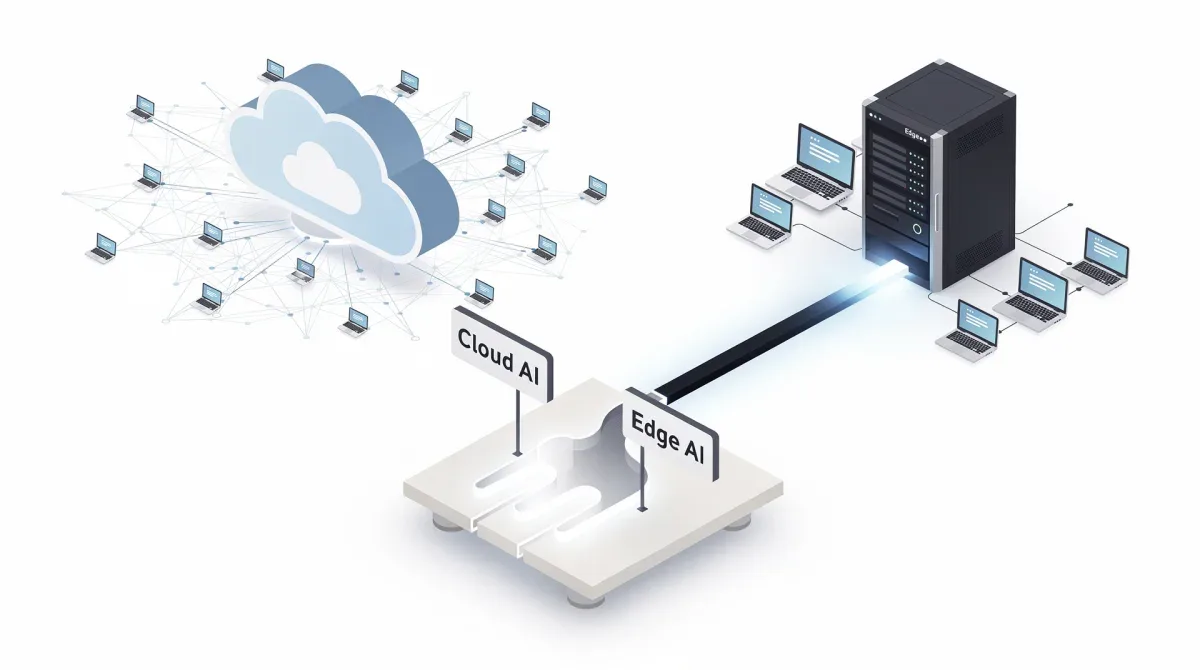
Edge AI refers to AI systems that process data locally on a device or a local server, at or near the source of the data generation. This minimizes the need to send data to a centralized cloud for processing. Cloud LLMs, on the other hand, leverage remote data centers with massive computational resources to run complex AI models, accessible over the internet. The distinction is crucial for understanding the operational implications for businesses.
- Edge AI: Processing occurs on local devices, reducing latency and enhancing privacy.
- Cloud LLMs: Data processed in remote data centers, offering scalability and centralized management.
- Hybrid Approaches: Combining both, where some tasks are local and others offloaded to the cloud.
The move towards edge AI is not about replacing cloud LLMs entirely but rather optimizing where and how AI computations are performed. For many enterprise applications, the benefits of local processing—such as real-time analytics, lower bandwidth consumption, and compliance with data residency regulations—are becoming increasingly compelling.
Ultimately, the choice between edge and cloud deployment depends on specific use cases, regulatory requirements, and performance objectives. As hardware capabilities at the edge continue to advance, the balance is shifting, making local execution of sophisticated AI models a viable and often preferable option for a growing number of scenarios.
The rise of 24GB VRAM hardware for local LLMs
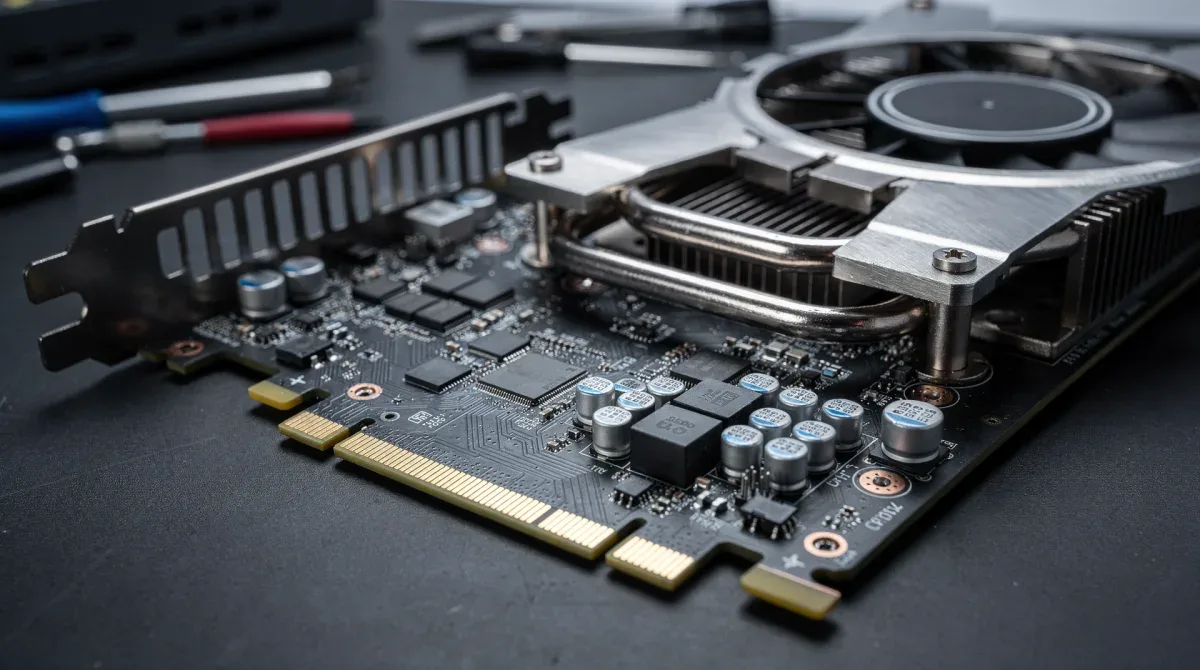
The availability of consumer and professional-grade graphics cards equipped with 24GB of VRAM has been a game-changer for running large language models locally. Until recently, deploying enterprise-grade LLMs outside of a cloud environment was largely impractical due to the sheer memory requirements of these models. Now, this hardware threshold allows for the direct execution of increasingly sophisticated models on standard workstations or dedicated edge servers.
This significant increase in local memory capacity means that models that previously required distributed cloud computing can now be loaded entirely into the GPU's memory on a single machine. This dramatically reduces the barriers to entry for businesses looking to implement powerful AI solutions without incurring the recurring costs and potential security risks associated with cloud services.
Impact on model size and complexity
With 24GB VRAM, developers can now run models with billions of parameters directly on local hardware. This includes many of the open-source LLMs that rival proprietary cloud-based models in performance. The ability to load larger models means more nuanced understanding, better generation capabilities, and overall higher quality AI outputs directly at the edge.
- Larger Models: Execute models with parameters ranging from 7B to 30B, even quantized versions of 70B models, locally.
- Enhanced Performance: Faster inference times due to reduced data transfer overhead and localized processing.
- Development Flexibility: Allows for rapid iteration and experimentation with different models without cloud dependency.
The implications extend beyond just running existing models. It opens up new avenues for fine-tuning and customizing LLMs for specific enterprise needs, using proprietary datasets that might be too sensitive to upload to the cloud. This control over the entire AI pipeline, from model selection to deployment, is a significant advantage for businesses seeking tailored solutions.

The surge in 24GB VRAM hardware has not only made local LLM deployment feasible but also highly attractive. It empowers enterprises to take greater control over their AI initiatives, fostering innovation and enabling a more secure and efficient integration of advanced AI capabilities into their operations.
Unpacking the benefits of edge AI for enterprise-grade models
The transition of enterprise-grade LLMs from cloud to edge deployments, facilitated by hardware with 24GB VRAM, brings a multitude of strategic advantages for businesses. These benefits span critical areas such as data security, operational efficiency, and real-time performance, fundamentally altering the value proposition of AI implementation.
One of the most compelling benefits is the enhanced data privacy and security. By processing sensitive information locally, companies can ensure that proprietary data never leaves their controlled environment, significantly reducing the risk of data breaches and complying with stringent regulatory requirements like GDPR and HIPAA. This level of data sovereignty is often unattainable with cloud-based solutions.
Key advantages of local LLM execution
Running LLMs on edge devices delivers tangible improvements in several operational aspects. The direct processing of data at the source eliminates the round trips to cloud servers, leading to substantially lower latency and faster response times, which is crucial for applications requiring immediate insights or interactions.
- Improved Data Privacy: Sensitive data remains within the enterprise's local network, reducing exposure.
- Reduced Latency: Real-time processing for applications demanding immediate responses, such as automated customer service or industrial automation.
- Lower Operational Costs: Eliminates recurring cloud subscription fees and data transfer costs over time.
- Offline Capability: AI applications can function even without continuous internet connectivity.
Furthermore, the ability to operate offline or in environments with intermittent connectivity ensures business continuity and expands the reach of AI applications to remote or resource-constrained locations. This resilience is a significant differentiator from cloud-dependent systems, which can be vulnerable to network outages.
In essence, edge AI with local LLMs provides a robust, secure, and cost-effective alternative for enterprises. It empowers them to leverage advanced AI capabilities while maintaining full control over their data and operations, paving the way for more innovative and integrated AI solutions across various industries.
Addressing challenges and considerations for edge LLM deployment
While the advantages of deploying enterprise-grade LLMs on edge hardware are significant, the transition is not without its challenges. Businesses must carefully consider several factors to ensure a successful and sustainable implementation. These considerations range from hardware infrastructure and software optimization to ongoing maintenance and talent acquisition.
One primary challenge lies in the initial investment in hardware. While cloud services offer a pay-as-you-go model, edge AI requires upfront capital expenditure for GPUs with sufficient VRAM, local servers, and associated infrastructure. This can be a barrier for smaller enterprises or those with limited IT budgets, requiring a clear return on investment analysis.
Overcoming technical hurdles
Optimizing LLMs for edge deployment also presents technical complexities. Models often need to be quantized or pruned to fit within the memory and computational constraints of edge devices without significant performance degradation. This requires specialized knowledge in model optimization techniques and careful benchmarking.
- Hardware Costs: Initial investment in powerful GPUs and local infrastructure.
- Model Optimization: Techniques like quantization and pruning to fit models on edge devices.
- Software Stack: Ensuring compatible frameworks and libraries for local execution.
- Maintenance and Updates: Managing software updates and hardware maintenance for distributed edge devices.
Additionally, managing a distributed network of edge AI devices can be more complex than managing a centralized cloud environment. This includes deploying updates, monitoring performance, and troubleshooting issues across multiple physical locations. Robust remote management tools and strategies are essential for scaling edge AI solutions.
Despite these challenges, the long-term benefits of edge LLMs often outweigh the initial hurdles. Strategic planning, investing in the right talent, and adopting scalable management practices can help enterprises navigate these complexities, unlocking the full potential of local AI processing for their critical applications.
Practical applications: Industries benefiting from local LLMs
The ability to run enterprise-grade LLMs locally on hardware with 24GB VRAM is opening new doors for various industries, enabling innovative applications that were previously impractical or impossible due to latency, privacy, or cost concerns. This localized processing power is particularly transformative for sectors dealing with sensitive data or requiring immediate decision-making capabilities.
In healthcare, for instance, local LLMs can process patient records, assist with diagnostics, and provide personalized treatment recommendations without sending highly confidential data to external cloud servers. This ensures compliance with strict privacy regulations while still leveraging advanced AI for better patient outcomes.
Transformative use cases across sectors
The impact of edge AI extends across a broad spectrum of industries, each finding unique ways to capitalize on the benefits of local LLM execution. From manufacturing to finance, the applications are diverse and growing.
- Healthcare: Secure processing of patient data, clinical decision support, drug discovery.
- Financial Services: Fraud detection, personalized financial advice, risk assessment, all while keeping sensitive client data on-premises.
- Manufacturing: Predictive maintenance, quality control, robot automation, and supply chain optimization, with real-time analytics on factory floors.
- Retail: Personalized customer experiences, inventory management, demand forecasting, executed locally for immediate results.
- Telecommunications: Network optimization, intelligent traffic management, and enhanced cybersecurity at the network edge.
These examples highlight how local LLMs can drive operational efficiencies, enhance security, and create new service offerings. The ability to deploy AI models directly where the data is generated enables faster, more accurate, and more secure decision-making, leading to significant competitive advantages.
The adoption of edge AI with local LLMs is not just a technological upgrade; it's a strategic move that allows industries to harness the full power of AI in a more controlled, efficient, and compliant manner. This shift is poised to redefine how businesses operate and innovate in the digital age.
The future outlook: Hybrid architectures and continued innovation
The trajectory of AI deployment is increasingly pointing towards hybrid architectures, where the strengths of both edge AI and cloud LLMs are leveraged synergistically. While 24GB VRAM hardware empowers local execution of enterprise-grade models, it’s unlikely to entirely supersede cloud infrastructure. Instead, a more integrated approach is emerging, optimizing where specific AI tasks are best performed.
This hybrid model allows businesses to retain the scalability and vast computational resources of the cloud for certain tasks, such as initial model training or large-scale data aggregation, while benefiting from the low latency, privacy, and cost-efficiency of edge processing for inference and real-time operations. The flexibility to choose the optimal deployment strategy for each component of an AI workflow is a significant advancement.
Emerging trends in AI infrastructure
Innovation in AI hardware and software continues at a rapid pace, promising even more powerful and efficient edge AI capabilities in the near future. We can anticipate further increases in VRAM capacity, more energy-efficient processors, and advancements in AI accelerators specifically designed for edge environments.
- Increased VRAM: Expect even higher memory capacities on consumer and professional GPUs.
- Specialized Edge Processors: Development of chips optimized for AI inference with lower power consumption.
- Federated Learning: Training models on decentralized edge devices without centralizing data.
- Software Tooling: Improved frameworks and tools for easier model deployment and management at the edge.
The development of federated learning techniques, where models are trained collaboratively across multiple edge devices without sharing raw data, represents another significant leap. This approach further enhances data privacy and can lead to more robust and generalized AI models.
Ultimately, the future of AI deployment will be characterized by adaptability and intelligence, with organizations strategically allocating their AI workloads between edge and cloud environments. This ongoing innovation will ensure that businesses can continue to push the boundaries of what's possible with AI, driving efficiency, security, and new opportunities across all sectors.
| Key Aspect | Description |
|---|---|
| 24GB VRAM Impact | Enables local execution of enterprise-grade LLMs, previously cloud-exclusive. |
| Edge AI Benefits | Enhanced data privacy, reduced latency, lower operational costs, and offline capability. |
| Challenges | High initial hardware costs, model optimization complexities, and distributed management. |
| Future Outlook | Hybrid architectures combining edge and cloud, with continuous hardware and software innovation. |
Frequently asked questions about edge AI and local LLMs
What is the primary advantage of running LLMs locally on edge devices?▼The main advantage is enhanced data privacy and security, as sensitive information remains within the enterprise's controlled environment, eliminating the need to transmit it to external cloud servers. This also significantly reduces latency and can lead to lower long-term operational costs.
How does 24GB VRAM hardware enable local LLM deployment?▼24GB of VRAM provides sufficient memory capacity to load and execute substantial large language models (LLMs) directly onto a single GPU. This memory threshold allows complex, enterprise-grade models with billions of parameters to run locally, circumventing the previous reliance on distributed cloud computing resources.
What types of enterprises benefit most from edge AI with local LLMs?▼Industries dealing with highly sensitive data, such as healthcare and financial services, benefit immensely from the enhanced privacy. Additionally, sectors requiring real-time processing and low latency, like manufacturing and telecommunications, gain significant advantages through immediate, on-site AI inference.
Are there significant challenges in deploying LLMs at the edge?▼Yes, key challenges include the initial capital expenditure for high-VRAM hardware, the technical complexities of optimizing models for edge devices (e.g., quantization), and the management of a distributed network of AI-enabled devices. Strategic planning is crucial to overcome these hurdles effectively.
Will edge AI completely replace cloud LLMs in the future?▼It is unlikely that edge AI will completely replace cloud LLMs. The future is leaning towards hybrid architectures, where both edge and cloud infrastructures are utilized strategically. The cloud will likely remain essential for large-scale model training and extensive data aggregation, while edge AI handles real-time inference and privacy-sensitive tasks.
Conclusion
The advent of 24GB VRAM hardware has irrevocably altered the landscape of AI deployment, making Edge AI local LLMs a tangible and highly beneficial reality for enterprises. This shift promises unparalleled data privacy, reduced operational costs, and real-time processing capabilities that were once exclusive to vast cloud infrastructures. While challenges related to initial investment and technical optimization exist, the strategic advantages for industries handling sensitive data or requiring immediate insights are undeniable. As innovation continues, a hybrid approach leveraging the strengths of both edge and cloud will likely define the future, empowering businesses to harness advanced AI with greater control and efficiency.
