Digital Wardrobe Apps: Cut Apparel Purchases by 50%
Advertisements
Digital wardrobe apps offer a powerful solution for modern consumers, enabling precise cataloging of existing garments to significantly reduce redundant apparel purchases and foster more mindful shopping habits.
In an era of fast fashion and endless consumer choices, managing our wardrobes has become a significant challenge. However, the rise of digital wardrobe apps presents a transformative solution, allowing individuals to catalog their clothing and accessories with unprecedented efficiency, ultimately helping to reduce redundant apparel purchases by as much as 50%. This technological innovation is not just about organization; it's a strategic tool for conscious consumption and financial prudence.
Understanding the appeal of digital wardrobe apps
Digital wardrobe apps have emerged as a powerful solution for modern consumers seeking to gain control over their clothing collections. These applications move beyond simple inventory management, offering sophisticated tools that transform how we interact with our closets and approach shopping. Their appeal lies in their ability to bring order to what can often feel like a chaotic part of our lives.
The core functionality of these apps revolves around digitizing your entire wardrobe. This means taking photos of each item, categorizing them, and adding details such as brand, size, color, and even care instructions. This process, while initially time-consuming, lays the foundation for a much more streamlined and thoughtful approach to personal style and consumption.
The visual cataloging advantage
One of the most compelling features of digital wardrobe apps is the visual catalog they create. Instead of rummaging through packed drawers or overflowing hangers, users can browse their entire collection at a glance on their smartphone or tablet. This visual accessibility has several profound benefits:
- It provides a comprehensive overview of all owned items, revealing what you truly possess.
- It helps identify gaps in your wardrobe, preventing impulse buys of similar items.
- It facilitates outfit planning, allowing users to mix and match virtually before dressing.
- It reduces the mental load associated with deciding what to wear daily.
Beyond simple cataloging, many apps integrate advanced features like style suggestions, packing lists for travel, and even tracking the cost-per-wear of items. This holistic approach empowers users to make more informed decisions, moving away from reactive shopping to a proactive, strategic wardrobe management system. Understanding and leveraging these features is the first step towards a more sustainable and economically sound fashion journey.
Ultimately, the appeal of digital wardrobe apps stems from their promise of efficiency, organization, and a renewed sense of control over one's personal style and spending habits. By providing a clear, visual inventory, they empower users to make smarter choices, significantly impacting both their wallets and their environmental footprint.
The psychology behind redundant apparel purchases
To truly appreciate the impact of digital wardrobe apps, it's essential to understand the psychological drivers behind why we often buy clothes we don't need. Redundant apparel purchases are not merely a matter of forgetfulness; they are often rooted in a complex interplay of emotions, marketing influences, and cognitive biases that lead to repetitive and often regrettable spending.
One primary factor is the 'out of sight, out of mind' phenomenon. When clothes are hidden in crowded closets or forgotten in the back of drawers, their existence fades from our active memory. We then perceive a need for a new item, even if we already own something functionally or aesthetically identical. This cognitive blind spot is a significant contributor to overconsumption.
Marketing and emotional triggers
Modern marketing strategies are highly effective at tapping into our emotional vulnerabilities. Retailers constantly present new trends, sales, and limited-time offers, creating a sense of urgency and desirability. This often triggers impulsive purchases driven by:
- The desire for novelty and the excitement of acquiring something new.
- The fear of missing out (FOMO) on a perceived good deal or trend.
- Emotional coping mechanisms, where shopping is used to alleviate stress, boredom, or sadness.
- Social comparison, where we feel pressured to keep up with peers or societal fashion standards.
These emotional and external pressures often override rational decision-making, leading to purchases that don't align with our actual needs or existing wardrobe. The fleeting satisfaction of a new purchase quickly gives way to buyer's remorse when we realize we already own something similar, or that the item doesn't fit our lifestyle.
Furthermore, the sheer volume of clothing available and the rapid cycles of fast fashion contribute to this problem. It becomes easy to lose track of what we own when new collections arrive weekly. Digital wardrobe apps intervene precisely at this psychological juncture, offering a clear, objective view of our possessions that counters these impulsive tendencies and allows for more deliberate, thoughtful purchasing decisions.

By providing a constant, accessible reminder of what's already in the closet, these apps help to neutralize the psychological triggers that lead to redundant buys, fostering a more mindful and sustainable approach to fashion.
How digital cataloging prevents duplicate purchases
The most direct benefit of using digital wardrobe apps is their unparalleled ability to prevent duplicate purchases. By creating a comprehensive and easily accessible catalog of every item you own, these apps eliminate the guesswork and memory lapses that often lead to buying what you already have. This systematic approach transforms your shopping habits from reactive to highly intentional.
Imagine being in a store, tempted by a new black sweater. Without a digital catalog, you might vaguely recall owning a similar item but be unsure of its exact style, fit, or condition. This uncertainty often results in a purchase, only for you to discover a near-identical sweater already hanging in your closet. Digital wardrobe apps solve this dilemma instantly.
Real-time inventory and informed decisions
With a digital wardrobe app, you can simply open your phone, search for 'black sweater,' and immediately see all the black sweaters you own. Details such as fabric, silhouette, and even photos of you wearing them can be stored within the app. This real-time inventory empowers you to make an informed decision on the spot:
- Do I truly need another black sweater, or is this one too similar to what I already have?
- Does this new item fill a specific gap, or is it a redundant addition?
- Can I create new outfits with my existing black sweaters that achieve a similar look?
This immediate access to your entire collection acts as a powerful deterrent against impulsive, unnecessary purchases. It shifts the focus from 'what do I want?' to 'what do I need to complement my existing wardrobe?' This subtle but significant change in mindset is crucial for reducing consumption.

Moreover, some advanced apps allow users to tag items they are considering buying and compare them directly with their existing inventory. This visual comparison can highlight redundancies before a purchase is even made, saving both money and closet space. The discipline of cataloging forces a confrontation with your actual possessions, making you more accountable for each new addition. This proactive approach to wardrobe management is key to preventing the accumulation of unworn or duplicate items, leading to a much more efficient and cost-effective personal style.
Quantifying the savings: a 50% reduction in apparel spending
The claim of reducing redundant apparel purchases by 50% through digital wardrobe apps might seem ambitious, but it's a realistic outcome for many users. This significant reduction isn't just anecdotal; it's a measurable result of more mindful consumption driven by organized inventory and informed decision-making. The financial impact can be substantial, translating into hundreds, if not thousands, of dollars saved annually.
Consider the average consumer who, without a clear overview of their wardrobe, might purchase several items each year that are duplicates or near-duplicates of what they already own. These might include another pair of black jeans, a white T-shirt, a navy blazer, or a striped top, simply because the existing ones are forgotten or inaccessible. Each of these 'unnecessary' purchases adds up.
Case studies and consumer reports
While specific global statistics are still emerging, early adopters and various fashion industry reports indicate a strong correlation between digital wardrobe management and decreased spending. Users consistently report:
- Fewer impulse buys, particularly during sales events.
- A shift towards purchasing higher-quality, more versatile items that truly fill gaps.
- Increased satisfaction with their existing wardrobe, leading to less desire for newness.
- Better utilization of current clothes, extending their lifespan and reducing the need for replacements.
For example, if an individual typically spends $100 per month on clothing, a 50% reduction would mean saving $50 monthly, or $600 annually. Over several years, these savings compound significantly. This money can then be redirected towards other financial goals, such as savings, investments, or experiences, rather than accumulating unworn garments.
The 50% figure represents the potential savings from eliminating truly redundant items and curbing impulsive shopping. It doesn't necessarily mean cutting all fashion spending in half, but rather optimizing it. By knowing exactly what you own, you can shop with purpose, investing in pieces that genuinely enhance your style rather than adding clutter. This strategic approach to spending is where the true power of digital wardrobe apps lies, turning a disorganized closet into a tool for financial empowerment.
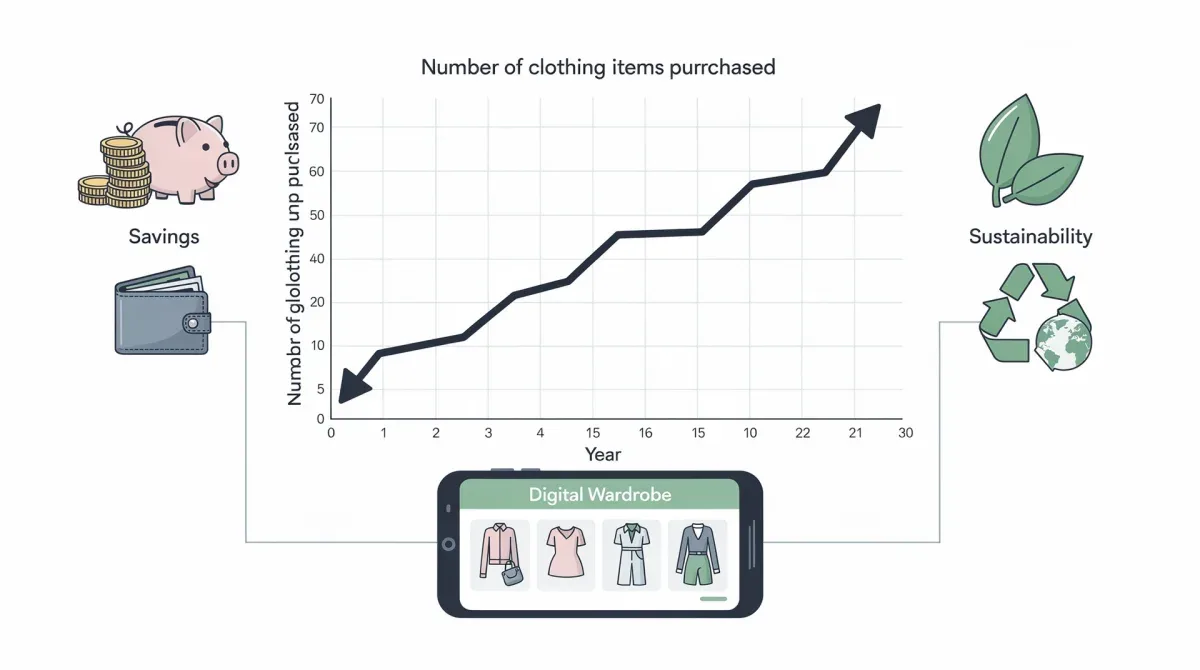
The quantifiable savings underscore that these apps are more than just a trend; they are a practical financial tool for the modern consumer.
Beyond savings: environmental and lifestyle benefits
While the financial savings from reducing redundant apparel purchases are a compelling reason to adopt digital wardrobe apps, their benefits extend far beyond the wallet. These tools also play a crucial role in promoting environmental sustainability and fostering a more mindful, less stressful lifestyle. In an age where conscious consumption is increasingly valued, these secondary benefits are equally significant.
The fashion industry is a major contributor to environmental degradation, from excessive water use and chemical pollution in production to the vast amounts of textile waste ending up in landfills. Every redundant purchase exacerbates these problems. By significantly reducing the number of new clothes we buy, digital wardrobe apps directly mitigate this environmental impact.
Promoting sustainable fashion practices
When consumers buy fewer, more thoughtfully chosen items, it supports a shift towards a more sustainable fashion ecosystem. This includes:
- Reducing demand for fast fashion, which often relies on exploitative labor and environmentally harmful practices.
- Encouraging investment in higher-quality, durable garments that last longer.
- Minimizing textile waste by maximizing the use of existing clothes.
- Fostering an appreciation for what one already owns, rather than constantly seeking newness.
Beyond the environmental aspect, digital wardrobe apps contribute to a more organized and less stressful daily life. The mental burden of an overflowing, disorganized closet can be surprisingly heavy. Deciding what to wear each day becomes a chore, and the constant feeling of 'having nothing to wear' despite a closet full of clothes is a common frustration.
With a digitized wardrobe, outfit planning becomes effortless. You can quickly assemble looks for various occasions, experiment with combinations, and even track outfits worn to avoid repetition. This efficiency frees up mental space and reduces morning stress, allowing for a more focused and productive start to the day. The enhanced organization also extends to packing for trips, where pre-planned outfits ensure you bring exactly what you need without overpacking.
Ultimately, digital wardrobe apps empower users to become more intentional consumers, leading to a wardrobe that is not only cost-effective but also environmentally friendly and conducive to a calmer, more organized lifestyle. They represent a powerful tool for personal well-being and responsible consumption in the modern world.
Choosing the right digital wardrobe app for you
With a growing number of digital wardrobe apps available, selecting the right one can seem daunting. Each app offers a unique set of features, user interfaces, and pricing models. The key is to identify your specific needs and priorities to find an app that will genuinely enhance your wardrobe management and help you reduce redundant purchases effectively.
Consider your technical proficiency and how much time you're willing to invest in the initial setup. Some apps require more manual input for cataloging, while others offer AI-powered assistance for tagging and categorization. The ease of use and intuitiveness of the interface are crucial for long-term engagement.
Key features to look for
When evaluating different digital wardrobe apps, keep an eye out for these essential features:
- Easy Upload and Organization: The ability to quickly photograph and categorize items, ideally with smart tagging or AI assistance.
- Outfit Planning Tools: Features that allow you to virtually combine items, save outfits, and plan for events.
- Calendar Integration: The option to log when you wear specific outfits, helping to track usage and avoid repetition.
- Wishlist and Shopping Tools: A dedicated section to add items you're considering, allowing for comparison against your existing wardrobe before purchase.
- Analytics and Insights: Some apps provide data on your most-worn items, cost-per-wear, and even suggest items to declutter.
- Cloud Sync and Backup: Ensures your wardrobe data is safe and accessible across multiple devices.
Popular apps like Stylebook, Pureple, and Cladwell each offer a distinct approach, from highly detailed tracking to more minimalist, AI-driven suggestions. Reading reviews and trying out free versions or trials can provide valuable insight into which app best suits your personal style and organizational preferences. Some apps are free with in-app purchases, while others require a one-time payment or a subscription. Factor this into your decision, considering the potential savings you stand to gain.
Ultimately, the 'best' app is the one you will consistently use. A well-chosen digital wardrobe app becomes a powerful ally in your quest for a more organized, sustainable, and cost-effective approach to fashion, solidifying its role as an indispensable tool for conscious consumers.
| Key Benefit | Brief Description |
|---|---|
| Reduces Redundant Purchases | By providing a visual inventory, apps prevent buying items you already own, leading to significant savings. |
| Saves Money (Up to 50%) | Eliminating unnecessary buys can cut apparel spending by half, freeing up funds for other priorities. |
| Promotes Sustainability | Less consumption means less waste and a reduced environmental footprint from the fashion industry. |
| Enhances Organization | Streamlines outfit planning, reduces clutter, and alleviates decision fatigue, leading to a more organized lifestyle. |
Frequently asked questions about digital wardrobe apps
What exactly is a digital wardrobe app?▼A digital wardrobe app is a mobile application that allows you to photograph, catalog, and organize all your clothing, shoes, and accessories. It creates a virtual representation of your closet, enabling you to manage your wardrobe, plan outfits, and track items efficiently from your smartphone.
How can these apps help me save money?▼By providing a clear inventory of everything you own, digital wardrobe apps prevent you from buying duplicate items. You can check your existing collection before making a purchase, ensuring you only buy what you truly need and don't already possess, leading to significant savings.
Is it time-consuming to set up a digital wardrobe?▼Initially, yes, cataloging your entire wardrobe can take time, depending on the size of your collection. However, many apps offer features like bulk uploads, AI tagging, and easy categorization to streamline the process. The initial investment pays off through long-term organization and reduced spending.
Do digital wardrobe apps promote sustainable fashion?▼Absolutely. By encouraging users to make the most of their existing clothes and reducing redundant purchases, these apps directly contribute to a decrease in overall consumption. This helps lessen the environmental impact of fast fashion and promotes a more mindful, sustainable approach to clothing.
What features should I look for in a good digital wardrobe app?▼Key features include easy photo upload and categorization, outfit planning tools, calendar integration for tracking wears, a wishlist for future purchases, and analytics on your wardrobe usage. User-friendliness and cloud backup are also important considerations for a seamless experience.
Conclusion
In an increasingly consumption-driven world, digital wardrobe apps stand out as a revolutionary tool for managing personal style, finances, and environmental impact. By offering a meticulously organized and easily accessible catalog of your clothing, these applications empower you to make informed decisions, curb impulsive buying, and significantly reduce redundant apparel purchases. The documented potential to cut spending by 50% is not just a financial gain but a testament to a broader shift towards conscious consumption and sustainable living. Embracing digital wardrobe management is a proactive step towards a more efficient, organized, and environmentally responsible approach to fashion, benefiting both your wallet and the planet.
