AWS vs. Azure: 2026 Cloud Migration Strategies for U.S. Enterprises
U.S. enterprises evaluating cloud migration in 2026 must critically assess AWS and Azure’s distinct offerings in terms of infrastructure, security, compliance, and cost models to align with specific business objectives and regulatory landscapes.
As U.S. enterprises navigate the complex landscape of digital transformation, the decision to embark on a cloud journey, or to optimize an existing one, becomes increasingly critical. Central to this strategic pivot is the choice between leading cloud service providers. This article delves into cloud migration strategies for 2026, specifically comparing Amazon Web Services (AWS) and Microsoft Azure, offering a comprehensive analysis to guide your enterprise’s future.
Understanding the Cloud Landscape for U.S. Enterprises in 2026
The year 2026 marks a pivotal moment in cloud adoption, with U.S. enterprises increasingly reliant on robust, scalable, and secure cloud infrastructures. The shift from traditional on-premises data centers to cloud environments is no longer a futuristic concept but a present-day imperative driven by demands for agility, cost-efficiency, and innovation. Businesses are seeking not just infrastructure, but comprehensive ecosystems that support AI, machine learning, data analytics, and advanced security protocols.
The competitive landscape between AWS and Azure continues to evolve rapidly. Both platforms offer extensive suites of services designed to meet diverse enterprise needs, yet they possess distinct philosophies and strengths. Understanding these nuances is paramount for making informed decisions that will impact operational efficiency, financial outlay, and strategic positioning for years to come. The emphasis in 2026 is squarely on intelligent migration, leveraging cloud capabilities to foster competitive advantage.
Key Drivers for Cloud Migration
- Digital Transformation: Accelerating the adoption of new technologies and business models.
- Operational Efficiency: Streamlining processes and reducing manual overhead.
- Cost Optimization: Converting capital expenditures into operational expenditures, often leading to significant savings.
- Scalability and Flexibility: Instantly scaling resources up or down based on demand.
Moreover, the regulatory environment in the U.S. plays a significant role, particularly for sectors like finance, healthcare, and government. Compliance with frameworks such as HIPAA, FedRAMP, and various state-specific regulations is a non-negotiable aspect of any cloud strategy. Both AWS and Azure have made substantial investments in compliance certifications, but their approaches and specific offerings can differ, necessitating careful evaluation.
In conclusion, the 2026 cloud landscape for U.S. enterprises is characterized by a mature market with sophisticated demands. The decision to migrate, and to which provider, requires a deep understanding of not just technical capabilities, but also strategic alignment with business goals, financial implications, and regulatory commitments. This foundational understanding sets the stage for a deeper dive into the specifics of AWS and Azure.
AWS: The Pioneer’s Robust Ecosystem for Enterprise Migration
Amazon Web Services (AWS) has long been the market leader, establishing itself as the pioneer in the public cloud space. Its extensive suite of services, global infrastructure, and mature ecosystem make it a compelling choice for many U.S. enterprises. AWS offers unparalleled depth and breadth of services, from compute and storage to advanced machine learning and IoT capabilities, often providing multiple options for a single use case, allowing for highly customized solutions.
For enterprises considering migration to AWS in 2026, the platform’s robust set of migration tools and professional services is a significant advantage. Services like AWS Migration Hub, AWS Application Migration Service (MGN), and AWS Database Migration Service (DMS) simplify the process of moving diverse workloads, including legacy applications and complex databases, with minimal downtime. This comprehensive toolkit is designed to address various migration patterns, from rehosting to refactoring.
Core Strengths of AWS for Enterprises
- Market Leadership and Maturity: A decade-plus of innovation and a vast customer base.
- Extensive Service Portfolio: Offering the widest range of cloud services.
- Strong Developer Community: A large, active community provides abundant resources and support.
- Pay-as-you-go Model: Granular billing allows for precise cost management.
Security on AWS is a shared responsibility model, with AWS securing the underlying infrastructure and customers responsible for security in the cloud. AWS provides a formidable array of security services, including identity and access management (IAM), network security, data encryption, and threat detection. These tools empower enterprises to build highly secure environments, meeting stringent compliance requirements crucial for sectors like government and finance.
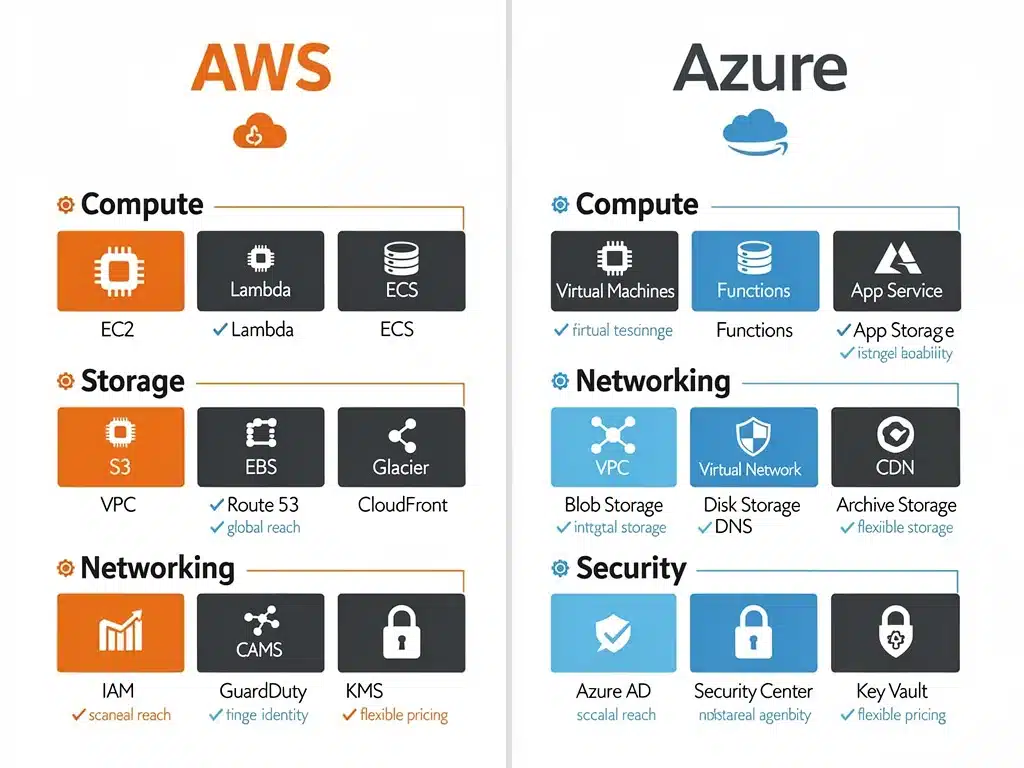
Moreover, AWS’s global reach, with numerous regions and Availability Zones across the U.S. and worldwide, offers high availability and disaster recovery capabilities. This geographical distribution is vital for enterprises requiring low-latency access for their users and robust business continuity plans. The continuous innovation within AWS ensures that enterprises have access to the latest technologies, fostering a culture of agility and competitive edge.
In summary, AWS presents a powerful and mature option for U.S. enterprises seeking a comprehensive cloud migration strategy. Its vast service catalog, robust migration tools, and strong security posture make it a formidable contender, especially for organizations prioritizing flexibility, deep technical capabilities, and a proven track record.
Azure: Microsoft’s Integrated Cloud for Hybrid and Enterprise Solutions
Microsoft Azure, while entering the cloud market later than AWS, has rapidly emerged as a powerful challenger, particularly appealing to U.S. enterprises with significant investments in Microsoft technologies. Azure’s strength lies in its seamless integration with existing Microsoft products and services, such as Windows Server, SQL Server, Active Directory, and .NET applications. This native compatibility often simplifies migration paths for organizations deeply embedded in the Microsoft ecosystem.
Azure’s hybrid cloud capabilities are a significant differentiator. Solutions like Azure Stack allow enterprises to run Azure services on-premises, providing a consistent platform across public and private clouds. This hybrid approach is particularly attractive to businesses that need to maintain certain workloads on-premises due to regulatory requirements, data sovereignty concerns, or specific performance needs, while still leveraging the scalability and flexibility of the public cloud.
Azure’s Distinct Advantages for Enterprises
- Microsoft Ecosystem Integration: Seamless compatibility with existing Microsoft software and tools.
- Hybrid Cloud Prowess: Strong offerings for consistent operations across on-premises and public cloud.
- Enterprise-Grade Support: Renowned for its strong enterprise sales and support channels.
- Compliance Focus: Extensive certifications and specific offerings for regulated industries.
Security on Azure is also robust, with Microsoft investing heavily in securing its platform and offering a wide range of security services. Azure Security Center, Azure Active Directory, and Azure Sentinel provide comprehensive capabilities for identity management, threat protection, and security information and event management (SIEM). These tools are designed to help enterprises meet stringent security and compliance mandates, often simplifying the audit process for regulated industries.
Furthermore, Azure’s pricing model, while complex, offers various options including pay-as-you-go, reserved instances, and hybrid benefit programs, which can significantly reduce costs for customers with existing Microsoft licenses. This flexibility, combined with Microsoft’s global network of data centers, ensures high availability and performance for applications and services deployed on Azure.
In essence, Azure provides a compelling proposition for U.S. enterprises, especially those with a strong Microsoft footprint or a need for sophisticated hybrid cloud solutions. Its integrated approach, enterprise-focused support, and strong emphasis on compliance make it a highly competitive choice for diverse cloud migration strategies.
Key Considerations for 2026 Cloud Migration Strategies
When comparing AWS and Azure for cloud migration in 2026, U.S. enterprises must delve deeper than surface-level feature sets. A holistic evaluation encompasses several critical factors that will dictate the success and long-term viability of their cloud strategy. These considerations include cost, security, compliance, scalability, and the specific technical requirements of existing applications and data.
Cost optimization remains a top priority for most organizations. While both AWS and Azure offer flexible pricing models, understanding the nuances of their billing structures, discount programs, and potential for unexpected charges is crucial. This often requires a detailed total cost of ownership (TCO) analysis, factoring in not just infrastructure costs but also operational expenses, licensing, and potential savings from increased efficiency.
Critical Evaluation Factors
- Cost Management: Detailed TCO analysis, understanding billing models and discount programs.
- Security Posture: Aligning cloud provider security offerings with internal policies and regulatory needs.
- Compliance and Governance: Ensuring adherence to industry-specific and national regulations.
- Scalability and Performance: Matching cloud capabilities with current and future demand.
- Vendor Lock-in: Assessing the ease of portability and multi-cloud strategies.
Security and compliance are non-negotiable, particularly for U.S. enterprises operating in regulated sectors. Both AWS and Azure offer extensive certifications and security services, but the specific implementation and ease of achieving compliance can vary. Enterprises must assess how each platform aligns with their particular regulatory obligations, such as HIPAA for healthcare, FedRAMP for government, or PCI DSS for financial services. Governance frameworks and data residency requirements also play a significant role.
Scalability and performance are fundamental to leveraging the cloud’s benefits. Enterprises need to evaluate how each platform handles peak loads, provides global reach, and ensures low-latency access for their users. The choice often comes down to matching the cloud provider’s capabilities with the specific performance requirements of critical applications and services. The ability to scale seamlessly without significant re-architecture is a major advantage.
Ultimately, a successful cloud migration strategy in 2026 hinges on a meticulous evaluation of these interconnected factors, ensuring that the chosen platform not only meets current demands but also supports future innovation and growth. The decision is a strategic investment that requires careful planning and a clear understanding of enterprise-specific needs.
Migration Pathways and Strategic Planning for U.S. Businesses
The journey of cloud migration is rarely a simple lift-and-shift. For U.S. businesses, effective migration pathways require meticulous strategic planning, considering both technical complexities and business objectives. The choice between AWS and Azure significantly influences these pathways, as each platform offers distinct tools, methodologies, and partner ecosystems to facilitate the transition.
A common approach involves a phased migration, starting with non-critical workloads and gradually moving more complex systems. This allows organizations to gain experience, refine processes, and mitigate risks. Both AWS and Azure provide extensive documentation, training, and professional services to support these efforts. However, the specific tools and expertise available can influence the speed and efficiency of migration for different types of applications.
Effective Migration Strategies
- Rehosting (Lift-and-Shift): Moving applications as-is with minimal changes.
- Replatforming: Making minor cloud-native optimizations without changing core architecture.
- Refactoring/Rearchitecting: Rebuilding applications to fully leverage cloud-native services.
- Repurchasing: Switching to a SaaS solution.
- Retaining: Keeping some applications on-premises.
For organizations with a substantial on-premises presence, particularly those invested in Microsoft technologies, Azure’s hybrid cloud solutions like Azure Arc and Azure Stack Hub can offer a smoother transition. These services allow for consistent management and operations across hybrid environments, reducing the learning curve and operational overhead associated with managing disparate infrastructures. AWS also offers hybrid options, such as AWS Outposts, but Azure’s integration with on-premises Microsoft software is often seen as a key advantage for certain enterprises.
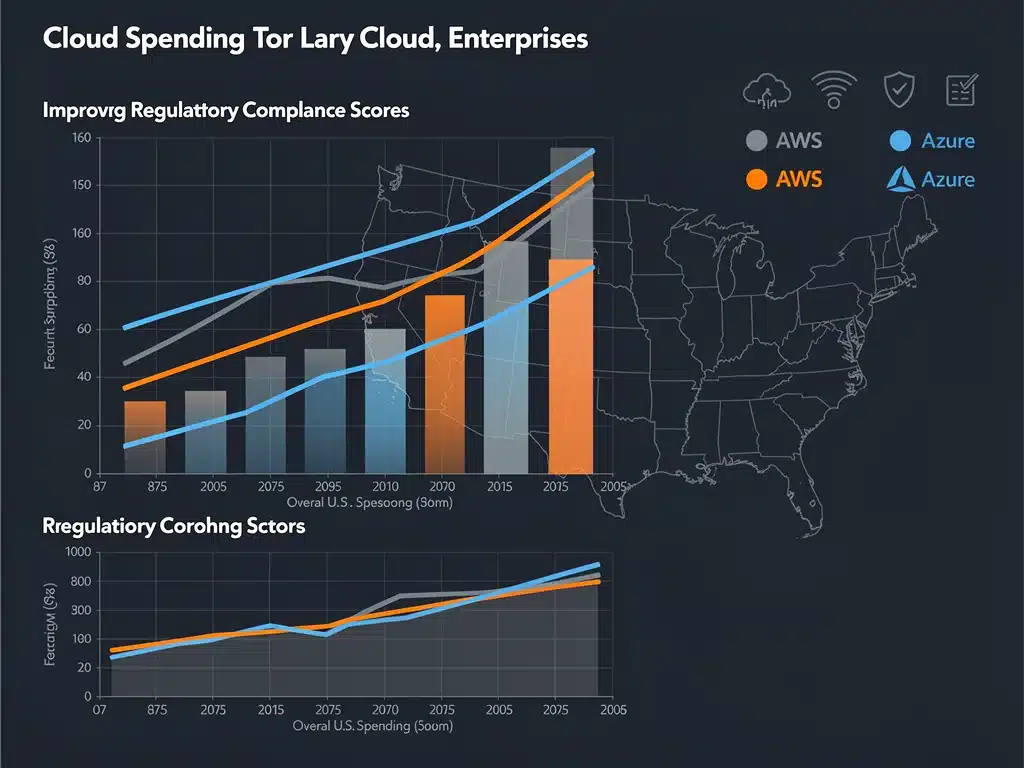
Furthermore, the partner ecosystem plays a crucial role in successful migrations. Both AWS and Azure boast extensive networks of system integrators, managed service providers, and independent software vendors. Leveraging these partnerships can provide specialized expertise, accelerate migration timelines, and ensure best practices are followed. Enterprises should evaluate which ecosystem best aligns with their existing vendor relationships and desired support models.
In conclusion, strategic planning for cloud migration in 2026 involves a careful selection of migration pathways tailored to specific business needs and technical landscapes. Whether opting for a phased approach, leveraging hybrid solutions, or engaging with specialized partners, U.S. businesses must meticulously plan their transition to ensure a seamless and successful journey to the cloud.
Cost Management and Financial Implications in AWS vs. Azure
The financial implications of cloud migration are a primary concern for U.S. enterprises. While both AWS and Azure promise cost savings, understanding their distinct pricing models and optimization strategies is crucial for effective budget management in 2026. The initial sticker price rarely tells the full story; a deeper dive into operational costs, discounts, and potential for unexpected charges is necessary.
AWS is often perceived to have a more complex pricing structure due to its vast array of services, each with its own granular billing. However, this granularity also allows for precise cost optimization if managed effectively. Features like Reserved Instances (RIs) and Savings Plans can offer significant discounts for committed usage, while services like AWS Cost Explorer and AWS Budgets provide tools for monitoring and controlling spending. Enterprises need dedicated cloud financial management (FinOps) practices to fully leverage these capabilities.
Cost Optimization Strategies
- Reserved Instances/Savings Plans: Committing to usage for significant discounts.
- Spot Instances: Utilizing spare capacity for fault-tolerant workloads at lower costs.
- Right-sizing Resources: Matching resource allocation to actual usage to avoid over-provisioning.
- Automated Cost Management: Implementing tools and policies to control spending.
Azure, on the other hand, often appeals to enterprises with existing Microsoft licenses due to its Azure Hybrid Benefit program, which allows organizations to use their on-premises Windows Server and SQL Server licenses in Azure, reducing virtual machine costs. Azure also offers Reserved Instances and various discount programs. Its pricing can sometimes feel more predictable for those already familiar with Microsoft’s licensing schemes, but complexity can still arise with specialized services.
Beyond direct infrastructure costs, enterprises must also factor in operational expenses, including the cost of skilled personnel for cloud management, monitoring, and security. Both platforms require specialized expertise, and the availability and cost of cloud professionals can vary. Moreover, data transfer costs (egress fees) can become a significant expense, especially for applications with high data outflow. Careful architectural planning can mitigate these costs.
In conclusion, effective cost management in the cloud is an ongoing process that extends beyond the initial migration. U.S. enterprises choosing between AWS and Azure must conduct thorough financial analysis, implement robust FinOps practices, and continuously monitor usage to ensure their cloud investment yields the expected returns. The right choice can lead to substantial savings, while a misstep can result in unexpected expenditures.
Security, Compliance, and Governance in the Cloud for U.S. Enterprises
For U.S. enterprises, security, compliance, and governance are paramount concerns when considering cloud migration. The regulatory landscape is complex and constantly evolving, making the choice between AWS and Azure a decision with significant implications for data protection, legal adherence, and corporate responsibility. Both providers invest heavily in these areas, but their approaches and the ease of meeting specific requirements can vary.
AWS operates under a shared responsibility model: AWS secures the cloud infrastructure itself, while the customer is responsible for security within the cloud. AWS offers a vast array of security services, including AWS Identity and Access Management (IAM), AWS Key Management Service (KMS), AWS WAF, and AWS Shield, enabling enterprises to build highly secure and compliant environments. Its extensive list of certifications (e.g., ISO, SOC, PCI DSS, HIPAA, FedRAMP) demonstrates its commitment to meeting global and industry-specific standards.
Critical Security and Compliance Measures
- Identity and Access Management (IAM): Granular control over user permissions.
- Data Encryption: Protecting data at rest and in transit.
- Network Security: Firewalls, DDoS protection, and intrusion detection.
- Regular Audits and Certifications: Demonstrating adherence to industry standards.
Azure similarly adheres to a shared responsibility model and offers a comprehensive suite of security and compliance services. Azure Security Center provides unified security management and advanced threat protection across hybrid cloud workloads. Azure Active Directory is a robust identity solution, and Azure Sentinel offers cloud-native SIEM capabilities. Microsoft’s strong focus on enterprise clients means it often provides tailored solutions and extensive documentation for meeting specific regulatory requirements, which can be particularly beneficial for regulated industries.
For U.S. enterprises, particularly those dealing with sensitive data, understanding data residency and sovereignty is crucial. Both AWS and Azure have data centers across the U.S., allowing organizations to keep their data within national borders if required by regulations. However, the specific features and ease of implementing data governance policies, such as data classification, retention, and access controls, should be thoroughly evaluated against internal corporate policies and external regulatory mandates.
In conclusion, selecting a cloud provider for U.S. enterprises in 2026 demands a rigorous assessment of their security capabilities, compliance certifications, and governance tools. Both AWS and Azure provide robust frameworks, but the optimal choice will depend on an enterprise’s specific industry, regulatory obligations, and internal security posture. A strong security and compliance strategy is not just about avoiding penalties, but about building trust and protecting critical assets.
Future-Proofing Your Enterprise: Innovation and Ecosystems
Beyond immediate migration needs, U.S. enterprises must consider how AWS and Azure will enable future innovation and integrate into their broader technological ecosystems. The cloud is not merely an infrastructure; it’s a platform for adopting emerging technologies like Artificial Intelligence (AI), Machine Learning (ML), Internet of Things (IoT), and advanced analytics. The provider’s commitment to innovation and the richness of its ecosystem will significantly impact an enterprise’s long-term competitive advantage.
AWS has consistently been at the forefront of cloud innovation, regularly introducing new services and features. Its ecosystem includes a vast marketplace of third-party solutions, a strong open-source community presence, and extensive developer tools. For enterprises looking to rapidly experiment with cutting-edge technologies or build highly customized, cloud-native applications, AWS often provides the broadest palette of services and the most mature ecosystem for innovation. This includes services like Amazon SageMaker for ML, AWS IoT Core, and a plethora of serverless computing options.
Innovation and Ecosystem Considerations
- AI/ML Capabilities: Breadth and depth of services for artificial intelligence and machine learning.
- IoT Integration: Support for connected devices and edge computing.
- Developer Tools and Community: Resources for rapid application development and innovation.
- Third-Party Integrations: Availability of marketplace solutions and partner services.
Azure, driven by Microsoft’s enterprise focus, also boasts a powerful innovation engine, particularly in areas like AI, hybrid cloud, and developer tools. Azure AI services, Azure Machine Learning, and Azure IoT Hub provide robust capabilities for enterprises seeking to embed intelligence into their applications and operations. Furthermore, Azure’s strong integration with popular development tools like Visual Studio and GitHub simplifies the development lifecycle for many organizations, especially those with existing Microsoft developer expertise.
The choice of cloud provider also influences an enterprise’s ability to pursue a multi-cloud or hybrid-cloud strategy. While both platforms offer services to facilitate these approaches, their native integration capabilities and management tools can differ. For instance, Azure Arc provides a unified management plane for resources across on-premises, multi-cloud, and edge environments, which can be a significant advantage for complex IT landscapes. AWS’s approach often involves more manual integration or reliance on third-party tools for multi-cloud management.
In conclusion, future-proofing an enterprise’s cloud strategy involves selecting a provider that not only meets current operational needs but also fosters innovation and integrates seamlessly into a dynamic technological ecosystem. Both AWS and Azure offer compelling pathways for growth, but the optimal choice depends on an enterprise’s strategic vision, existing technological footprint, and appetite for embracing new paradigms.
| Key Aspect | Brief Comparison |
|---|---|
| Ecosystem & Services | AWS offers broader, deeper services; Azure excels with Microsoft integration and hybrid solutions. |
| Cost & Pricing | AWS has granular billing; Azure offers Hybrid Benefit and often simpler licensing for Microsoft users. |
| Security & Compliance | Both offer robust security and extensive certifications, with shared responsibility models. |
| Innovation & Future-Proofing | AWS leads in raw innovation; Azure focuses on integrated AI/ML and hybrid management. |
Frequently Asked Questions About Cloud Migration
U.S. enterprises primarily migrate to the cloud for enhanced agility, scalability, and cost optimization. The cloud enables faster deployment of new services, allows resources to scale with demand, and often converts high capital expenditures into more manageable operational costs, fostering innovation and competitive advantage in a dynamic market.
Azure excels in hybrid cloud with solutions like Azure Stack and Azure Arc, providing consistent management across on-premises and public cloud environments, particularly beneficial for Microsoft-centric businesses. AWS offers Outposts, extending AWS infrastructure to on-premises, but Azure’s integration with existing Microsoft estates is often more seamless for many enterprises.
For regulated industries, key security considerations include data encryption, identity and access management, network security, and compliance certifications (e.g., HIPAA, FedRAMP, PCI DSS). Both AWS and Azure offer robust security services and certifications, but enterprises must ensure the chosen platform aligns with their specific regulatory mandates and data residency requirements.
The cost-effectiveness of AWS versus Azure is highly dependent on an enterprise’s specific workloads, existing licenses, and optimization strategies. AWS offers granular billing and extensive discount programs. Azure’s Hybrid Benefit can significantly reduce costs for those with existing Microsoft licenses. A detailed TCO analysis and continuous FinOps practices are essential for accurate assessment.
The vendor ecosystem is extremely important, as it provides access to a vast network of partners, third-party solutions, and specialized expertise. A robust ecosystem can accelerate migration, enhance innovation, and provide critical support. Enterprises should evaluate which ecosystem best complements their existing technologies and strategic goals for long-term success.
Conclusion
The decision between AWS and Azure for cloud migration in 2026 is a monumental one for U.S. enterprises, laden with implications for technology, finance, and strategic positioning. Both platforms offer world-class services, robust security, and pathways for innovation. AWS stands out with its mature ecosystem and unparalleled breadth of services, appealing to organizations prioritizing deep technical customization and a vast developer community. Azure, with its strong integration with Microsoft technologies and advanced hybrid cloud capabilities, presents a compelling option for enterprises with existing Microsoft investments or complex on-premises requirements. Ultimately, the optimal choice hinges on a meticulous evaluation of an enterprise’s specific needs, including its existing IT landscape, regulatory obligations, budget constraints, and long-term strategic vision. A successful cloud journey is not just about choosing a provider, but about crafting a thoughtful, agile strategy that aligns with business objectives and fosters continuous innovation.