2026 Social Security COLA: 2.8% Benefit Increase for Households
Advertisements
The 2026 Social Security COLA adjustment, a 2.8% benefit increase, is set to impact millions of eligible households, providing crucial financial relief and requiring careful consideration for beneficiaries' long-term planning.
Navigating the 2026 Social Security COLA Adjustment: What the 2.8% Benefit Increase Means for Eligible Households is a critical topic for millions of Americans, directly impacting their financial well-being and future planning. This anticipated adjustment reflects ongoing economic realities and aims to preserve the purchasing power of beneficiaries.
Understanding the Cost-of-Living Adjustment (COLA)
The Cost-of-Living Adjustment, commonly known as COLA, is a vital mechanism designed to ensure that Social Security and Supplemental Security Income (SSI) benefits retain their purchasing power against inflation. Each year, the Social Security Administration (SSA) evaluates economic data to determine if an adjustment is necessary. This process is crucial for retirees, disabled individuals, and survivors who rely on these benefits.
Without COLA, the fixed income of beneficiaries would erode over time due to rising costs for everyday essentials like food, housing, and healthcare. The 2026 Social Security COLA adjustment of 2.8% is a direct response to these inflationary pressures, aiming to provide a necessary boost to beneficiaries' incomes.
How COLA is Calculated
The calculation of the COLA is tied directly to the Consumer Price Index for Urban Wage Earners and Clerical Workers (CPI-W). This specific index measures the average change over time in the prices paid by urban wage earners and clerical workers for a market basket of consumer goods and services. The SSA compares the CPI-W from the third quarter of the current year to the third quarter of the previous year. If there is an increase, that percentage increase becomes the COLA for the following year.
- CPI-W Focus: The CPI-W is specifically chosen to reflect the spending patterns of a demographic that closely mirrors Social Security beneficiaries.
- Third Quarter Data: Only data from July, August, and September is used, making the determination period relatively short but impactful.
- No Decrease: Social Security benefits can never decrease due to a COLA, even if the CPI-W shows a deflationary trend.
The 2.8% COLA for 2026 signifies that the CPI-W has risen by this amount, reflecting an increase in the cost of living. This adjustment is not a benefit enhancement in real terms, but rather an effort to maintain the existing value of benefits, preventing beneficiaries from falling behind economically. It's an essential component of the Social Security program, ensuring its long-term viability and fairness to those who have contributed throughout their working lives.
The 2.8% Benefit Increase: Who is Affected?
The announcement of a 2.8% benefit increase for the 2026 Social Security COLA adjustment has significant implications for a vast segment of the American population. This adjustment is not universally applied in the same way to everyone, but rather targets specific groups of beneficiaries. Understanding who will receive this increase and how it applies is crucial for accurate financial planning.

Millions of Americans rely on Social Security benefits as their primary or supplemental income, making this adjustment a critical factor in their financial stability. The increase is designed to help these individuals cope with the rising cost of living, which can disproportionately affect those on fixed incomes.
Eligible Households and Individuals
The 2.8% COLA will impact all individuals currently receiving Social Security benefits. This includes a broad spectrum of beneficiaries, each with their own unique circumstances. The increase will be automatically applied to their monthly payments, starting in January 2026.
- Retirees: The largest group affected, retirees who have claimed their Social Security benefits will see their monthly checks increase by 2.8%. This helps offset the effects of inflation on their fixed retirement incomes.
- Disabled Workers: Individuals receiving Social Security Disability Insurance (SSDI) will also benefit from the 2.8% COLA. This ensures that their disability payments keep pace with economic changes, supporting their daily living expenses.
- Survivors: Widows, widowers, and children receiving survivor benefits will also experience the 2.8% increase. This is vital for families who depend on these benefits after the loss of a loved one.
- Supplemental Security Income (SSI) Recipients: While technically a separate program, SSI benefits are also typically adjusted by the same COLA percentage. This provides essential support to low-income individuals who are aged, blind, or disabled.
It's important to note that the actual dollar amount of the increase will vary based on the individual's current benefit amount. A higher current benefit will result in a larger dollar increase, though the percentage remains constant. For example, a beneficiary receiving $1,500 per month will see an increase of $42, bringing their new monthly benefit to $1,542. This ensures fairness and proportionality across all benefit levels.
Impact on Financial Planning and Budgeting
The 2.8% 2026 Social Security COLA adjustment, while seemingly modest, plays a significant role in the financial planning and budgeting strategies of eligible households. For many, Social Security represents a cornerstone of their retirement income, and any adjustment directly influences their purchasing power and overall financial health. Understanding how to integrate this increase into existing financial plans is essential for long-term stability.
Beneficiaries should view this increase not just as extra income, but as a mechanism to maintain their current standard of living. Inflation continues to be a persistent factor in the economy, eroding the value of money over time. The COLA helps to counteract this erosion, allowing individuals to afford the same goods and services as before.
Adjusting Personal Budgets
Upon receiving the increased benefit, beneficiaries should revisit their personal budgets to reflect the new income. This is an opportune moment to assess spending habits and allocate funds strategically. For some, the increase might provide a small buffer against unexpected expenses, while for others, it might help cover rising costs in specific areas.
- Re-evaluate Expenses: Review monthly expenditures, particularly those prone to inflation, such as groceries, utilities, and transportation.
- Prioritize Needs: Ensure that essential needs are adequately covered before considering discretionary spending.
- Debt Management: If applicable, consider using a portion of the increase to pay down high-interest debt, which can improve overall financial health.
- Savings: Even a small increase can be directed towards emergency savings or a long-term investment, if feasible, to build a stronger financial foundation.
The COLA increase can also impact other aspects of financial planning, such as Medicare premiums. Often, Medicare Part B premiums are deducted directly from Social Security benefits. While the COLA aims to increase net benefits, beneficiaries should be aware that a portion of the increase might be offset by higher Medicare costs. This interaction is complex and requires careful consideration when planning budgets.
Historical Context of COLA Adjustments
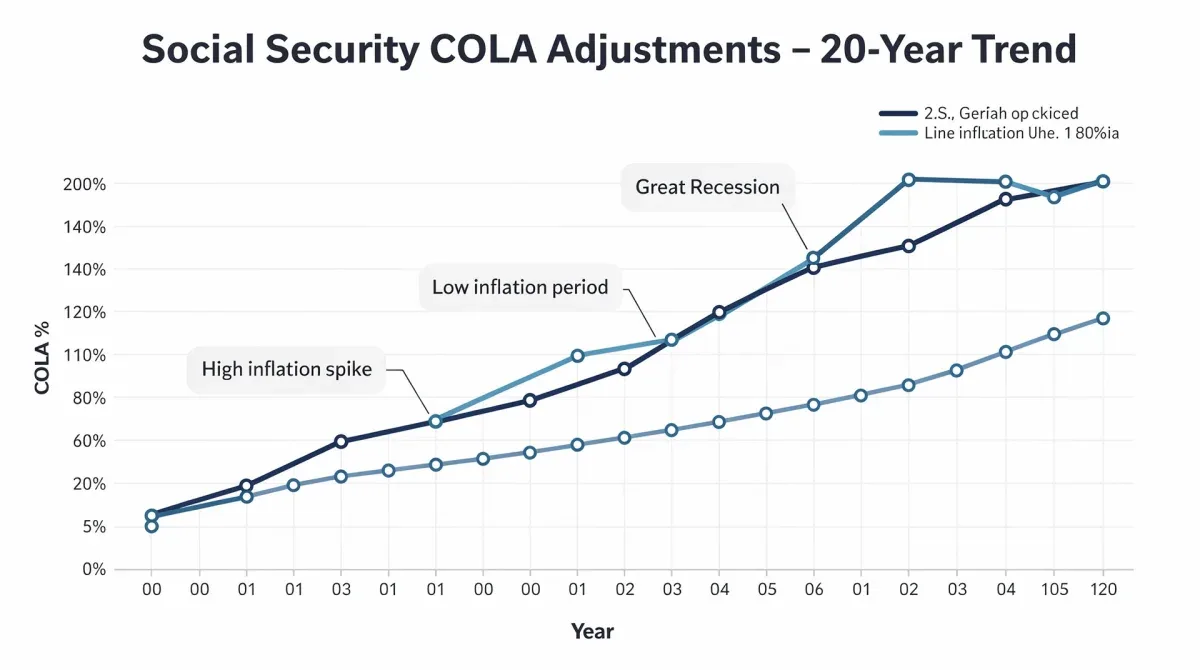
To fully appreciate the significance of the 2.8% 2026 Social Security COLA adjustment, it's beneficial to examine it within its historical context. COLA adjustments are not new; they have been a part of the Social Security program since 1975, designed to protect beneficiaries from the eroding effects of inflation. Looking back at past adjustments reveals patterns tied to economic cycles, inflation rates, and broader societal shifts.
The history of COLA reflects the dynamic nature of the U.S. economy. Periods of high inflation have historically led to larger COLA increases, while periods of low inflation or economic stagnation have resulted in smaller or even zero adjustments. This historical perspective provides valuable insights into what the current 2.8% increase signifies in the broader economic landscape.
Past Trends and Economic Factors
Over the decades, COLA percentages have varied widely. For instance, in the late 1970s and early 1980s, when inflation soared, COLA adjustments were in the double digits, with a peak of 14.3% in 1980. This was a direct response to a period of intense economic instability and rising prices. Conversely, there have been years, particularly in the early 2010s, where the COLA was 0% due to very low inflation.
- High Inflation Eras: Periods like the late 1970s saw substantial COLA increases, providing crucial relief to beneficiaries.
- Low Inflation Eras: Years with minimal inflation resulted in small or no COLA, challenging beneficiaries to manage fixed incomes.
- Economic Recessions: Economic downturns often lead to lower inflation, consequently affecting COLA percentages.
- Healthcare Costs: A persistent factor influencing beneficiaries' real purchasing power, as healthcare costs often outpace general inflation.
The 2.8% COLA for 2026 sits in the middle ground, indicating a moderate level of inflation compared to historical extremes. It suggests a continued period where costs are rising, but not at the alarming rates seen in some past decades. This historical perspective helps beneficiaries understand that the 2.8% is a reflection of current economic conditions, rather than an arbitrary figure.
Potential Challenges and Considerations
While the 2.8% 2026 Social Security COLA adjustment is a welcome relief for many eligible households, it's crucial to acknowledge the potential challenges and broader considerations that accompany such an increase. A COLA, by its nature, is a reactive measure to inflation, and its effectiveness can be influenced by various external factors, some of which may mitigate its intended positive impact.
Beneficiaries should not solely rely on the COLA to solve all their financial needs. Instead, it should be seen as one component of a larger financial strategy. Understanding the limitations and potential drawbacks of the COLA is as important as understanding its benefits, allowing for more realistic and robust financial planning.
Offsetting Factors and Financial Nuances
One of the primary challenges is that the COLA might not fully keep pace with the specific inflation rates experienced by retirees. The CPI-W, while a broad measure, may not accurately reflect the spending patterns of all beneficiaries, particularly regarding healthcare costs, which often rise faster than general inflation. This can lead to a perception that the COLA is insufficient.
- Medicare Premiums: As mentioned, Medicare Part B premiums can increase, potentially offsetting a portion of the COLA. For some, this could mean a net decrease in their disposable income.
- Income Taxes: For beneficiaries whose combined income exceeds certain thresholds, a portion of their Social Security benefits may become taxable. A COLA increase could potentially push some individuals into a higher tax bracket or make more of their benefits subject to taxation.
- Means-Tested Programs: For individuals receiving benefits from other means-tested government programs, an increase in Social Security income might affect their eligibility or the amount of benefits they receive from those programs.
- Long-Term Care Costs: The rising costs of long-term care are a significant concern for many seniors, and a 2.8% COLA may not adequately cover these escalating expenses.
Furthermore, the long-term solvency of the Social Security program remains a persistent concern. While COLA adjustments are necessary, they also contribute to the overall expenditures of the system. Policymakers continuously debate how to ensure the program's financial health for future generations, and COLA adjustments are a part of that larger discussion. Beneficiaries must remain informed about these broader policy discussions, as they can have future implications for benefit structures and adjustments.
Strategizing for the Future: Beyond the COLA
While the 2.8% 2026 Social Security COLA adjustment offers immediate relief and helps maintain purchasing power, a truly robust financial strategy for eligible households must extend beyond merely anticipating annual adjustments. Relying solely on Social Security, even with periodic COLA increases, may not be sufficient to cover all living expenses and future needs. Proactive planning and diversification of income sources are paramount for long-term financial security.
Beneficiaries, whether current or future, should view the COLA as one piece of their financial puzzle, not the entire picture. The goal is to build a resilient financial framework that can withstand economic fluctuations and unforeseen circumstances, ensuring comfort and peace of mind throughout retirement.
Diversifying Income and Savings
One of the most effective strategies is to diversify income streams. This means not putting all financial eggs in the Social Security basket. Exploring other avenues for income and savings can significantly bolster financial stability.
- Personal Savings: Building a substantial personal savings account is crucial. This provides a safety net for emergencies and allows for greater financial flexibility.
- Retirement Accounts: Contributions to 401(k)s, IRAs, or other employer-sponsored retirement plans are essential. These accounts offer tax advantages and can grow significantly over time.
- Part-Time Work: For some, engaging in part-time work during retirement can supplement income, provide social engagement, and keep skills sharp.
- Investments: Exploring various investment options, such as stocks, bonds, or real estate, can generate additional income and help grow wealth. It's important to consult with a financial advisor to create an investment strategy tailored to individual risk tolerance and goals.
Moreover, understanding and managing healthcare costs is a critical component of future planning. These expenses are often a significant burden for retirees. Researching Medicare options, supplemental insurance, and long-term care insurance can help mitigate these costs. Engaging with financial professionals can provide personalized advice, helping individuals navigate complex financial decisions and optimize their resources. By taking a holistic approach to financial planning, beneficiaries can enhance their security and enjoy a more comfortable future, regardless of the annual COLA percentage.

Navigating Future Social Security Changes
The 2026 Social Security COLA adjustment is a single point in the ongoing evolution of the Social Security program. While beneficial, it's part of a larger system that faces continuous scrutiny and potential reforms. Understanding the broader landscape of Social Security and anticipating future changes is vital for beneficiaries to make informed decisions and adapt their financial strategies accordingly.
The program's long-term sustainability is a subject of constant debate among policymakers, economists, and the public. Demographic shifts, such as increasing life expectancies and lower birth rates, place pressure on the system, making future adjustments to benefits or contributions a possibility.
Anticipating Policy Reforms and Demographic Shifts
Several proposals for Social Security reform are regularly discussed, ranging from adjustments to the full retirement age to changes in the COLA calculation method or the taxation of benefits. While no immediate radical changes are anticipated, beneficiaries should stay informed about these discussions, as they could impact future benefit levels.
- Full Retirement Age: There are ongoing discussions about potentially increasing the full retirement age for future generations, which would affect when individuals can claim their full benefits.
- Benefit Formula Adjustments: Proposals sometimes include modifying the formula used to calculate initial benefits or the annual COLA, which could alter the rate of benefit growth.
- Taxation of Benefits: Changes to the income thresholds at which Social Security benefits become taxable are also frequently debated.
- Trust Fund Solvency: The Social Security Trust Funds are projected to be able to pay 100% of scheduled benefits until a certain point, after which they may only be able to pay a reduced percentage unless Congress acts. This overarching concern drives many reform discussions.
Beneficiaries should actively seek out reliable information from official sources, such as the Social Security Administration, and reputable financial news outlets. Engaging with financial advisors who specialize in retirement planning can also provide invaluable guidance on how potential policy changes might affect individual circumstances. By remaining vigilant and proactive, eligible households can better navigate the complexities of Social Security and ensure their financial security well into the future, understanding that the 2.8% COLA for 2026 is just one piece of a much larger, evolving system.
| Key Point | Brief Description |
|---|---|
| 2026 COLA Rate | Social Security benefits will increase by 2.8% starting January 2026. |
| Who is Affected | Retirees, disabled workers, survivors, and SSI recipients will see an increase. |
| COLA Purpose | Designed to offset inflation and maintain beneficiaries' purchasing power. |
| Financial Impact | Requires budget adjustments; may be offset by rising Medicare premiums or taxes. |
Frequently Asked Questions About the 2026 COLA
What is the purpose of the Social Security COLA?▼The Social Security Cost-of-Living Adjustment (COLA) is designed to protect the purchasing power of Social Security benefits. It ensures that inflation does not erode the value of these benefits, allowing retirees, disabled individuals, and survivors to maintain their standard of living despite rising costs for goods and services.
How is the 2.8% COLA for 2026 calculated?▼The COLA is calculated based on the Consumer Price Index for Urban Wage Earners and Clerical Workers (CPI-W). The Social Security Administration compares the average CPI-W from the third quarter (July, August, September) of the current year to the third quarter of the previous year. The percentage increase becomes the COLA.
Will the 2.8% COLA affect my Medicare premiums?▼Yes, the COLA can indirectly affect Medicare premiums. While the COLA increases your Social Security benefit, Medicare Part B premiums are often deducted directly from these benefits. Increases in Part B premiums can sometimes offset a portion of your COLA increase, impacting your net benefit.
Are all Social Security beneficiaries eligible for the 2.8% increase?▼Generally, all individuals receiving Social Security benefits, including retirees, disabled workers, and survivors, will receive the 2.8% increase. Supplemental Security Income (SSI) recipients typically also see a similar adjustment, ensuring a broad impact across various beneficiary categories.
What should I do to prepare for the 2026 COLA adjustment?▼To prepare, review your current budget and identify how the 2.8% increase might affect your overall financial situation. Consider how it might cover rising expenses, or if it can be directed towards savings or debt reduction. Staying informed about potential Medicare premium changes is also crucial.
Conclusion
The 2026 Social Security COLA adjustment, with its 2.8% benefit increase, represents a critical measure designed to safeguard the financial well-being of millions of eligible American households. This adjustment, while a direct response to inflationary pressures, underscores the continuous need for beneficiaries to engage in thoughtful financial planning that extends beyond annual COLA announcements. Understanding the mechanics of the COLA, its historical context, and potential offsetting factors like Medicare premiums or taxation, empowers individuals to integrate this increase effectively into their budgets. Ultimately, a holistic approach that combines awareness of Social Security changes with diversified income streams and proactive savings strategies will be key to navigating future economic landscapes and ensuring enduring financial security for all beneficiaries.
